

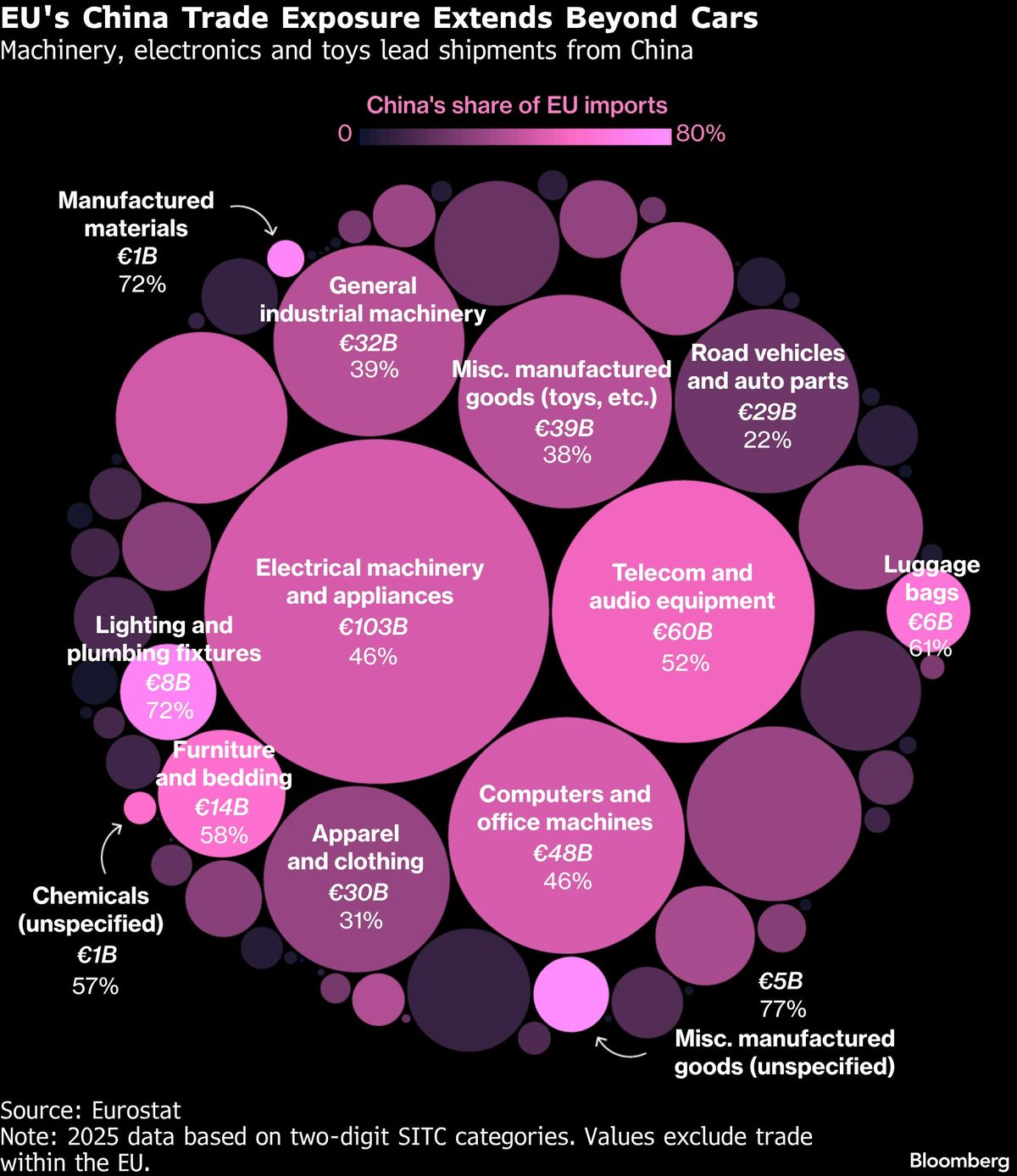
(Oct 26): The European Union is planning to use safeguard measures to cut imports of products from sectors including chemicals, furniture and machinery from China, according to people familiar with the matter.
The measures, which could take the form of either import caps or tariffs, may be presented as soon as the first quarter of 2027, said the people, who spoke on the condition of anonymity.
The European Commission is seeking to replicate its recent move to restrict the flow of hybrid vehicles into the EU, when it reached an agreement with Beijing to cap imports at 350,000 cars a year from China, according to the people. That level was deemed high enough to dissuade retaliation.
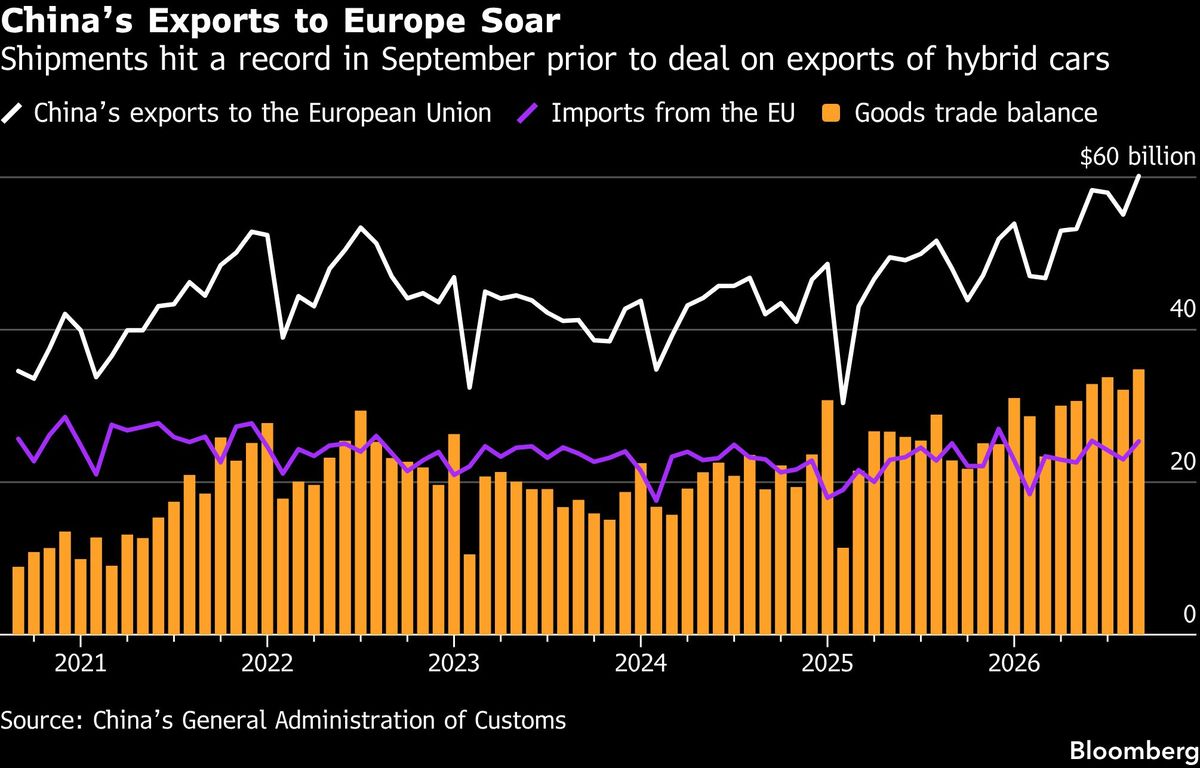
The latest action is part of a broad push by the EU to reduce its massive trade deficit with China, which reached €360 billion (US$404 billion or RM1.65 trillion) last year. The commission, which handles trade matters for the EU, is walking a fine line, trying to give its industry a boost without causing retaliation from Beijing and triggering a trade war.
Spokespeople from the commission didn’t immediately reply to a request for comment.
“Our industries have called for action and we have heard them, and we will respond, including some more safeguards,” Commission President Ursula von der Leyen told reporters earlier this month.
Safeguard measures allow the EU to restrict products from a sector if there’s been a surge of imports into the bloc. The EU has already started to assess trade data to see where that’s the case, Bloomberg reported earlier.
The measures can take the form of import quotas, as in the case of the hybrid vehicles, or tariff-rate quotas, which apply a levy on imports above a certain volume to curb excess flows.
The EU can choose to introduce the measures unilaterally without Beijing’s agreement. The people cautioned that the plans and the exact sectors the EU would target could change following discussions with member states and China.
China’s Commerce Ministry said in a statement earlier this month that the EU “cannot fantasise about gaining benefits by exerting pressure, nor should it underestimate” the country’s “determination and capability to protect its own interests”.
Just like the action set to be taken on hybrid cars and the bloc’s earlier move on steel, the new safeguard measures would comply with World Trade Organization rules and apply to other countries outside the European Economic Area, the people said.
Separately, the commission aims to put forward proposals in the coming weeks on implementing the hybrid vehicles cap so that it can enter into force in December, some of the people said. Those measures would apply for four years and China will see its quota rise by 6% a year after the first year of the cap. Quotas on vehicles from other countries such as Japan and South Korea would follow a similar logic, one of the people said.
Low-cost and at times subsidised goods from China have been flooding the continent, eroding domestic industries and putting local jobs at risk. That, coupled with falling demand and limited market access in China for many European goods, has led to a massive trade deficit of more than US$1 billion (RM4.09 billion) a day — and rising.
EU leaders were united at a summit in Brussels earlier this month in urging the bloc’s executive to quickly take action across economic sectors and establish new powers to help cut the trade deficit and deter China from retaliating.
The commission is planning to present proposals before mid-December for a tool to diversify supplies as well as an instrument to rapidly react to any aggressive trade actions. A new instrument would do that by cutting access to the bloc’s single market for select goods and services in ways that are more agile and broader than current options allow, the people said.
It’s unclear whether Beijing is open to seeing its exports curbed much further beyond hybrid vehicles and it has responded strongly to the prospect of the EU introducing new tools.
The EU’s trade chief, Maros Sefcovic, is due to take stock of progress and discuss next steps with his Chinese counterparts early next year.
Agreements reached so far would also see Beijing cut tariffs on some auto parts, olive oil and ice cream. The EU is also seeking to improve market access in China and ease export procedures for critical minerals and permanent magnets.
Uploaded by Chng Shear Lane