

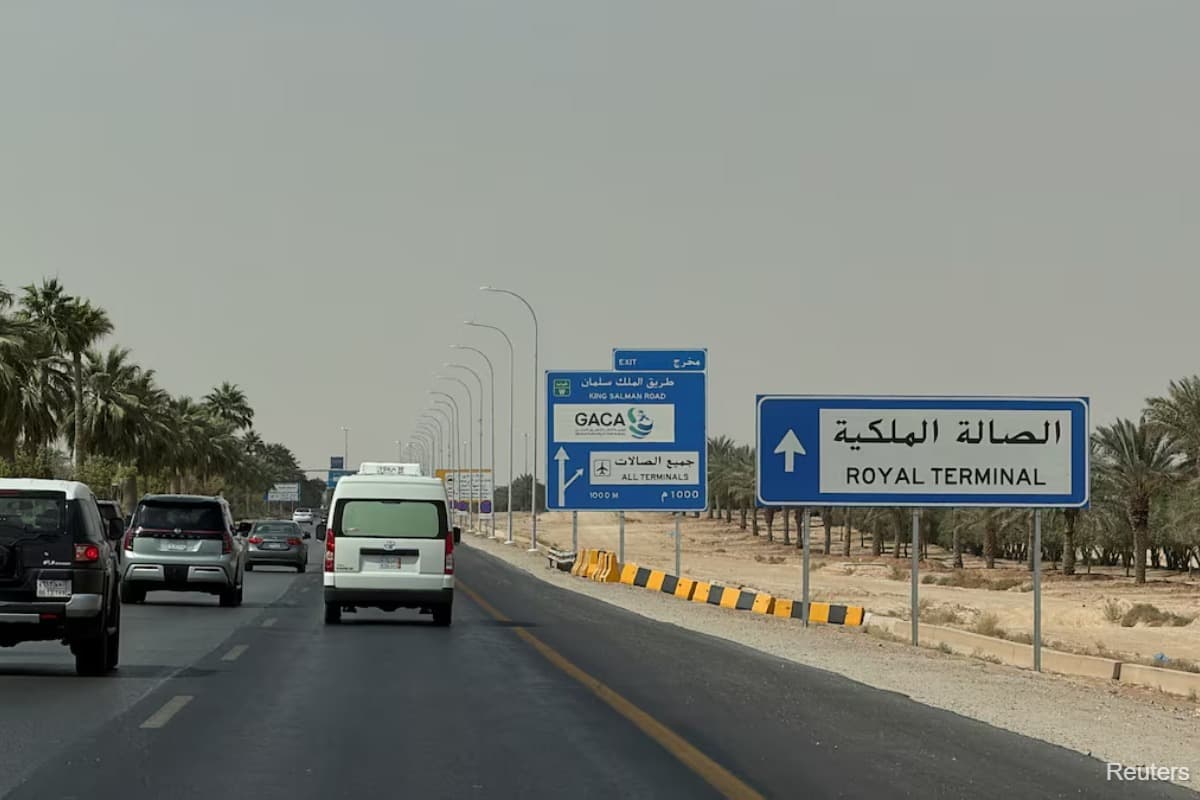
Dozens of flights departed King Khalid International Airport early on Sunday to destinations including London, Dubai and Beijing, according to the airport’s website.
Local carriers Saudia and Flynas operated flights, while international airlines including Air India and Emirates were also on the schedule. Most global carriers still have a suspension in place, meaning air traffic into and out of Riyadh is still heavily limited.
The airport, which suspended operations following Houthi attacks on Oct 10-11 that killed more than a dozen people and injured hundreds, is operating two of its five terminals. Terminal 3, which sustained damages in the strikes this month, remains non-operational.
The reopening coincides with a weekend of heavy Houthi strikes on Riyadh. The Saudi-led coalition battling the militant group in Yemen said it intercepted a ballistic missile and drone launched towards the capital on Sunday, while also fighting off projectiles in southern areas close to the Yemeni border.
Dozens of people have been killed this month in attacks on Saudi Arabia by the Houthis, including on an airport in the Eastern Province and oil fields operated by Saudi Aramco. The Houthis continue to claim they’re targeting Riyadh’s airport, in addition to critical energy infrastructure in the kingdom.
The US ordered the departure of diplomatic staff from Saudi Arabia as a result of the growing risk and also adjusted staffing at embassies across the Middle East. The orders come nearly eight months into the US and Israeli war against Iran, and after US President Donald Trump has made repeated threats to order a new round of strikes, potentially in the wake of the US midterm election on Nov 3.
An increase in hostilities threatens further damage to the Saudi economy and risks slowing progress on Crown Prince Mohammed bin Salman’s multi-trillion dollar agenda to turn his country into a hub for foreign investment, tourism and artificial intelligence.
The attacks prompted Riyadh to postpone critical events including the Future Investment Initiative, which typically brings the titans of finance, energy and politics to the capital every October. Business has also slowed as the temporary airport closure had forced consultants and executives to scrap trips.
Many people that have shown up in Riyadh in recent weeks have made the drive to the capital from nearby hubs including Dubai, Doha or Bahrain or taken the train from the Gulf coastal city of Dammam.
Saudi Arabia issued air-raid alerts over the weekend for areas including Riyadh, Yanbu, Jeddah and Mecca, one of Islam’s holiest sites.
Secretary General of the Gulf Cooperation Council Jasem Albudaiwi slammed the attacks endangering the holy city, calling it “a highly dangerous violation of the sanctity of the holy sites and a provocation to the sentiments of Muslims worldwide.”
The Houthis, part of Tehran’s so-called axis of resistance, have been in conflict with Riyadh since well before the Iran war began in February. They stepped up their attacks in October after Saudi-backed Yemeni forces launched an offensive to recapture Houthi-held areas.
Uploaded by Liza Shireen Koshy