

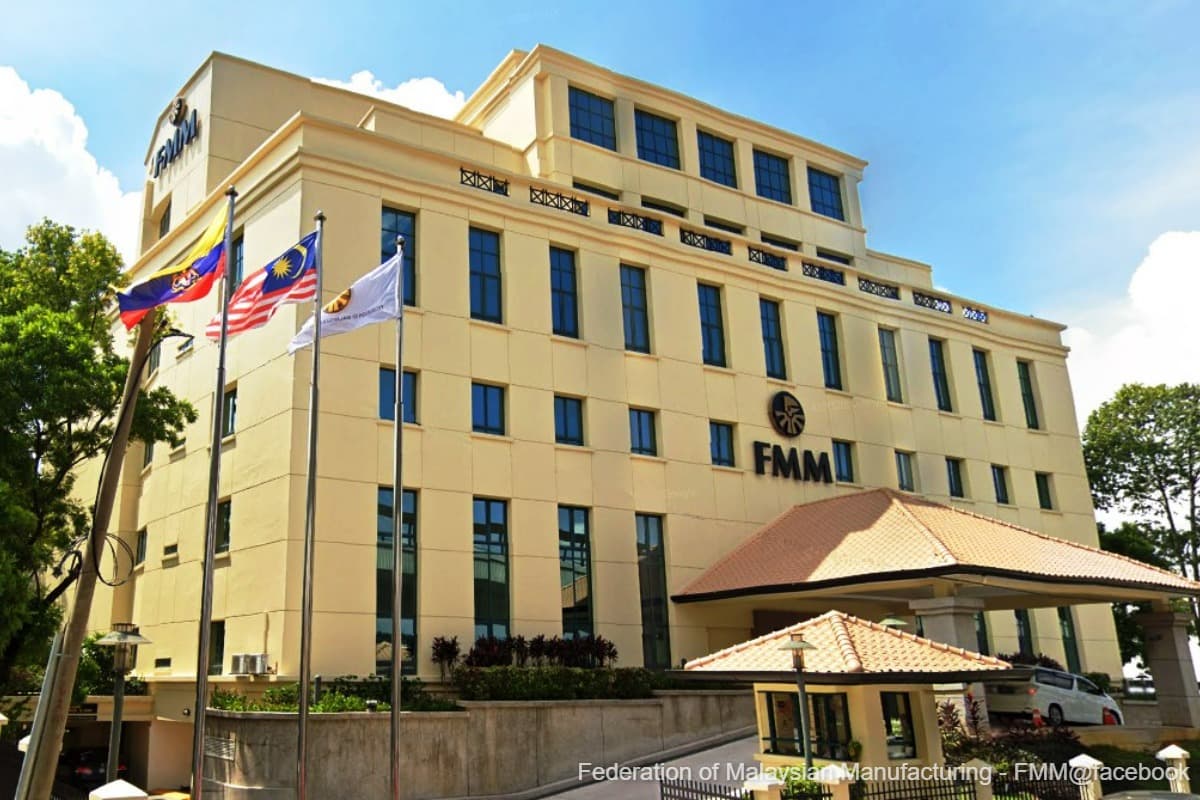
KUALA LUMPUR (Oct 25): The Federation of Malaysian Manufacturing (FMM) is urging the government to provide stronger tax incentives, easier financing and technology support to help small and medium enterprises (SMEs) grow and compete globally, in a statement on Sunday.
Welcoming Budget 2027’s focus on SMEs, FMM said businesses need more support to innovate, expand and contribute to Malaysia’s economic growth, in line with Prime Minister Datuk Seri Anwar Ibrahim’s vision.
FMM outlined several measures to boost SME growth.
It called for lower SME corporate tax rates, wider eligibility for preferential tax rates and the removal of the RM2.5 million paid-up capital requirement for SME tax eligibility. FMM welcomed the one-percentage-point tax rate reduction but said businesses need more savings to reinvest in growth.
It also welcomed RM2.1 billion in combined funding through the NIMP Fund, KWAP’s Dana Pemacu and Khazanah’s MTC Fund, as well as expanded financing guarantees. However, it stressed that financing must be affordable, accessible and disbursed promptly.
To encourage technology adoption, FMM proposed a RM1.5 billion Smart Manufacturing Support Package for 2027–2030. This includes RM500 million for automation, RM750 million for digitalisation and RM250 million for artificial intelligence (AI), alongside workforce training and technical support.
FMM also proposed a RM1 billion National Manufacturing Research and Innovation Endowment Fund to help businesses develop new products, commercialise research and work with universities and research institutions.
To help growing businesses access support for longer, FMM called for the manufacturing SME definition to cover companies with annual turnover of up to RM100 million or up to 300 employees. It said continued support would help SMEs expand into mid-tier companies without losing assistance too early.
FMM also proposed a RM100 million National Supply Chain Resilience Fund to strengthen local suppliers, improve partnerships with major companies and multinational corporations, and reduce supply chain disruptions.
The federation said stronger domestic investment would help Malaysian manufacturers upgrade technology, expand production, create better-paying jobs and increase exports, while strengthening the country’s industrial capabilities.