

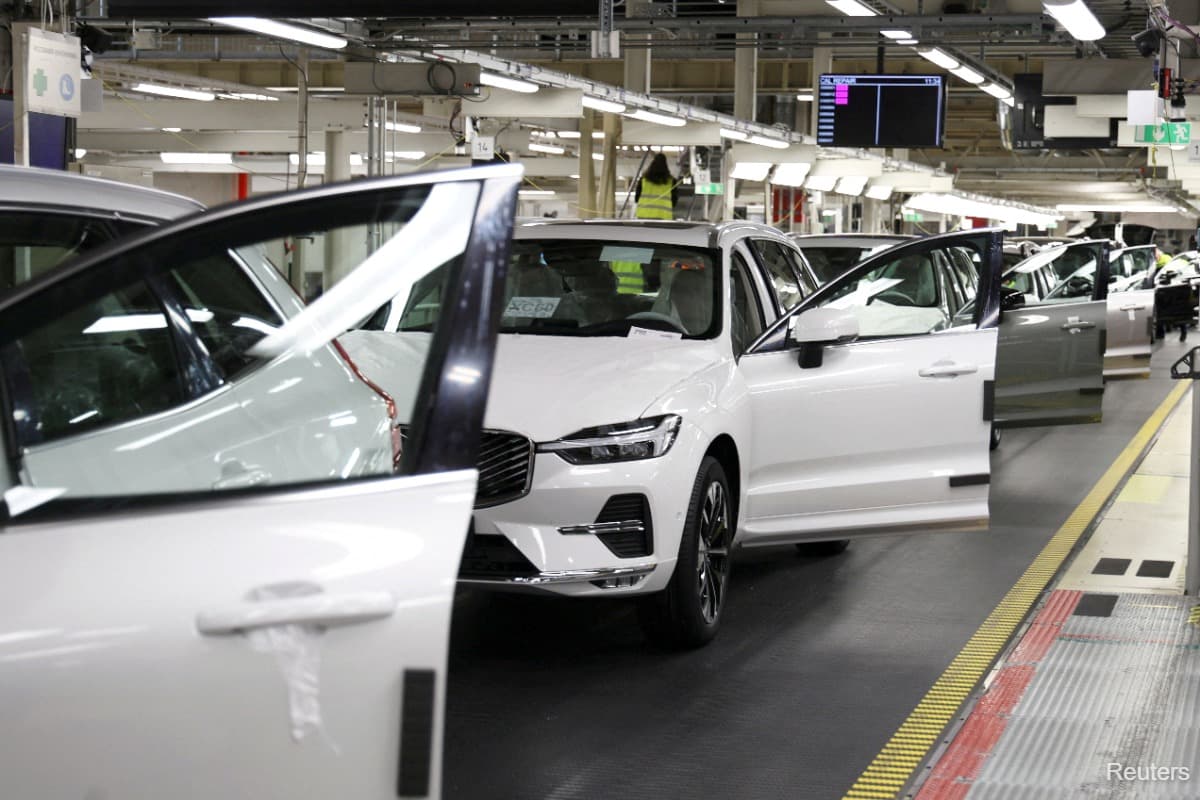
(Oct 23): Volvo Car AB plunged by about 30% to a record low after the Swedish automaker’s chief executive officer said the market for Western-developed cars in China is disappearing fast, prompting it to cut 2,500 more jobs.
Deliveries in China dropped more than 40% in the third quarter as local brands dominate the electric-vehicle market and a spending crisis weighs on demand. Volvo, owned by China’s Geely, is now valued at 29.8 billion kronor (US$2.68 billion or RM12.25 billion), 80% less then when it listed five years ago.
“Nobody will be successful with the old recipe where you had global cars developed in Europe and sold them at a premium price” in China, chief executive officer Håkan Samuelsson said on Friday during an analyst call. “Those times are gone.”
The job cuts, affecting about 6% of Volvo Car’s workforce, are part of a plan to reduce costs by an additional five billion kronor. The latest round, targeting mostly Sweden, come on top of about 3,000 positions Volvo Car announced it would eliminate last year.
Volvo’s deeper savings measures mirror moves by manufacturers including Volkswagen AG and BMW AG, who are trying to become leaner to meet mounting Chinese competition. They are also stepping up local partnerships in China and development teams to come up with features to better target local tastes. Samuelsson’s comments suggest those steps may not go far enough.
BMW is set to start sales of its new iX3 sport utility vehicle in China next month, while the world’s biggest luxury-car maker in June slashed it outlook, citing dimming prospects in its biggest market. Volkswagen followed last month.
More than a hundred local brands are vying for buyers in China with the cut-throat competition forcing much fast model development times and lower prices. Western manufacturers like Volkswagen have been slow to react, and are lagging on some features favoured by domestic drivers, which have included gadgets like movie screens and advanced voice recognition.
Samuelsson admitted underestimating the rapid transformation of China’s car market. The Swedish brand, owned by China’s Zhejiang Geely Holding Co since 2010, will in future rely on technology and vehicle underpinnings from its Chinese parent to compete, Samuelsson said. Volvo, which listed in 2021, remains nearly 80% controlled by its parent, exacerbating share price swings.
“In China, you need to come back with regionally developed products with Chinese software, and there we of course have a huge advantage that we can work and develop those cars together with Geely,” he said during a Bloomberg Television interview.
Chinese brands are winning buyers with cheaper electric vehicles, advanced digital features and models tailored to local tastes. Western automakers, by contrast, have often relied on global models with higher prices and slower development cycles, leaving them struggling to keep pace.
Volvo’s troubles were evident when the company on Friday reported swinging to a loss that was much deeper than analysts had forecast. Aside from the issues in China, Volvo cited costs from tariffs in the US and the removal of electric-vehicle subsidies there.
To get back on track, the company plans to introduce seven new vehicles for Western markets and six regionally tailored models for China by the end of the decade.
In Europe, Volvo managed to grow sales even as competition there from Chinese brands is also intensifying. A European Union push to limit hybrid imports from the Asian country may provide only temporary respite as brands including BYD Co set up manufacturing in the region.
Samuelsson, who returned in April 2025 after leading Volvo for a decade through 2022, is preparing to hand over the CEO post to former Skoda boss Klaus Zellmer. The German manager is due to take over no later than Oct 1, 2027.
Uploaded by Tham Yek Lee