

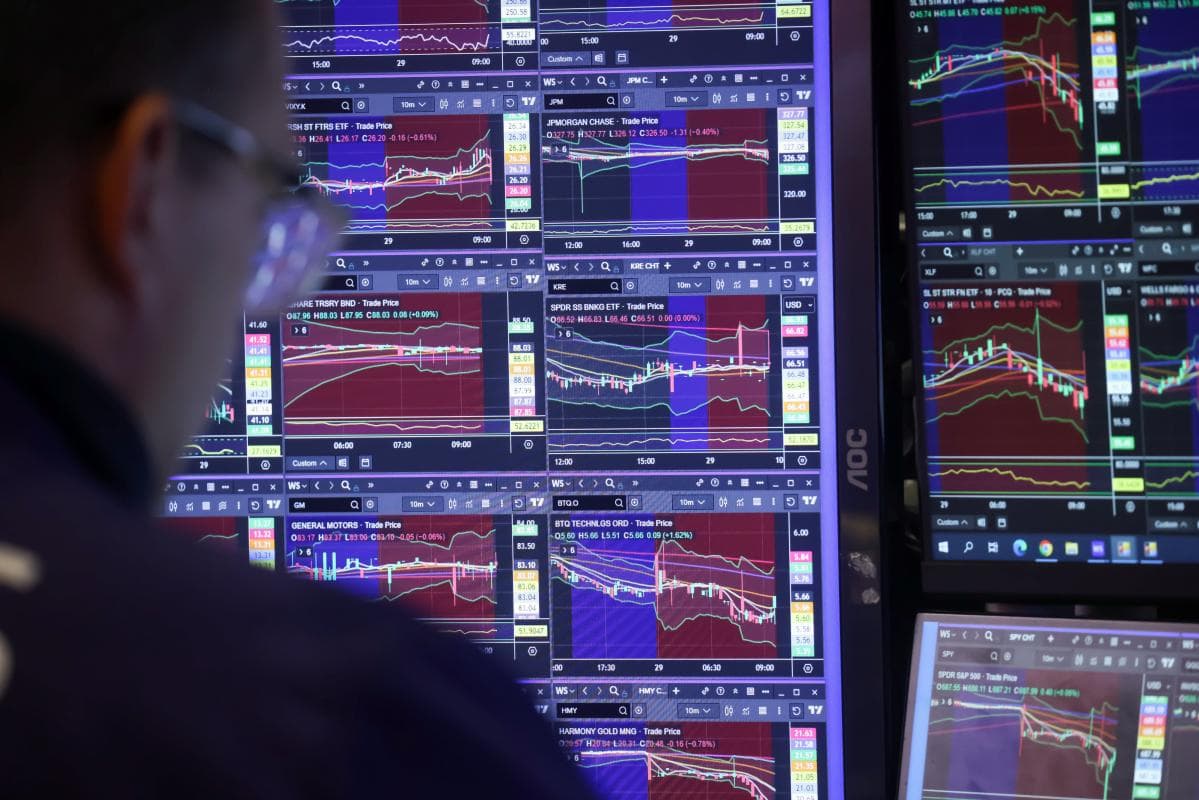
(Oct 23) : Wall Street shunned stocks as a technology rout and Middle East risks drove investors to the safety of bonds, reducing bets on another Federal Reserve rate hike in 2026.
A nearly 7% plunge in chipmakers sent the Nasdaq 100 to its worst day since June. That was after Meta Platforms Inc.’s plans to boost capital spending reignited fears that tech firms will issue more debt to finance the artificial-intelligence buildout. The S&P 500 fell 1.2%. An oil rally also weighed on sentiment amid heightened supply fears.
The rush for shelter spurred the biggest jump in Treasuries in over a year, outweighing worries about energy-fueled inflation. In fact, money markets are no longer fully pricing in a Fed rate increase by the end of the year.
“The correction in tech valuations prompted investors to reconsider whether a market-induced tightening of financial conditions could warrant a less restrictive course of monetary policy,” said Ian Lyngen at BMO Capital Markets.
Following an extraordinary run in tech stocks, markets are becoming more demanding around evidence of the payoff from AI investments and worries about the sustainability of that spending amid higher rates, according to James McCann at Edward Jones.
“We remain constructive on large-cap stocks,” he said. “However, investors should look to ensure that they have good diversification in portfolios.”
Meta’s results kicked off a technology earnings season that’s likely to focus on runaway AI expenditures — and attempts by companies to get a return on investment. Alphabet Inc., Microsoft Corp. and Amazon.com Inc., three of the other biggest spenders on data centers, are slated to report next week.
Blackstone Inc. President Jon Gray said investors don’t need to worry that the boom in AI will turn into a bubble, just days after billionaire Ken Griffin said he fears the industry was “almost certainly” headed in that direction.
“When you think about a bubble, you think about building capacity and then hoping the demand comes,” Gray told Bloomberg Television after the firm reported its third-quarter results. “With AI, you’re building capacity, and you’re hoping you can keep up with the demand.”
Elsewhere, Chinese stocks were dragged into a bear market, with US$2.4 trillion lost since a peak in May, as a protracted slump in consumption and mounting doubts over the profitability of AI companies turn them into one of the world’s worst performers.
Meantime, French bond stress deepened as spreads widened to a 15-year high, with a broad flight from risk and the threat of another weekend of protests reinforcing the country’s status as the weak link in global markets.
uploaded by Isabelle Francis