

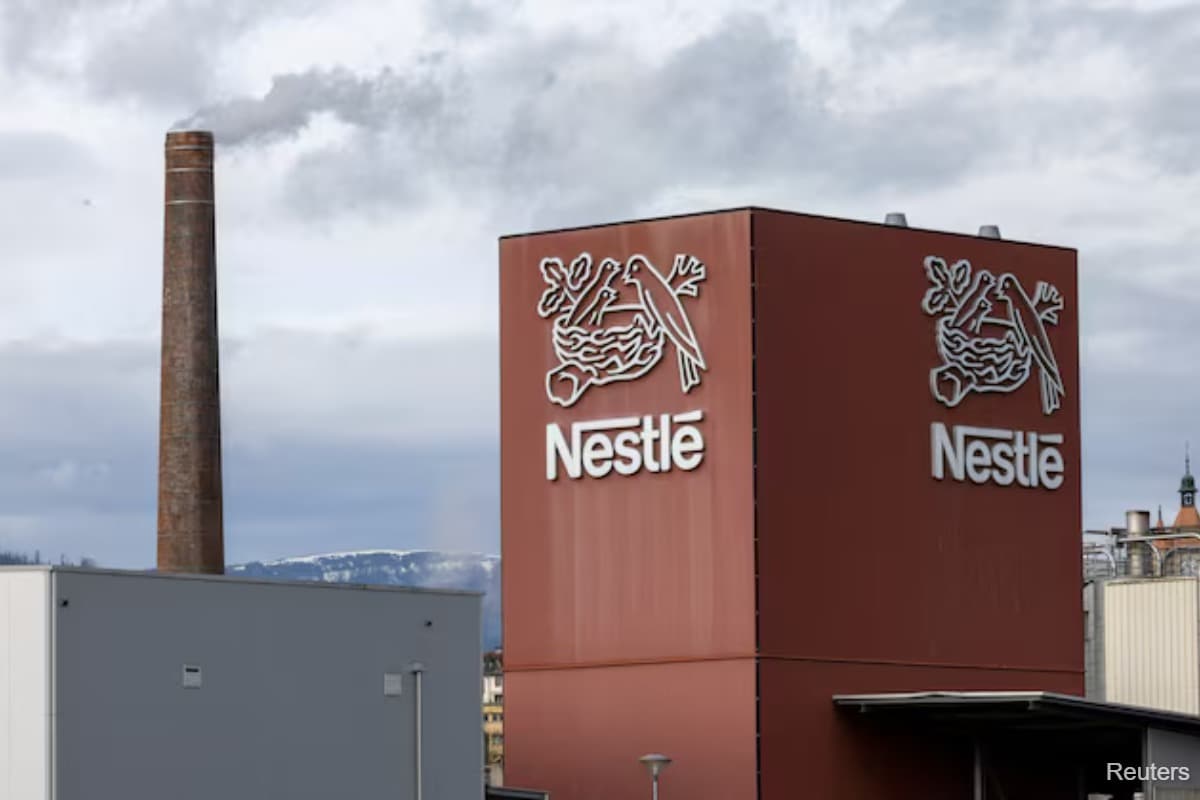
LONDON (Oct 22): Nestle reported better-than-expected organic sales growth for the third quarter on Thursday and said it had excluded its Russian unit from consolidated financial accounts after Moscow seized the business.
Russian President Vladimir Putin ordered the temporary seizure of Nestle's assets on Sept 17, part of an intensifying crackdown on European firms because of Europe's support for Ukraine, Russian officials and US business people say.
Nestle CFO Anna Manz said the Russian business, which contributed around 2% of group sales, was no longer being consolidated into financial results from the end of September, with no impact to organic sales, volumes and pricing.
However, the move does impact reported sales, underlying trading operating profit and free cash flow from the fourth quarter, Manz said, noting that derecognising the net assets would negatively impact net debt by approximately 900 million Swiss francs (US$1.09 billion) for 2026.
Nestle said it was derecognising assets in Russia worth 1.6 billion francs and recognising a non-cash charge of around 1.4 billion francs for cumulative currency translation adjustments.
Nestle's shares were seen up 1.3% in pre-market trading.
Volume growth fuels organic sales
The maker of Maggi stock cubes and Nescafe coffee maintained its full-year 2026 organic sales outlook for 3%-4% growth and recorded a 4% uptick in quarterly organic sales, above analyst expectations for a 3.4% rise.
Nestle's 1.1% price increases were below the average analyst estimate of 1.9%. Real internal growth (RIG) — or sales volume — was 2.8%, exceeding expectations for a 1.5% rise.
RIG, a key metric in Nestle's strategy, has steadily improved since Philipp Navratil became CEO in September 2025.
"I am pleased with our progress," Navratil said. "But I am not satisfied. There is much more for us to do to deliver the potential of the business."
Navratil has reduced Nestle's exposure to ice cream and water brands through joint ventures, slimming the Swiss conglomerate's portfolio in search of growth, a tactic similar to rival firms such as Unilever and Reckitt.
Uploaded by Liza Shireen Koshy