


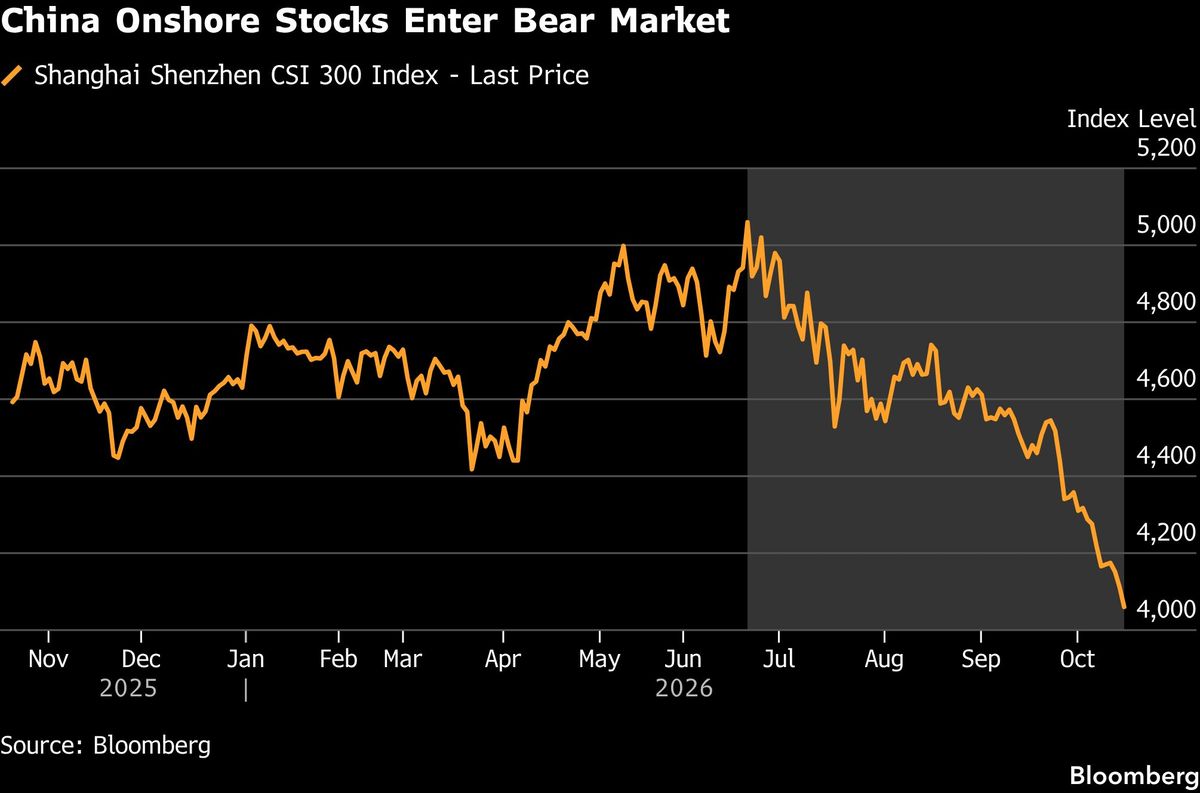
(Oct 22): Chinese stocks entered a bear market, with US$2.4 trillion (RM9.8 trillion) lost since a peak in May, as a protracted slump in consumption and mounting doubts over the profitability of artificial intelligence (AI) companies turn them into one of the world’s worst performers.
The CSI 300 Index closed 1.8% lower on Thursday, bringing its total losses from a high in June to 20%. Gauges for major Chinese companies and tech firms also plunged in Hong Kong, with a months-long sell-off showing little sign of abating.
The declines mark a sharp reversal from the stimulus-driven rally sparked in late 2024 that then gained momentum from AI bets before succumbing to a global sell-off in technology names. While policymakers have stepped up market supportive measures, the lack of a broad-based spending package and economic growth that’s barely meeting national targets have disappointed investors. Some analysts say the malaise may well extend into next year.
“This slide is too rapid and may just herald further declines ahead,” said Fu Zhifeng, the chief investment officer of Shanghai Chengzhou Investment Management. “If there is no turnaround in market overhangs, including weak domestic demand, uncertainty over how to justify hefty AI spending and European and US government bond yields, investors are unlikely to change their trading strategies anytime soon.”
The rout in Chinese onshore shares has erased US$2.4 trillion in market value from a recent peak, according to data compiled by Bloomberg. The Hang Seng China Enterprises Index and the CSI 300 gauge both rank among the worst performing major equity indexes globally this year, with losses of more than 10% each.
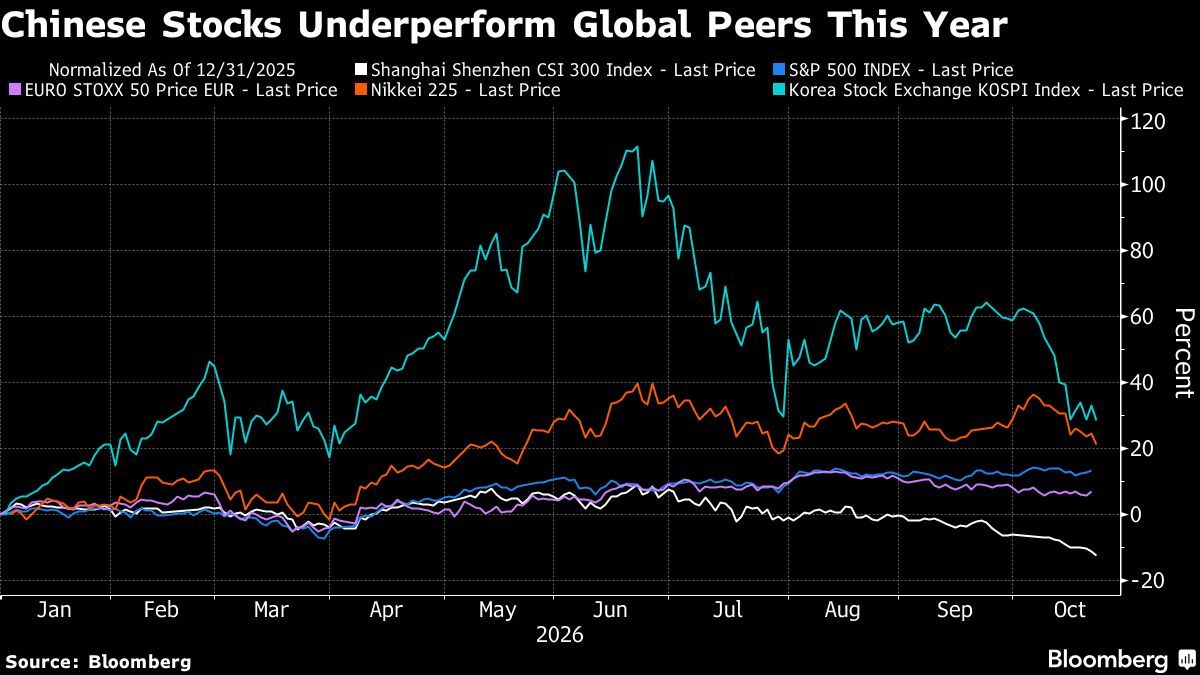
Mixed results from US megacaps are also casting doubts on the durability of the AI rally as investors grow more discerning over valuations amid rising borrowing costs. In China, early optimism over technological breakthroughs and strong state support drove valuations to lofty levels, leaving the sector more vulnerable as sentiment turns.
The Hang Seng Tech Index slumped as much 5.3% on Thursday, the biggest intraday drop since July 17, as regulatory and business challenges facing China’s e-commerce industry weighed on tech giants including Alibaba Group Holding Ltd. A gauge of major Chinese companies listed in Hong Kong dropped as much as 3.5%.
“Although Chinese tech trades at a significant discount to its global peers, weak earnings growth and potential earnings dilution mean the shares could stay rangebound or drift lower without a meaningful catalyst,” said Jeremy Tan, the chief executive officer of Tiger Fund Management in Singapore.
Authorities have moved to curb selling pressure and stabilise its equity market, though analysts said state-backed buying alone may not be enough to enable a sustained recovery. Persistently weak sentiment may blunt the impact of the purchases.
A similar challenge emerged in 2024, when sustained buying through exchange-traded funds (ETFs) cushioned stocks through the summer, but failed to deliver a lasting turnaround until broader policy measures lifted sentiment in September.
Turnover in a basket of nine ETFs known to be traded by the national team reached 52 billion yuan (US$7.79 billion or RM31.78 billion) as of 2.45pm Local time, the most since the 62.8 billion yuan on Oct 15.
“With no global equities rebound to rely on, the national team might need to buy more and do so for longer than in its two most recent rescues, during the April 2025 tariff shock and the July 2026 technology sell-off,” Bloomberg Intelligence analysts including Rebecca Sin wrote in a note.
The outstanding amount of margin trades — or bets funded by borrowed cash — has dropped to a level last seen in late 2025, underscoring waning risk appetite. The daily turnover in China’s onshore stocks has been hovering around the lowest level in about 15 months.
“Investor sentiment remains very poor for China’s onshore and offshore markets, and without new policy or tech catalysts, this kind of volatile, directionless environment may persist into early 2027,” said Homin Lee, a senior macro strategist at Lombard Odier in Singapore.
Uploaded by Tham Yek Lee