

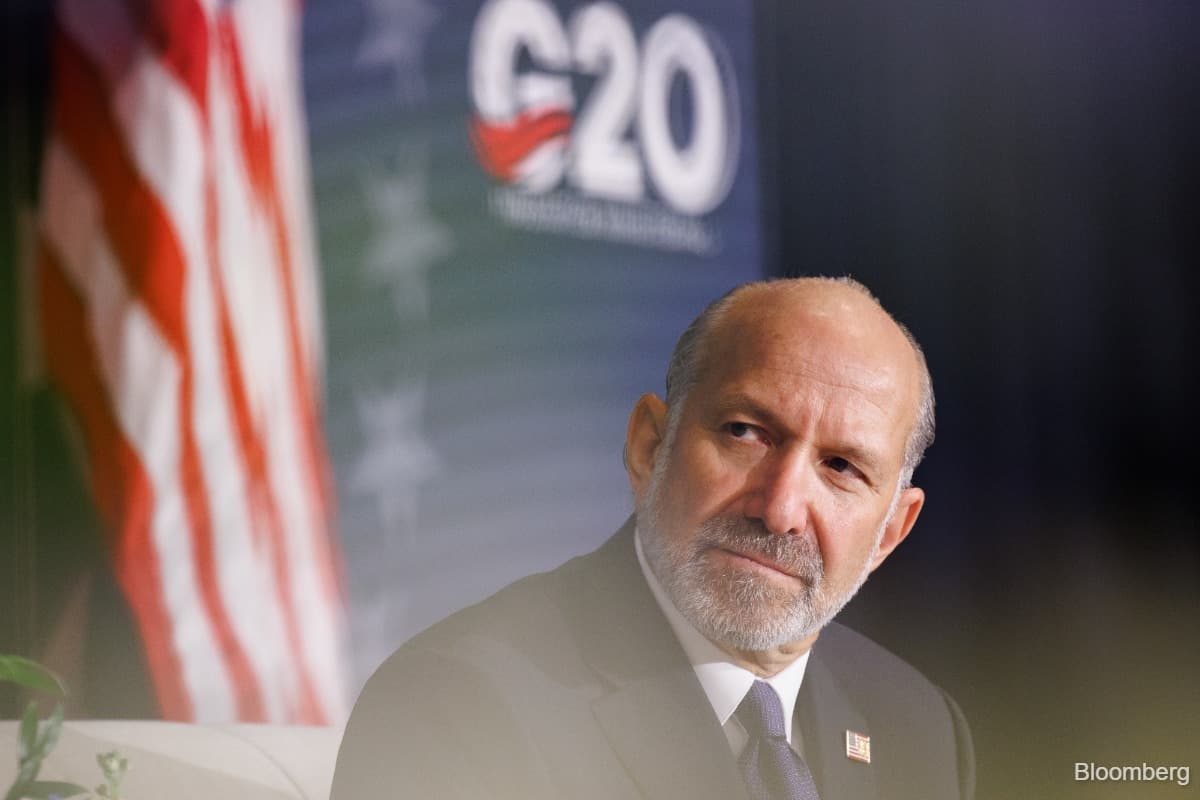
Talks have cooled off in recent days after US officials including Commerce Secretary Howard Lutnick took issue with Mexican officials’ demands for reduced tariffs on metals, according to two of the people, who asked not to be identified discussing private deliberations.
Lutnick has sought to exert more influence in the talks and broader trade policy after taking a back seat to US Trade Representative Jamieson Greer, whose office earlier spearheaded the negotiations, according to the people. Lutnick met virtually with Mexico’s President Claudia Sheinbaum on Sept 9.
The White House and Commerce Departments did not respond to requests for comment.
Mexican officials had earlier expressed hope that a deal was within the negotiators’ grasp. One sticking point is around lowering tariffs on derivative metals products. Duties on downstream products made from steel and aluminum have amassed to cover a substantial part of Mexico’s economy, and Mexican leaders have said they did not want a deal without relief on that.
Talks between the two countries stalled after a counter-proposal from Lutnick failed to address Mexican concerns, the people said. Now, US officials have grown comfortable with the idea of kicking a potential deal down the road, well after the Nov 3 midterm elections.
“We’re a little bit stuck on the details,” Roberto Lazzeri, Mexico’s ambassador to the US and one of several officials who have participated in US trade negotiations, said Monday on a panel in Miami. The Wall Street Journal first reported the impasse in talks.
“I think the sticking point is the 232 tariffs,” Lazzeri said, referring to the duties imposed by the Trump administration under Section 232 of the Trade Act of 1974, which include a 50% import tax on steel and aluminum, and a 25% import tax on for non-US content on USMCA-compliant cars.
Mexico’s Economy Minister Marcelo Ebrard, who is Mexico’s lead negotiator, rejected the suggestion that Lutnick was blocking a potential deal.
“In my last conversation with him, I didn’t get the impression that he was opposed to reducing those tariffs, at least as far as I know,” Ebrard told reporters late last week.
A framework agreement between the US and Mexico would provide stability and certainty to business leaders who are stalling investment decisions amid rolling negotiations over renewing the US-Mexico-Canada trade deal. Another point of contention has been industry-specific tariff rates, which Mexican officials have argued give other countries, including Japan and Korea, an upper hand.
Mexico’s economy is heavily dependent on trade with the US, with more than 80% of its exports going to its northern neighboru. The government has sought a deal that would see US tariffs on light vehicles go to 15% from the current 25%, according to other officials, who also asked not to be identified. The proposed agreement also included a reduction in the 50% tariffs on steel and aluminum, although the two sides had not settled on a new rate.
The disagreements echo those that caused the breakdown of US and Canada talks in August, which was largely driven by Lutnick’s opposition to proposed concessions on industry specific, Section 232 tariffs — which fall under the Commerce Department’s jurisdiction.
On Tuesday, Sheinbaum struck a positive note about reaching “the best possible” trade deal.
“We haven’t reached a final agreement yet, but we’ve come quite a long way,” she said at a daily press briefing.
Uploaded by Liza Shireen Koshy