

This article first appeared in The Edge Malaysia Weekly on October 19, 2026 - October 25, 2026
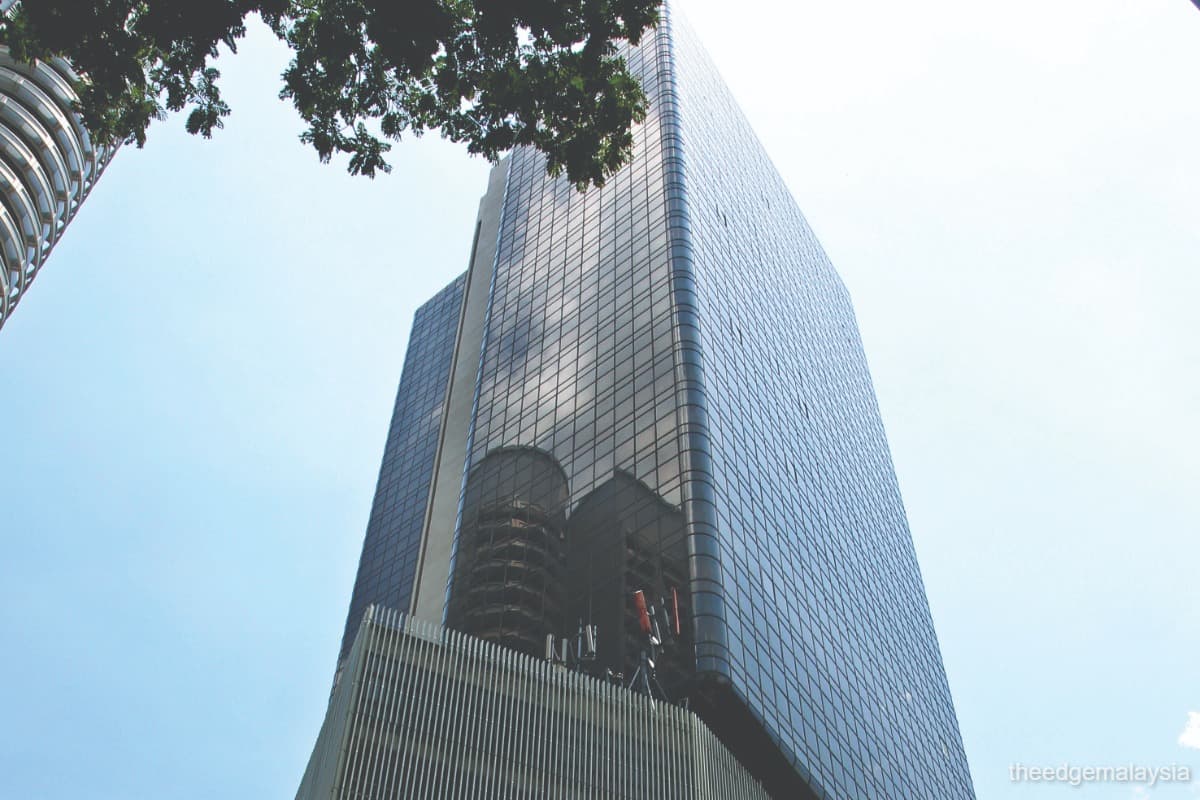
INTEREST in Kuala Lumpur’s city centre is growing, and the latest deal is the RM132 million sale of Menara Haw Par along Jalan Sultan Ismail. Singapore Exchange-listed Haw Par Corp Ltd announced on Oct 2 that the group had sold its subsidiary Haw Par Land (Malaysia) Sdn Bhd (HPL) to JD Hotels (Jalan S Ismail) Sdn Bhd. HPL owns two pieces of land (Lots 1226 and 242), which include the 32-storey Menara Haw Par.
This is not the first purchase by JD. The Edge reported back in December 2020 that JD Hospitality Sdn Bhd had acquired the 21-storey Menara MIDF in Jalan Raja Chulan from Permodalan Nasional Bhd (PNB) for RM140 million, or RM875 psf. The building has since been converted into a RM200 million, 23-storey integrated hospitality and healthcare development, YOTEL & Medical Centre. Set to feature 290 hotel rooms, the YOTEL component is targeted for completion this December, while the medical centre is scheduled for 2027.
A recent company search shows that JD Hospitality is fully owned by Singapore’s MES Group Holdings Pte Ltd. Both JD Hospitality and JD Hotels (Jalan S Ismail) share common directors — Abdul Rawoof Shah V M Kader, Fathimunnisa Mohamed Abdul Jaleel, Mohamed Abdul Jaleel Muthumaricar Shaik Mohamed and Shaik Mohamed Mohamed Abdul Jaleel.
Industry players say the Golden Triangle area remains the Malaysian capital’s most resilient address, but that the buyer profile is changing. One industry observer notes that investors are no longer just buying offices to lease. They are acquiring older buildings for hotel conversion and land for branded and mixed-use projects.
“Office space is plentiful, but freehold, well-located sites near KLCC and Bukit Bintang are scarce, and when they come up, serious buyers move fast and pay a premium,” he says.
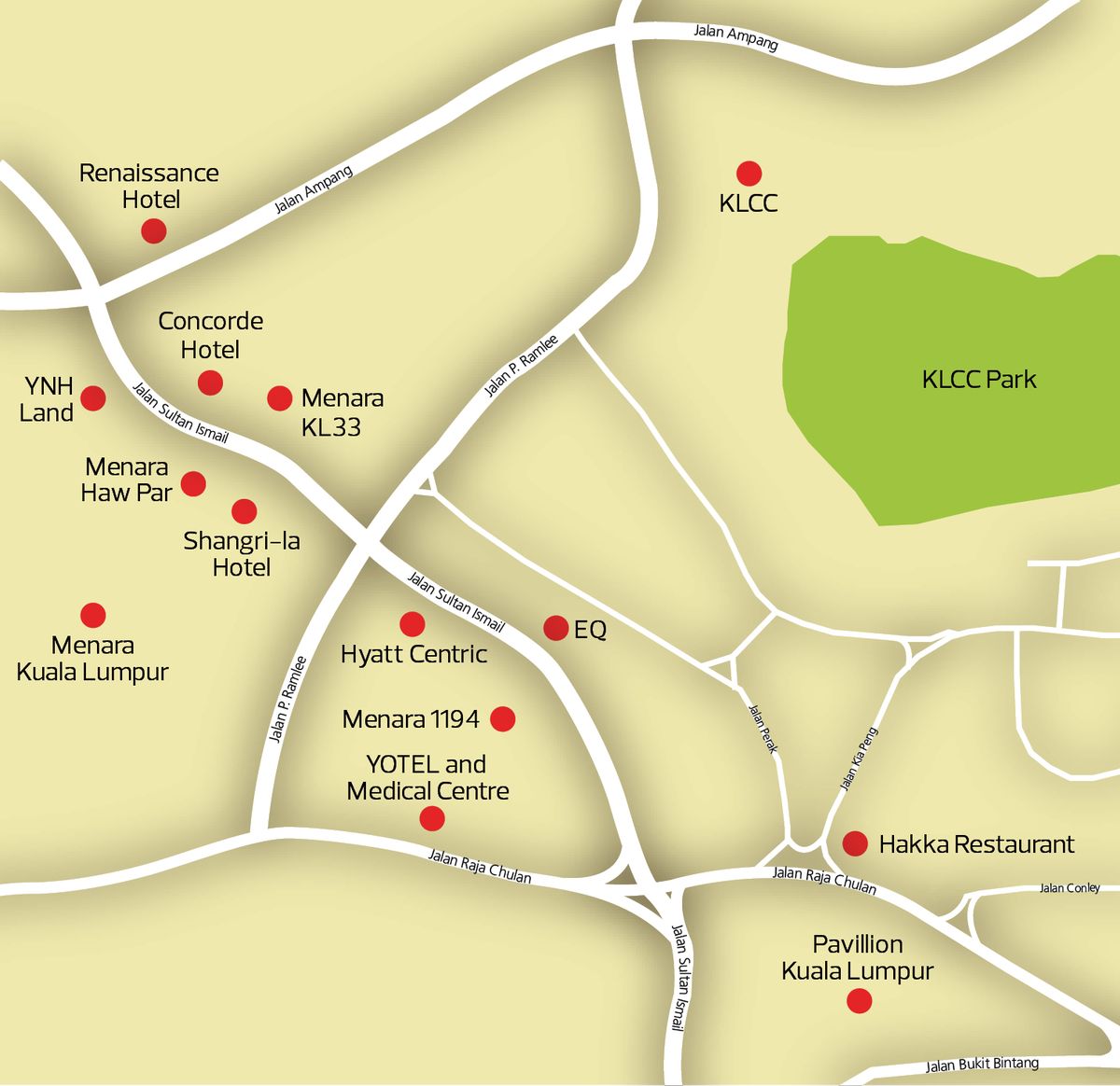
“Hospitality is a major driver. Conrad, Hyatt Centric and YOTEL are all making their entry or debut within a few hundred metres of each other, with Wisma KFC becoming Hyatt Centric, the former Menara MIDF becoming Malaysia’s first YOTEL, and the former Malaysia Airlines headquarters set to open as the country’s first Conrad,” the observer tells The Edge, adding that more owners of ageing towers along Jalan Sultan Ismail and Jalan Raja Chulan are expected to see hotel conversion as a way to unlock value.
The former MAS HQ, or what is now known as Lot 1194, is owned by PNB. The Edge reported in June 2025 that the mixed-use development comprising a 50-storey, 481-room luxury hotel and a redeveloped 35-storey office tower was on the market for about RM1.4 billion.
Another industry observer says that Menara KL33 along Jalan Sultan Ismail, which was completed in 2001, has been on the market with an indicative price of about RM200 million.
The Hakka Restaurant land deal reported in March has also gained much interest with an unconfirmed record price of RM5,000 psf.
Selective market
Raine & Horne International Zaki + Partners CEO Erman Hardy Murzamil says there has been quite a bit of activity in the KL city centre recently, particularly within the Golden Triangle. “However, the market is not seeing a uniform recovery. Interest is increasingly selective and asset-specific, with buyers looking beyond location to consider the age and condition of the building, occupancy, tenure, capital expenditure requirements and longer-term potential.”
He adds that there are still some sizeable office assets being offered for sale.
“The Icon along Jalan Tun Razak is one example, while a refurbished 25-storey freehold office tower along Jalan Sultan Ismail is also currently being marketed. These present opportunities to acquire existing buildings in established locations, although pricing must reflect the building’s condition and any further capital expenditure required.
“At the same time, we are seeing some significant transactions. The recently announced RM132 million sale of Menara Haw Par is particularly relevant, given its location directly on Jalan Sultan Ismail. The proposed RM331 million disposal of Menara AmBank is another sizeable office deal within the broader city-centre market. Although the circumstances behind each transaction differ, they demonstrate continued interest in established office assets in central Kuala Lumpur.”
Erman adds that any repurposing should be assessed on a case-by-case basis against demand and regulatory requirements.
Interest is also moving to land. Erman cites Chin Hin Group Property Bhd’s (KL:CHGP) proposed RM455 million acquisition of the freehold site opposite Concorde Hotel on Jalan Sultan Ismail from YNH Property Bhd (KL:YNHPROP), showing that redevelopment potential is drawing buyers too. There is said to be plans to build a RM3.6 billion mixed-use project including serviced apartments, retail and hotel on the site.
EXSIM Development Sdn Bhd’s EXSIM KL City Centre Sdn Bhd (formerly known as EXSIM KLCC Sdn Bhd) has also partnered UEM Sunrise Bhd (KL:UEMS) to develop its 1.6-acre freehold Angkasa Raya site opposite the PETRONAS Twin Towers. UEM Sunrise acquired the site back in January 2008.
Knight Frank Malaysia senior executive director of land and industrial solutions Allan Sim says recent announcements, including by Eastern & Oriental Bhd (KL:E&O) and Majestic Gen Sdn Bhd, Chin Hin and on the UEM Sunrise-Exsim tie-up, “point to a gradual return of developer interest” in the city centre. A site between KLCC and Bukit Bintang provides access to both districts’ catchments, and with freehold tenure and dual road frontages, he says, it is “a combination that is difficult to replicate”.
In July, property developers Eastern & Oriental and Majestic Gen acquired a parcel of land along Jalan Kia Peng, which includes a 30-storey condominium, for RM190 million with plans to develop a premium residential project.
How has the Tun Razak Exchange (TRX) — a major 70-acre integrated financial and lifestyle district in the heart of the city — affected the office market?
“TRX has undoubtedly changed. Occupiers now have access to newer buildings with better specifications, connectivity and amenities, raising expectations of what a prime office building should offer. This will put pressure on older buildings in the traditional Golden Triangle, particularly those that have not been upgraded for some time,” Erman says.
“However, this does not necessarily mean that demand is simply shifting from the traditional city centre to TRX. TRX can also be viewed as an extension of Kuala Lumpur’s prime commercial area, bringing greater attention and investment into the wider city centre. Jalan Sultan Ismail remains an established commercial address between KLCC and Bukit Bintang, with good public transport connectivity and a number of strategically located freehold properties.”
Over the next few years, he says the key question will be how owners respond to these changing market expectations. For some buildings, refurbishment and upgrading may be sufficient to remain competitive. Others may require more fundamental repositioning, conversion to alternative uses or eventual redevelopment. The decision will depend on the building’s condition, location, investment requirements and the commercial viability of the proposed use. In some cases, the underlying land value may become just as important as the value of the existing building.
Overall, the KL city centre market remains active, but buyers are becoming more discerning, Erman notes. “TRX has raised the benchmark for office space, placing greater pressure on older buildings to demonstrate their competitiveness. At the same time, this presents opportunities for owners and investors who can identify the right assets, unlock their underlying value and reposition them to meet the evolving needs of the market.”
Save by subscribing to us for your print and/or digital copy.
P/S: The Edge is also available on Apple's App Store and Android's Google Play.