

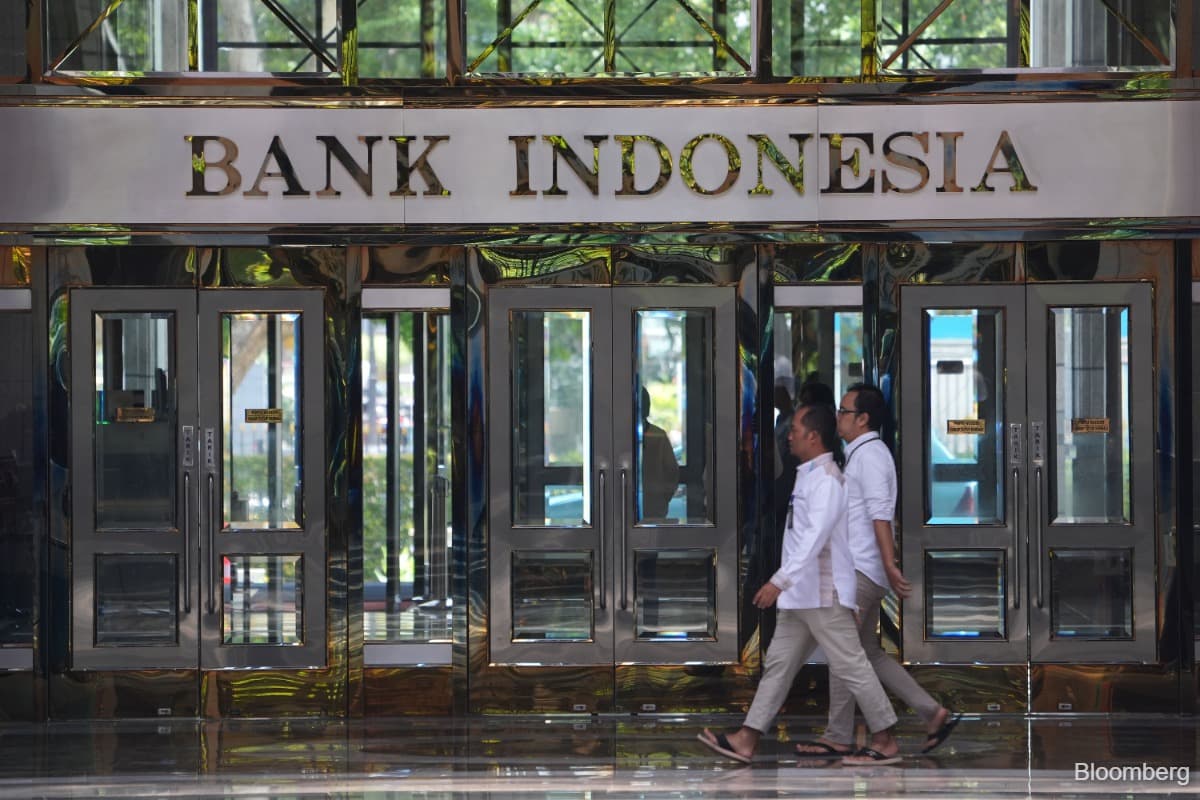
(Oct 20): Bank Indonesia’s reluctance to raise interest rates faces a fresh test on Wednesday, with bets on a hike increasing as the threat of a double downgrade to the nation’s stock market fuels capital outflows and piles pressure on the rupiah.
Several economists, including at Citigroup Inc, HSBC Holdings Plc and Bloomberg Economics, shifted their outlook towards tighter policy after the shock downgrade warning late last week from MSCI Inc, which triggered Indonesia’s worst stock rout in nearly three decades. That selloff spread to bonds and tipped the rupiah past the key threshold of 18,000 per dollar.
As of late Tuesday afternoon, the number of economists expecting a hike rose to 19, an even split out of the total 38 responses. Seventeen of those are penciling in a quarter-point move and two call for an outsized half-point increase. The benchmark BI-Rate has been at 5.75% since the last increase in June.
The turmoil presents a fresh challenge for governor Destry Damayanti, who has favoured currency intervention, hedging incentives and other targeted measures over rate increases, which would weigh more broadly on Southeast Asia’s largest economy.
“BI may be forced to hike rates amid sudden and rapid depreciation of the rupiah triggered by the MSCI proposal,” said United Overseas Bank Ltd economist Enrico Tanuwidjaja, who doesn’t rule out a “more aggressive” 50-basis point increase.
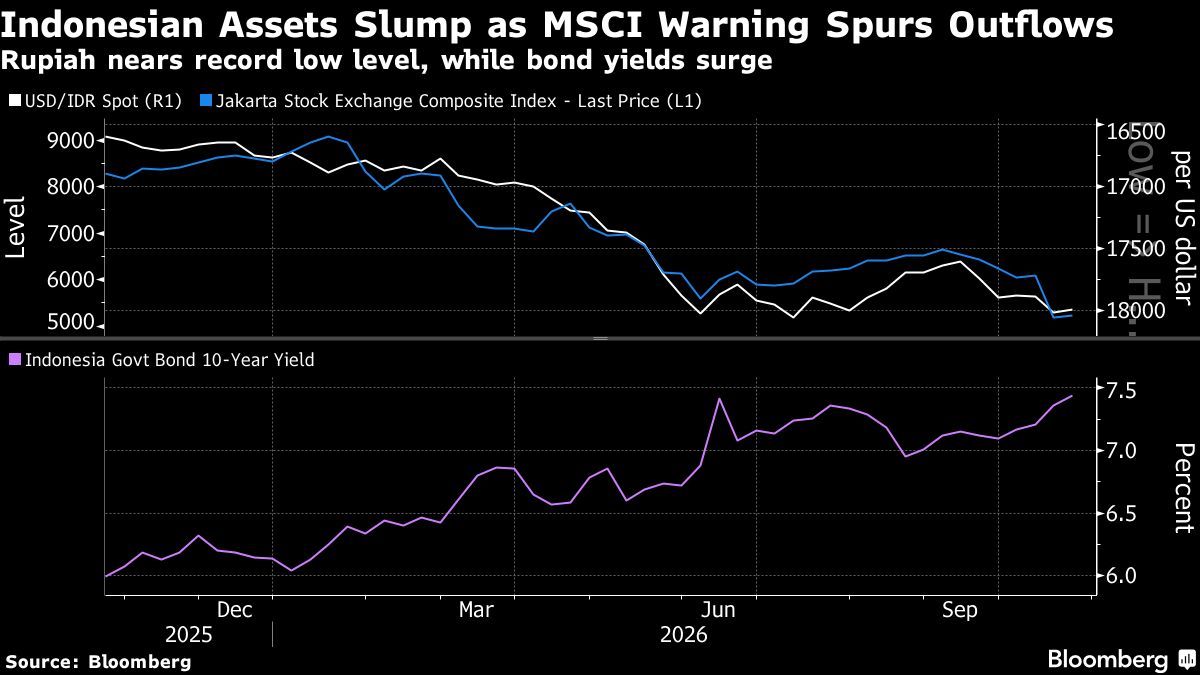
MSCI warned it may reclassify Indonesia from emerging market to standalone status, bypassing the frontier-market category — a much more severe step than officials and analysts had expected. With a final decision not due until June, it’s also raised fears of prolonged outflows.
MSCI’s warning adds to currency headwinds, such as a stronger dollar, elevated US yields and higher oil prices, prompting some economists to bring forward rate-hike calls.
Indonesia’s central bank has a track record of early and aggressive action during periods of severe rupiah instability, delivering 100 basis points of rate hikes earlier this year, including a half-point move in May.
A weaker rupiah would also fuel imported inflation. Food prices already pushed consumer prices to a three-month high in September, strengthening the case for a preemptive hike.
A hike this week would help preserve policy credibility, according to CIMB Bhd economists Joel Cheung, Lim Yee Ping and Michelle Chia. They expect another increase in November, adding that BI’s capacity to absorb further shocks through currency intervention is also narrowing as its dollar reserves fall.
Analysts will be watching BI’s plans to contain risks should the equity selloff do more damage to broader Indonesian assets.
Goldman Sachs Group Inc estimates an MSCI reclassification could trigger US$5.6 billion (RM22.8 billion) in passive equity outflows, with another US$2.7 billion at risk if index provider FTSE Russell takes similar action. Foreign investors have already withdrawn more than US$5 billion from Indonesian stocks this year.
While an equity-index downgrade would not directly trigger bond selling, a broader repricing of Indonesian risk could raise the premium investors demand to hold government debt, said PT Bank Danamon Indonesia economist Irman Faiz.
The central bank could raise yields on its short-term securities, called SRBI, to safeguard inflows, said DBS Bank Ltd’s Radhika Rao. It could also step in to stabilise the bond market and curb a sharp rise in borrowing costs.
A hike this week, though, wouldn’t necessarily mark the start of a deep tightening cycle, Rao said. If the rupiah stabilises at weaker levels and higher bond yields attract rate-sensitive investors, the turbulence might be contained to equity markets.
Indonesian stocks rebounded on Tuesday after authorities pledged measures to stave off a potential downgrade. Questions remain, though, over whether the measures go far enough to address MSCI’s concerns over opaque shareholding structures and coordinated trading.
Without credible reforms, Indonesian assets risk carrying a lasting premium over emerging-market peers, UOB said.
“Markets are increasingly betting on BI reverting to the tried-and-true policy of offering higher yields to lure foreign investors back,” economists at PT Bank Central Asia wrote in a note.
“The question, however, is whether BI will remain reactive in assessing the need for further rate hikes or become more anticipatory in adjusting its policy mix.”
Uploaded by Evelyn Chan