

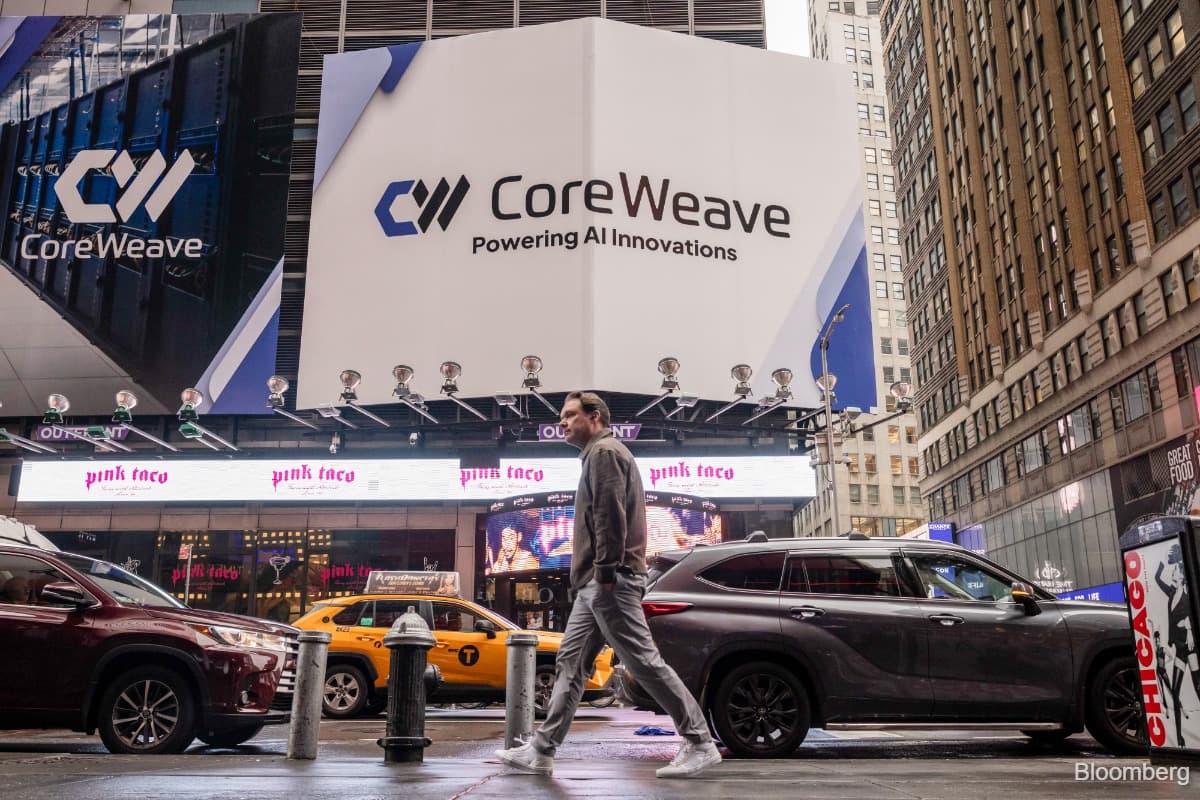
(Oct 20): Most global banks have limited exposure to CoreWeave, JPMorgan estimated on Tuesday, after the Nvidia-backed cloud company's stocks and bonds slumped last week on investor worries over debt financing.
AI infrastructure spending has been rattling investors globally as tech companies are on a fundraising spree from private-credit investors, banks and bond markets to rapidly expand, while questions over returns on these investments swell.
While large US investment banks along with Japan's MUFG could potentially have exposure of about US$1 billion to US$3 billion (RM4.1 billion to RM12.2 billion) in CoreWeave, most European and Asian players have less than US$500 million, the Wall Street brokerage said.
Much of this is through delayed draw term loans, JPMorgan said, which are largely held through special-purpose vehicles, with capital released as projects meet milestones.
"From the perspective of financing banks, we view bank exposures to CoreWeave as well managed and very well secured," JPMorgan analysts led by Kian Abouhossein said in a note.
The brokerage said estimates are based on "simplified assumptions" because banks provide limited disclosure on their exposure to the AI investment cycle.
JPMorgan has an "overweight" rating on CoreWeave with a target price of US$125 for 2027-end.
The cloud company has about US$24 billion of committed delayed draw term loans, including US$15 billion drawn and US$9 billion undrawn, according to the brokerage.
CoreWeave, which provides high-performance computing infrastructure for AI, has secured tens of billions of dollars in contracts with major technology companies. The company has about US$50 billion in debt.
Last week, the yield on CoreWeave's notes due 2031 touched almost 16%, while the cost of insuring against the company's debt rose to around 1,000 basis points.
The key risk facing banks is a mismatch between upfront spending on AI infrastructure and revenue received over time, JPMorgan said, adding that it expects CoreWeave's free cash flow to remain negative until 2030.
Uploaded by Magessan Varatharaja