

This article first appeared in The Edge Malaysia Weekly on August 31, 2026 - September 6, 2026
Genetic modification in crops and dairy cattle to combat climate volatility
Rising ambient temperatures, erratic rainfall patterns, prolonged dry spells and severe flash floods — all increasingly observable impacts of climate change — are actively disrupting crop planting cycles, degrading soil and straining animal welfare across the country.
As these volatile climate conditions reshape Malaysia’s agricultural norms, relying solely on conventional farming practices or post-disaster financial aid is no longer viable to defend food security.
“Climate resilience is highly biological in the sense that you can build the most advanced barn in the world [that] costs a lot of money and, still, a temperate animal like a Holstein cow will struggle with the Malaysian hot temperature and humidity,” says Farm Fresh Bhd (KL:FFB) chief financial officer Mohd Khairul Mat Hassan.
“Conversely, a hardy breed in a poor environment will survive but won’t produce the milk volumes we need to be commercially viable.”
In response, researchers and industry players are equipping livestock with modified genes to withstand heat stress. The same is done for crops: studies are being conducted at the Malaysian Agricultural Research and Development Institute (Mardi) to embed drought and flood resilience traits into staple crops.
Mardi director general Datuk Dr Mohamad Zabawi Abdul Ghani says the development of this “stacked” variety that combines both genes will be the ultimate frontier for crop scientists. This would mean that a single rice plant seed would be capable of navigating both severe drought and prolonged flooding within the same season.
“This, however, remains heavily dependent on the scale of research grants and budget allocations provided by the government,” he says.
Funding is one of the many challenges the industry is facing, on top of the need for decisive policy alignment and seamless commercial adoption across the entire food value chain, both of which will take time to put in place.
Heat stress threatens commercial viability of dairy cattle
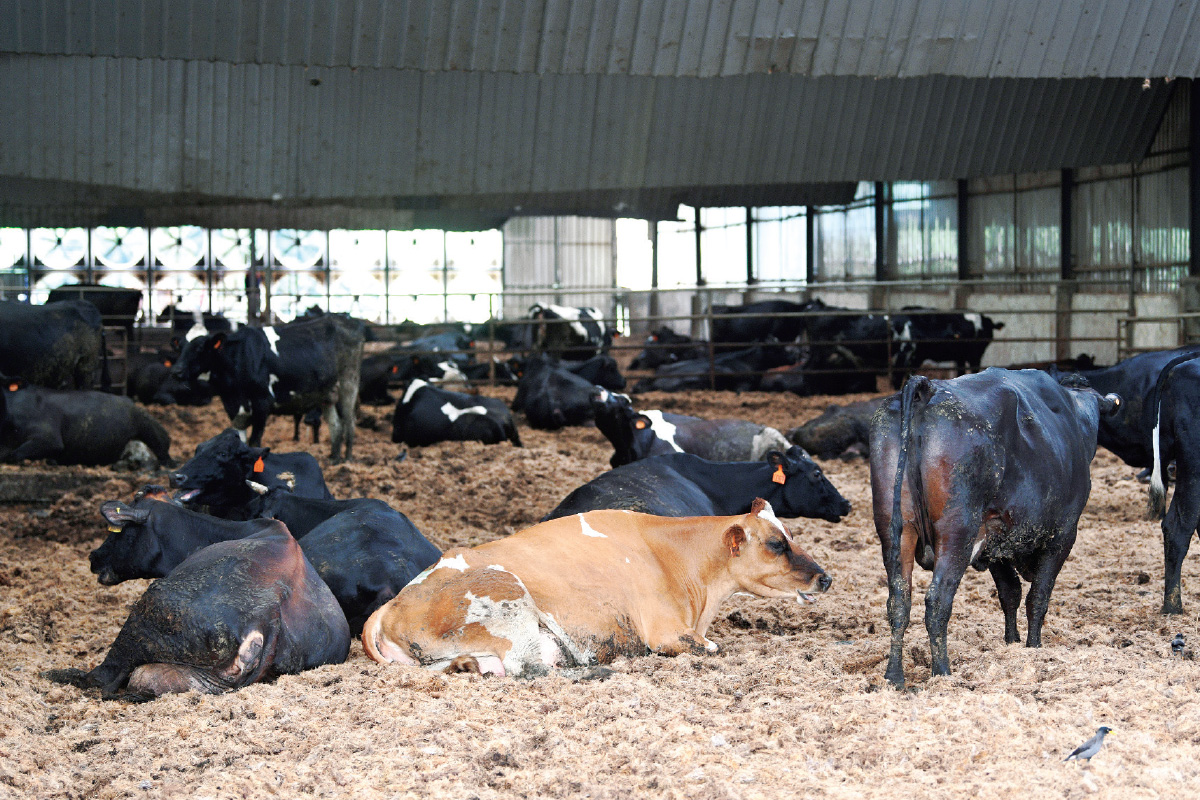
In dairy and cattle farming, high heat and humidity cause operational bottlenecks as dairy cows are sensitive to heat stress. When temperatures rise beyond their thermoneutral zone, cattle expend significant metabolic energy panting and sweating to regulate their core temperature. This then causes feed intake to drop, resulting in poor body condition, lower fertility rates and reduced overall milk yield.
From a carbon accounting perspective, heat stress also inflates emission intensity.
“When you have a dairy cow whose breed is not able to tolerate tropical climates, under heat stress conditions, they eat less,” says Dr Tee Tuan Poy, senior lecturer at the Department of Animal Science at Universiti Putra Malaysia (UPM).
“While they digest less and absolute methane drops slightly, their milk production drops significantly. In terms of emission intensity — or carbon footprint, calculated as kilogrammes of methane per kilogramme of milk produced — the footprint actually increases mathematically, because you are producing less milk from that animal.”
The commercial consequences of this metabolic diversion are immediate and compounding. Cattle rapidly lose structural weight and their overall immune systems are weakened, elevating mortality risks.
“Elevated internal temperatures cause a significant drop in conception rates. If a cow cannot successfully achieve pregnancy, it transitions into a non-productive asset, threatening the long-term economic viability of the entire farm operation,” says Tee.
At Mardi, efforts are underway to introduce foreign genetic traits into local livestock populations. Mardi has been importing cattle semen containing targeted genetic markers, such as the “slick gene”, which is a natural genetic mutation in cattle that results in a very short, sleek hair coat.
This gene significantly improves their natural ability to dissipate heat and withstand tropical humidity while enhancing disease resistance. Mardi is also crossbreeding imported Jersey and Holstein genetic lines from Australia with local cows to establish heat-tolerant, high-performing herds.
Farm Fresh relies on the Australian Friesian Sahiwal (AFS), a specialised crossbreed developed by the Queensland government in the 1960s by crossing Sahiwal (a hardy dairy breed from Pakistan) with Australian Holstein-Friesian cattle.
To insulate its operations from these systemic climate risks, Farm Fresh anchors its tropical dairy strategy on the AFS breed, which it believes to be the premier solution for tropical dairy farming.
“While Farm Fresh did not develop this breed, we have strategically introduced it across our pasture network to maximise its benefits,” says Mohd Khairul.
“The resulting AFS hybrid delivers an optimal commercial balance: it maintains an excellent milk yield while exhibiting high natural resistance to intense tropical heat and endemic parasites such as tick fever.”
By deploying the AFS breed, Farm Fresh has been able to scale its local production. Combined with improved animal husbandry skills and barn management, Farm Fresh has raised its average yield per cow per day from 15 litres three to four years ago to between 19 and 20 litres on its Malaysian farms.
Feed, manure and heat management critical to reduce emissions
Addressing livestock emissions requires looking beyond superficial fixes to understand the dual challenges of rumen fermentation and manure management.
“When we talk about greenhouse gas emissions from livestock, the major source comes from ruminant animals,” says UPM’s Tee.
She explains that dairy cattle possess a specialised digestive system featuring the rumen, which functions similarly to an anaerobic digester.
“Under non-oxygen conditions, the feed ferments inside the rumen, degraded by the microbes, producing methane gas that is primarily released through eructation — burping or belching — from the animal’s mouth,” she says.
In Malaysia, research gathering baseline inventory data estimates that a single breeding dairy cow generates an emission factor of roughly 86 to 88kg of enteric methane per year. Multiply that across commercial herds numbering several thousand animals and the atmospheric impact becomes substantial.
Addressing this relies heavily on tackling heat stress, a physical climate risk that creates an unexpected carbon footprint paradox for local dairy producers.
When tropical temperatures surge beyond a cow’s optimal core body temperature of 38°C to 39°C, the animal expends significant metabolic energy sweating and panting to cool down. As a result, feed intake declines and, subsequently, milk yield drops significantly.
Because emission intensity is calculated as kilogrammes of methane emitted per kilogramme of milk produced, a severe drop in milk yield shifts the mathematical ratio unfavourably, driving up the overall carbon footprint per glass of milk.
To counter heat stress and maintain yield efficiency, commercial operators are turning to targeted crossbreeding and modified housing.
On top of that, commercial producers are investing in closed-house systems equipped with ventilation, water misters and climate controls to lower ambient temperatures for high-productivity cows.
However, Tee notes that dietary formulation remains an immediate lever for reducing enteric methane. In the rumen, microbial digestion breaks down feed into volatile fatty acids — primarily acetate, butyrate and propionate.
High-fibre diets consisting strictly of poor-quality tropical forage lead to higher acetate and butyrate production, releasing excess free hydrogen that methanogenic microbes turn into methane gas.
Tropical forage grows in tropical climate, which include grass (e.g. Guiness grass) and legumes (e.g. Pinto peanut), which grow in warm weather.
Commonly, these tropical forages have lower nutrition values and consist of high cellulose fibre (e.g. lignin).
Conversely, feeding animals balanced diets containing 10% to 30% concentrate feeds like corn or palm kernel cake encourages propionate production, which acts as a hydrogen sink and suppresses methane generation per unit of feed.
Yet enteric fermentation represents only one side of the livestock emission equation. Tee stresses that manure management is a massive, often overlooked challenge that accounts for roughly half of a farm’s overall emission profile.
She explains that an average 500kg dairy cow produces 3% to 5% of its body weight in solid manure and urine every single day, translating into roughly 25kg per head. A commercial farm housing 4,000 head of cattle generates approximately 100 tonnes of manure daily.
Left untreated, accumulated manure decomposes anaerobically and leaches into the environment, emitting not only methane but also nitrous oxide — a potent greenhouse gas with a global warming potential nearly 300 times greater than carbon dioxide over a 100-year timescale.
On top of that, intensive feedlot operations require roughly 80 litres of water per cow daily just for washing and sanitation, creating significant water footprint concerns during drought periods.
To convert this environmental liability into an opportunity, Tee advocates for circular economy principles, such as integrating biogas digesters and organic composting systems.
Capturing methane from manure through biogas systems generates renewable energy while composting allows farmers to recycle vital organic nutrients back into pasture soils, replacing expensive imported mineral fertilisers.
Developing climate-smart rice varieties
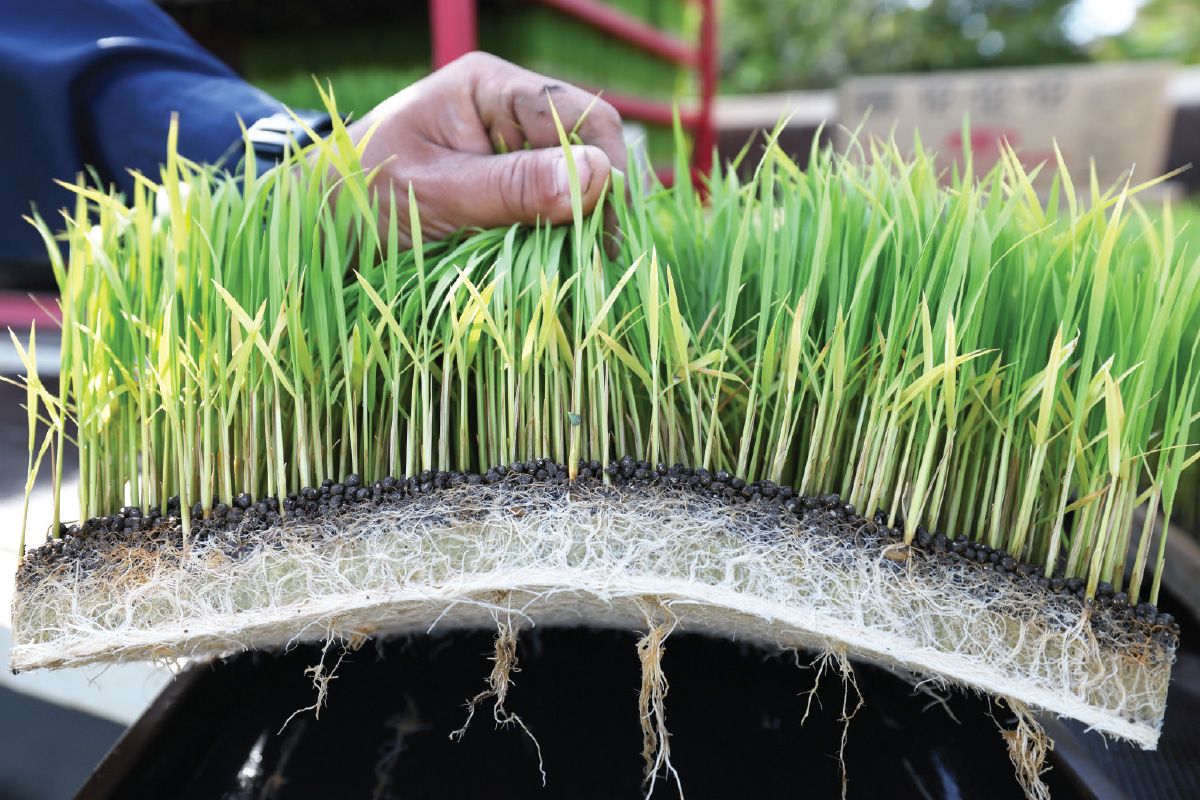
Crop scientists at Mardi are focused on genetic solutions for food security, particularly rice. Paddy fields are highly susceptible to extreme climate anomalies, from erratic dry spells that cause soil moisture stress to flash floods that completely submerge crops.
One example is the MRIA 1 variety, which was developed as an aerobic rice variety, mainly for cultivation under non-flooded conditions with lower water requirements. Its main contribution was to support rice production using a more water-efficient cultivation system.
Since then, Mardi’s breeding focus has expanded towards the broader development of climate-resilient rice, especially for drought, irregular rainfall and extreme weather conditions.
“For heat-stress tolerance, the work is still at an early stage. Mardi is currently establishing proper screening facilities to support future breeding and selection, particularly for traits related to pollen fertility and grain filling under high temperature,” says Mohamad Zabawi.
Rather than calling them “super-varieties”, Mardi describes these materials as targeted, climate-resilient varieties.
For drought stress, Mardi is currently developing lines such as MR 380, MR 381 and MR 382, which are now under local verification trials to validate their field performance, adaptability and yield stability before potential release.
Most modern rice varieties are generally sensitive to high temperature, especially during flowering or anthesis (when the flower is open and ready for pollination).
When the temperature exceeds around 35°C to 38°C, pollen viability and anther dehiscence can be affected. This can cause spikelet sterility (when flowers fail to produce viable grains), poor grain filling, more empty grains and ultimately yield loss, says Mohamad Zabawi.
There is a common perception among farmers that climate-resilient varieties come at the expense of yield; however, this is not necessarily true. Mohamad Zabawi says the main objective of Mardi’s climate-resilience breeding programme is to combine stress resilience with competitive yield performance so that farmers can maintain productivity under increasingly challenging environments.
“For drought stress, Mardi has made stronger progress. The popular variety MR 297 has moderate drought tolerance and can maintain up to 68% of its original yield under moderate drought conditions, making it suitable for areas at risk of water shortage or drought,” he says.
“In addition, MR 382 has shown promising performance under mild drought conditions, with an average yield of about four tonnes per hectare. Its early maturity also provides an advantage by helping the crop escape prolonged dry periods with limited rainfall.”
To combat flash flooding, Mardi is integrating the Sub-1 gene into local elite varieties, which allows rice plants to survive complete submergence under floodwaters for up to 14 days. Typically, rice plants perish when completely submerged for more than a few days.
To address rising ambient air temperatures during critical growth phases, Mardi is also collaborating with international institutions, including the Japan International Research Center for Agricultural Sciences, to develop heat-tolerant rice varieties focused on the early anthesis stage.
“Standard rice varieties typically undergo anthesis between 11am and 12pm, which is when daily temperatures are at their peak. Under extreme heat, pollen viability drops sharply, leading to spikelet sterility and severe yield losses,” Mohamad Zabawi explains.
“By breeding varieties that undergo anthesis earlier in the morning — around 9am — pollination occurs before extreme heat sets in, preserving pollen viability and securing crop yields despite surging daytime temperatures.”
The long-term commercialisation timeline requires a multi-year validation process, with Mardi anticipating that the Sub-1 integrated varieties will be ready for formal introduction to seed producers and farming cooperatives within the next two to three years.
Need for better baseline data and policy support
Despite the significant advancements in agricultural genomics, bridging the gap between laboratory success and commercial adoption remains a challenge.
Mohamad Zabawi points out that validating genetic traits under real-world conditions presents inherent trial bottlenecks.
While drought-tolerant or submergence-tolerant traits can be simulated in glasshouse environments, verifying large-scale performance requires actual field stress events. If a natural drought or flood does not occur during field evaluation seasons, empirical verification is delayed.
Furthermore, convincing local farmers to switch to new climate-smart genetic varieties requires overcoming deep-seated risk aversion.
“Smallholders prioritise immediate, proven crop yields and established disease resistance over long-term climate adaptation traits,” he says.
“When Mardi released the MR 303 variety in 2018, farmer acceptance hovered at a mere 5% because local growers remained reluctant to deviate from familiar cropping practices.”
Time is another critical constraint. Multiplying certified seeds from initial breeding lines to commercial quantities requires at least three full cultivation seasons, which takes between 12 and 18 months.
Mohamad Zabawi emphasises that technology deployment must be reinforced by clear, top-down policy directives from the ministry and institutional coordination across government agencies.
“Multi-year predictive planning is essential so that seed multiplication begins years before forecast climate events, such as 10-year extreme drought cycles,” he says.
Financing scientific research and development is equally imperative. UPM’s Tee stresses that expanding genetic research and building national greenhouse gas emissions, genomic and environmental datasets require substantial, sustained public investment.
“Perhaps the government should look into this and provide more funding to support the researchers from the university and research institutions. We need more funding to allow us to collect more data,” she says.
“Without deep baseline data and coordinated policy support, scaling these biological and waste management innovations to protect Malaysia’s food security will remain an uphill task.”
Looking to the future, Tee adds that the integration of advanced technologies like metagenomics, artificial intelligence and radio frequency identification tracking promises to transform livestock management.
Save by subscribing to us for your print and/or digital copy.
P/S: The Edge is also available on Apple's App Store and Android's Google Play.