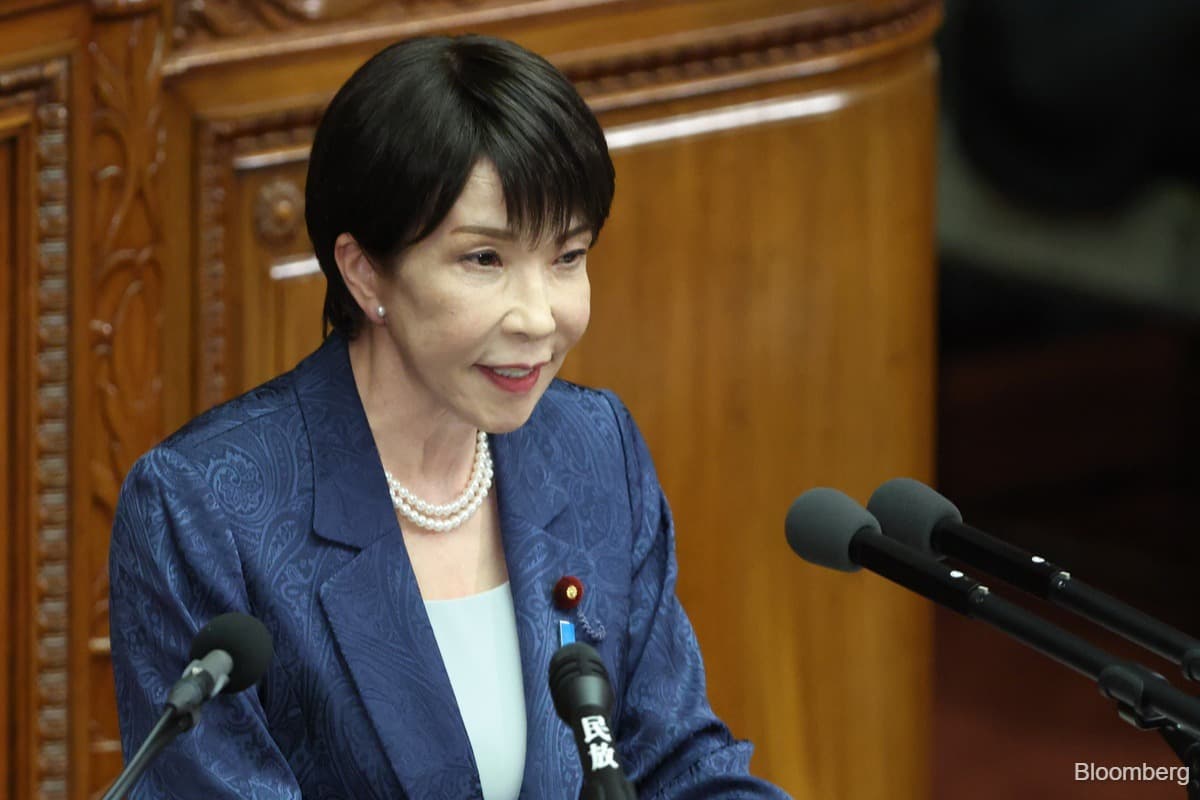
(Oct 20): Japanese Prime Minister Sanae Takaichi reiterated that she won’t rely on special deficit-covering bonds to fund a sales tax cut on food after her earlier remarks sparked speculation that she was changing her stance.
In a post on X late Monday, Takaichi wrote that she isn’t ruling out issuing government bonds to fund the national budget as a whole but she won’t rely on special deficit-covering bonds to cover a shortfall in income from the temporary sales tax cut.
The government’s position “remains unchanged,” she wrote. Takaichi said she was clarifying her position after some media reports appeared to misrepresent remarks she made earlier Monday in parliament.
At a budget committee meeting of the upper house, Takaichi said she wouldn’t rule out issuing government bonds when asked about how the sales tax cut would be funded.
“Regarding funding for the consumption tax rate reduction on food and beverages, within the broader framework of budget formulation reform, we will carefully examine the fiscal scale that would also enable us to reduce the debt-to-GDP ratio while closely monitoring tax revenue trends and proceeding with a review of both expenditures and revenues,” Takaichi said.
“We will appropriately control the total annual issuance of government bonds through both the initial budget and supplementary budgets, just as we did last fiscal year. This does not mean we are ruling out the issuance of government bonds,” she said.
The market has been paying close attention to how Takaichi would fund the sales tax cut, which is expected to cost ¥5 trillion (US$31.5 billion) per year, without further straining the nation’s debt burden. The temporary tax cut is expected to start in April and last for two years.
Uploaded by Liza Shireen Koshy