

This article first appeared in The Edge Malaysia Weekly on October 19, 2026 - October 25, 2026
Malaysia’s plan to raise the issue of transboundary haze at next month’s Asean foreign ministers’ meeting in Manila is a step in the right direction. Foreign Minister Datuk Seri Mohamad Hasan said the issue requires special attention because it is not covered by existing Asean mechanisms for natural disasters.
But while regional cooperation is necessary, Malaysia should also consider what it can do on its own to address a problem that has plagued the country — and other parts of the region — for years.
A legal framework specifically designed to tackle transboundary haze should be part of that conversation. Singapore offers one example through its Transboundary Haze Pollution Act, which allows action against entities whose conduct outside the country causes or contributes to haze pollution within its borders. Malaysia could explore a similar framework, adapted to its own legal system, to establish clearer grounds for investigating and holding responsible parties accountable where sufficient evidence exists.
This is not about rushing to blame Indonesia or Malaysian-owned plantations operating there. Minister of Communications Datuk Seri Fahmi Fadzil reportedly said last Friday that most of the fires observed in Indonesia occurred outside oil palm concessions owned by Malaysian companies, according to checks with the firms. A fire that spread from outside its boundaries did affect a Genting Plantations Bhd (KL:GENP) estate, but the blaze was subsequently extinguished, he said.
The findings underline the complexity of determining responsibility. Any framework must be evidence-based, enforceable and designed to complement diplomatic engagement, rather than jeopardise it.
Singapore’s Business Times reported last Friday that the country had identified seven companies believed to be involved in wildfires in Indonesia. It plans to issue notices to the companies under the Transboundary Haze Pollution Act, requiring them to take preventive measures. The companies, which Singapore will name at a later date, were identified by analysing satellite imagery and meteorological data on hotspots and smoke plumes from the fires.
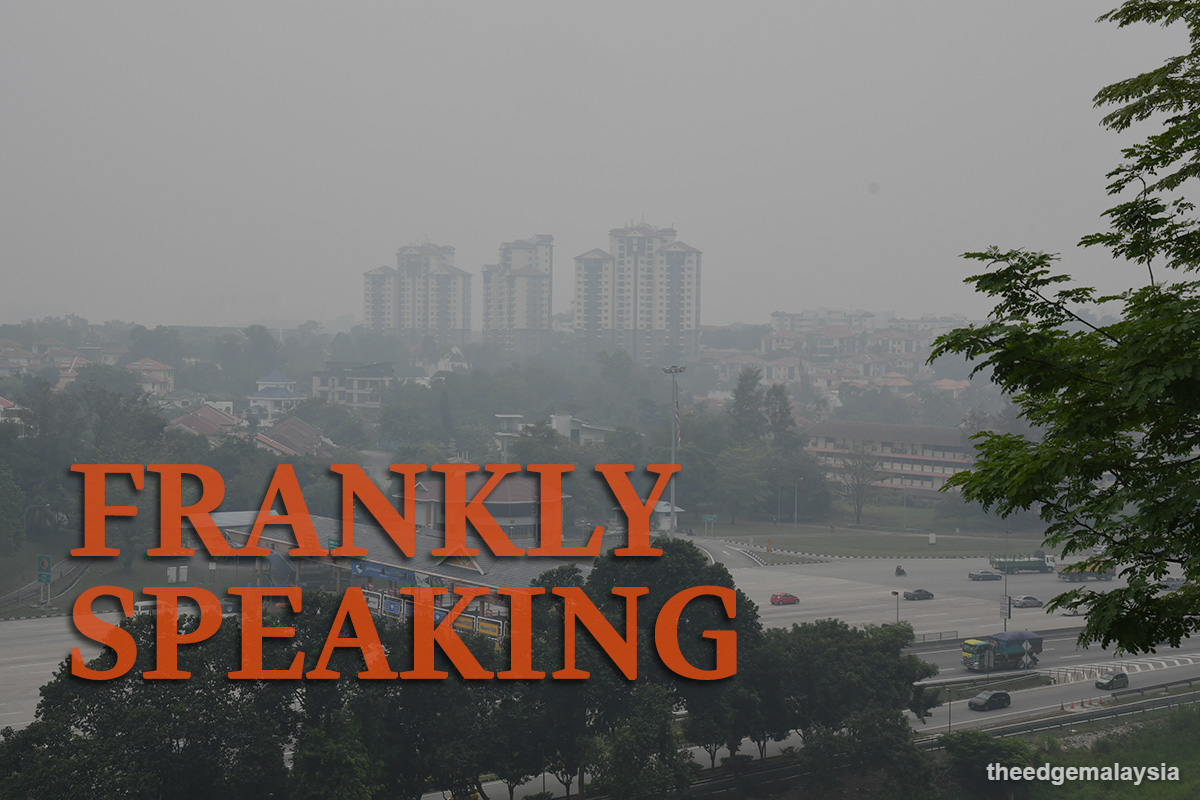
Indeed, the cost of inaction is becoming harder to ignore. This year’s haze situation in Malaysia is approaching a critical point, with schools closing for extended periods in affected areas. Public health aside, travel and tourism suffer while businesses face operational disruptions and mounting costs.
Malaysians should not have to accept these consequences as part of life in the region.
Save by subscribing to us for your print and/or digital copy.
P/S: The Edge is also available on Apple's App Store and Android's Google Play.