

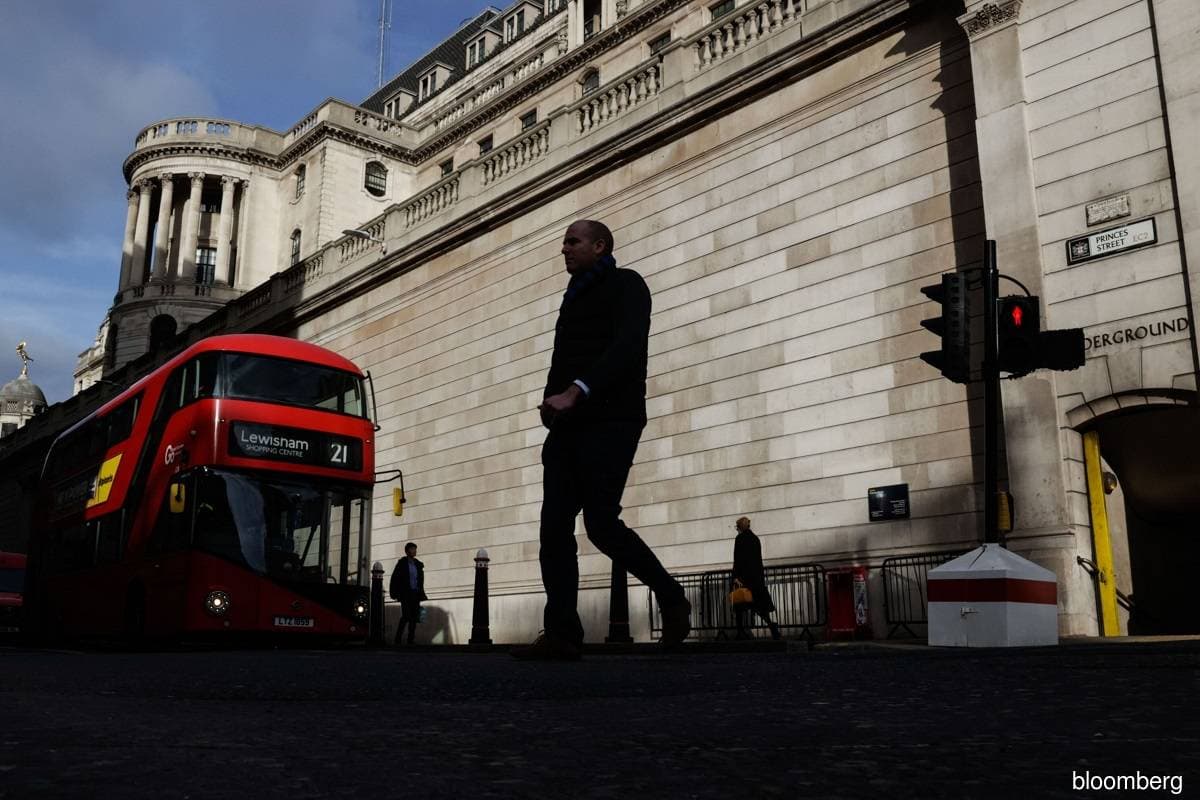
(Oct 18): A pickup in UK inflation to a nine-month high in data this week is likely to set the stage for key decisions from the upcoming budget to a likely interest-rate increase.
The report on Wednesday is anticipated by economists to show annual price growth in September at 3.4%. The result will amount to a reality check for British policymakers returning to London after warm words and an upgraded growth forecast from the International Monetary Fund.
The inflation data are likely to help seal the deal on the first rate hike from the Bank of England in over three years in November, while also feeding into the thinking of Chancellor of the Exchequer John Healey, who has vowed to give businesses and households some “breathing space” at next week’s budget.
His fiscal plans are being hemmed in by the global bond rout after the resurgence in energy prices prompted traders to bet on a series of BOE rate increases to contain inflationary pressures.
Gilt yields have risen to around their highest levels in decades, eroding Healey’s already-thin fiscal wiggle room. Tax hikes are likely to be needed to fund any cost-of-living measures, with banks set to be targeted.
While the BOE has held off on raising borrowing costs so far, investors are betting on it joining the Federal Reserve and European Central Bank in tightening policy at its upcoming meeting on Nov 5.
“The combination of soaring inflation, resilient demand and a stabilising labour market will make it hard for the BOE to remain on hold. We expect a 25-basis-point hike at the central bank’s next meeting in November. We also see another move in February,” said Bloomberg Economics.
Governor Andrew Bailey said in Bangkok last week that there is little evidence the energy shock is spreading widely across the economy yet, and figures on Tuesday will also likely suggest that price pressures from the labor market remain muted.
But the inflation situation is predicted to get worse. Bailey warned that the longer the Middle East conflict drags on, the more difficult it’s becoming to avoid a hike. The UK central bank is already forecasting that inflation will top 4% in early 2027, double its 2% target.
Elsewhere, Chinese growth data, Japanese inflation, global purchasing manager indexes and a rate decision from the embattled Indonesian central bank may be among the highlights.
Below is our wrap of what is coming up in the global economy.
US and Canada
In the wake of fresh inflation figures that showed price pressures are accelerating, the US economic data calendar lightens up. On Tuesday, separate reports on new residential construction and pending sales of previously owned homes are projected to illustrate the housing market was still struggling for traction in September.
Affordability constraints continue to weigh on demand, with 30-year mortgage rates recently hitting an almost three-year high of 7.5%.
On Friday, S&P Global will release its preliminary October manufacturing and services indexes. Economists see both measures pointing to solid growth, yet at a slightly slower pace. The same day, the University of Michigan releases its final October consumer sentiment reading.
Federal Reserve policymakers are in a media blackout period ahead of the Oct 27-28 policy meeting.
In Canada, Monday’s inflation update and business outlook will provide the final major clues to how the economy is weathering oil-driven inflation risks and the fallout from escalating trade tensions before policymakers make their next rate decision on Oct 28.
Headline yearly change in the consumer price index has held near 3% for months, which Bank of Canada governor Tiff Macklem has called “too high.” Economists expect it accelerated in September to 3.2%, though core measures likely held steady.
Meanwhile, retail sales likely rebounded in August after a temporary slump in July, though the resurgence may be short lived.
Albertans will vote Monday in a referendum that asks whether they’d like to begin a process to separate from Canada. The “remain” side holds a comfortable lead, but federalists fear high turnout for separation will introduce political and economics risks.
Later in the week, Prime Minister Mark Carney will travel to Türkiye to advance talks for a comprehensive trade agreement.
Asia
China releasing key economic data and several central banks lining up monetary policy decisions take the spotlight in Asia-Pacific this week.
China releases its third-quarter gross domestic product alongside September retail sales, industrial production, fixed-asset investment and property data on Monday. The figures will show the economic momentum in the world’s second-largest economy amid a prolonged property downturn that continues to weigh on investment.
China’s one-year and five-year loan prime rates on Tuesday are expected to stay unchanged at 3% and 3.5%, respectively. Industrial production data due Monday will also help gauge manufacturing activity in the country.
Indonesia is expected to keep its policy rate unchanged at 5.75% on Wednesday, while the Philippines is seen raising 25 basis points on Thursday. Rate-hike pressures prevail in South Korea too. The decisions will be closely watched as officials across the region balance inflation and currency pressures against risks to growth.
Inflation and business activity put Japan in focus on Friday. National CPI will offer another indication of whether price pressures remain strong enough to support the Bank of Japan’s historic policy-normalisation path.
Japan’s flash PMIs the same day will show whether growth remains broad-based across manufacturing and services. Trade data on Wednesday will provide another gauge of external demand.
Flash PMIs are also due in India that day. They will be closely watched for signs of how the economy is coping with a difficult external environment as inflation firms and oil prices remain above US$100 (RM408) a barrel. Core industries output, due Wednesday, will provide an earlier read on industrial momentum.
Elsewhere, South Korea’s early trade data and Taiwan’s export orders will help investors assess the strength of the regional trade and technology cycle.
Reserve Bank of Australia assistant governor Christopher Kent is due for an interview on News24 on Sunday and a fireside chat on Monday. RBA deputy governor Andrew Hauser is due to make an appearance on Wednesday.
Europe, Middle East, Africa
Germany’s ZEW investor confidence survey is due on Tuesday. The euro region’s first PMIs from the final quarter of the year will be a highlight, with those numbers on Friday seen likely to show resilient expansion. The European Central Bank’s survey of consumer expectations comes out the same day.
Few policymakers are on the calendar after last week’s IMF meetings, and a blackout period in advance of the Oct 29 rate decision will kick in on Wednesday.
France will continue to draw attention for its extended budget troubles. The country has been on negative outlook at Moody’s Ratings for a year, raising the prospect that a review result scheduled for Friday will lead to a downgrade.
Away from the eurozone, Hungary is due to unveil its 2027 budget at the start of the week, giving first concrete indications of how it plans to more than halve its deficit to the 3% required to join by the euro.
Meanwhile on Thursday, the Swiss National Bank will publish a summary of its September decision, when officials kept borrowing costs unchanged while dialling down their threat of franc intervention.
In South Africa, data on Wednesday will likely show inflation accelerated in September as fuel prices continue to climb.
Later in the day, Finance Minister Enoch Godongwana will present his medium-term budget in Cape Town, with investors looking for signs of commitment to repairing the public finances through a fiscal anchor. They also expect progress on consolidation, helped by mining-tax revenue and a narrower-than-expected deficit.
A number of monetary decisions are scheduled:
- Hungary’s central bank is expected to keep borrowing costs on hold on Tuesday, although a small cut is possible after a reduction in its inflation target.
- On Wednesday, Namibia will probably raise its rate by 25 basis points to 7% as inflation continues to surge due to elevated global energy prices.
- In Israel the same day, monetary authorities are expected to leave the benchmark at 3.25% following three straight cuts.
- In Türkiye on Thursday, a number of economists predict the central bank will deliver a 100 basis-point rate reduction cut to 36% after a bigger-than-expected slowdown in inflation in September. Governor Fatih Karahan has recently highlighted weakening economic activity and subdued demand.
- The Bank of Russia is likely to keep its rate at 14% on Friday, according to Bloomberg Economics, extending a pause as fuel shortages driven by Ukrainian drone strikes on oil refineries feed inflation pressures.
Latin America
The August GDP-proxy report from Argentina will likely add fresh evidence that the economy is on track to enter a technical recession, which would be the second under President Javier Milei.
Local economists now forecast third-quarter output at -1% — down from a forecast of 1.1% growth just a month ago — in the wake of July’s GDP-proxy report that showed the economy taking its steepest tumble since April 2020.
In Colombia, August’s 7.4-magnitude quake that struck the western part of the country will weigh heavily on the month’s economic activity data. Extensive damage from the temblor is expected to damp growth into 2027 before rebuilding gives the economy a boost.
Mexico offers up myriad growth indicators in the coming week, with GDP-proxy figures, joblessness and retail sales, which are likely to underscore the economy’s resilience.
Early October consumer prices data — the last inflation figures policymakers will get before their Nov 5 rate decision — aren’t likely to alarm or assure Banxico’s board.
Paraguay’s central bank has been on hold since a quarter-point cut in February put the key rate at 5.5%. Annual inflation ticked up to 1.7% in September though policymakers project it ending the year near the 3.5% center of their target range.
Rounding out the week in economic reports, Brazil on Friday publishes its mid-October consumer prices report ahead of Sunday’s presidential run-off election. Polling shows that the race has tightened up, but Senator Flávio Bolsonaro still appears poised to deny President Luiz Inácio Lula da Silva his bid for a fourth term.
On the inflation front, the early consensus sees the annual print rising beyond the 4.5% ceiling of the central bank’s target range, perhaps nearing 4.8.
Economists in the central bank’s Oct 9 survey raised their 2026 inflation estimate for Latin America’s biggest economy to 5.22%, a 21 basis-point rise over the previous survey.
Uploaded by Magessan Varatharaja