

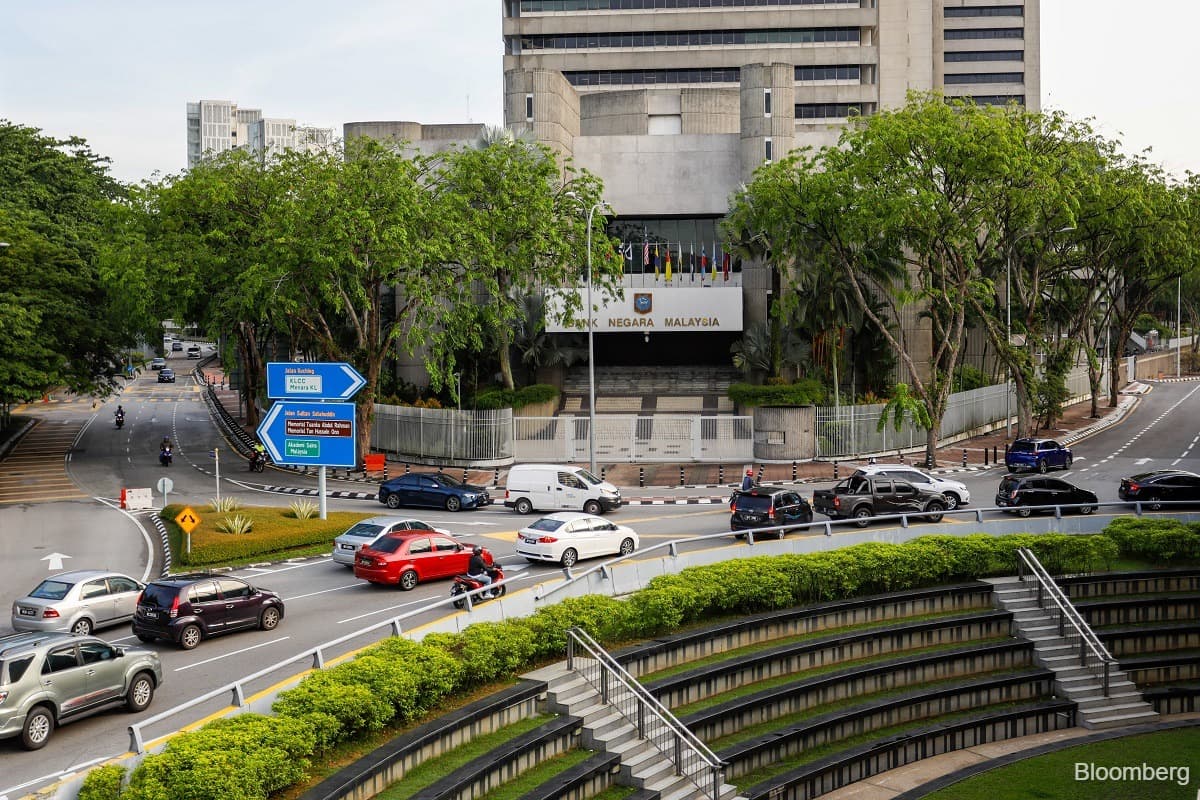
KUALA LUMPUR (Oct 16): Malaysia's still-robust growth is handing its central bank strong leverage to manage rising inflation risks in the final quarter of the year, economists said.
While expansion has moderated in the third quarter, the outlook remains for the economy to grow steadily, according to RHB Investment Bank and United Overseas Bank (UOB). BIMB Securities expects growth at 5.5%, handily beating the government’s revised 4.8%-5.3% target for 2026.
“Overall, economic activity appears to be running above potential for a third consecutive year, while inflation risks remain skewed to the upside, supporting the case for monetary policy normalisation,” UOB said.
BNM will raise policy rate by 25 basis points in November with the “solid” backdrop and positive momentum likely to extending into 2027, ANZ Research said.
Official preliminary estimates out earlier showed gross domestic product (GDP) rising 5.3% in July-September from a year earlier, lower than the 6% year-on-year growth in the second quarter. Bank Negara Malaysia (BNM) has one last monetary policy review scheduled for the year in November.
The central bank stood pat in September but dropped the term "appropriate” from its post-meeting statement, a move that economists said signals a shift in its policy stance.
On Thursday, BNM governor Datuk Seri Abdul Rasheed Ghaffour was reported by Bloomberg as saying that the change gives the central bank greater room to respond if needed.
Still, RHB Investment Bank is betting that the overnight policy rate will remain unchanged at 2.75% at the final meeting of the year. “The current economic environment and inflation trajectory support a broadly stable policy outlook, with no immediate pressure for rate adjustments,” the research house said.
Inflation has remained benign at 1.9% in August, according to latest available data and still within the central bank’s projection of 1.5%-2.5% for the year.
For CIMB Investment Bank, inflation appears contained so far while seasonally-adjusted data suggest a slowing momentum in key manufacturing and services sector.
“The softer sequential momentum suggests that domestic demand is moderating,” the house said, adding that BNM will likely keep the policy unchanged until 2027.