

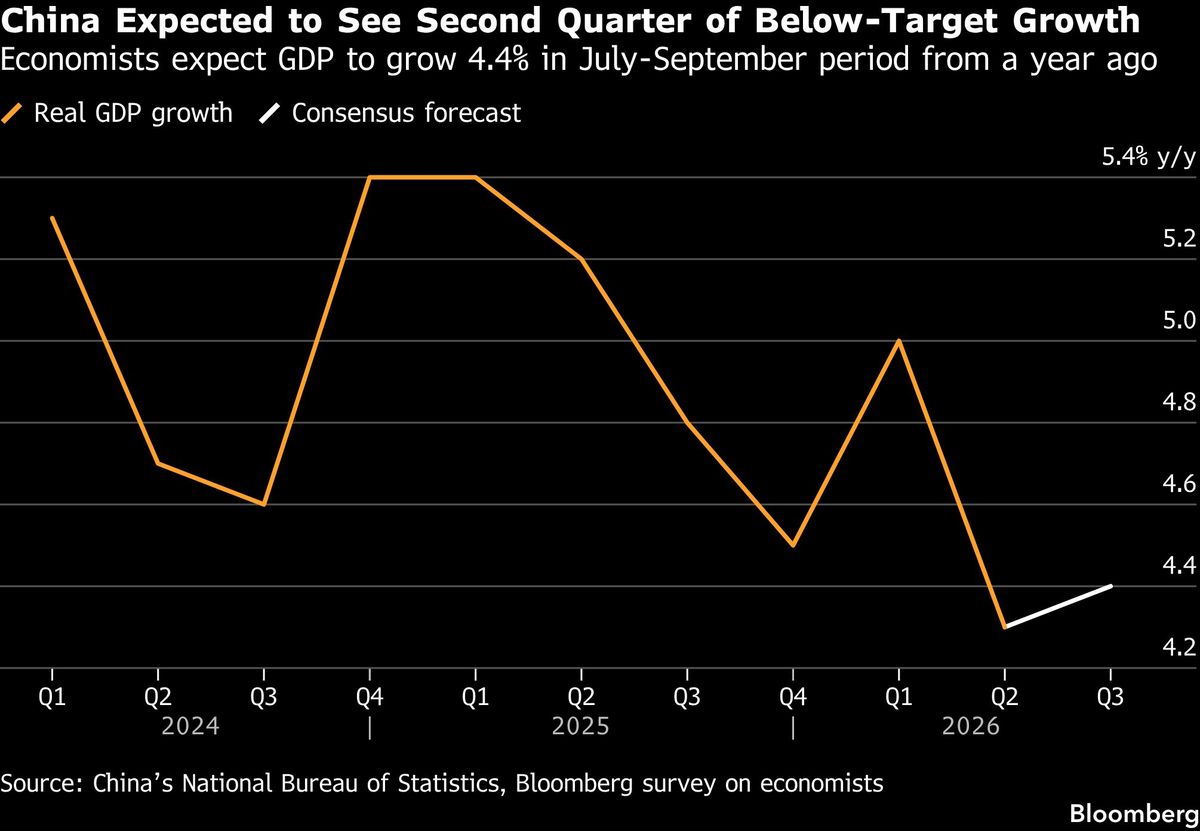
(Oct 16): China’s economy is heading for a second straight quarter of growth below the 2026 target set by the nation’s leaders, with their recent stimulus measures having come too late to make a notable impact.
Figures due on Monday will show gross domestic product rose 4.4% last quarter from a year earlier, according to the median estimate of economists polled by Bloomberg. While that would be a slight improvement on the 4.3% for the three months through June, it would again undershoot Beijing’s official annual target of 4.5% to 5%.
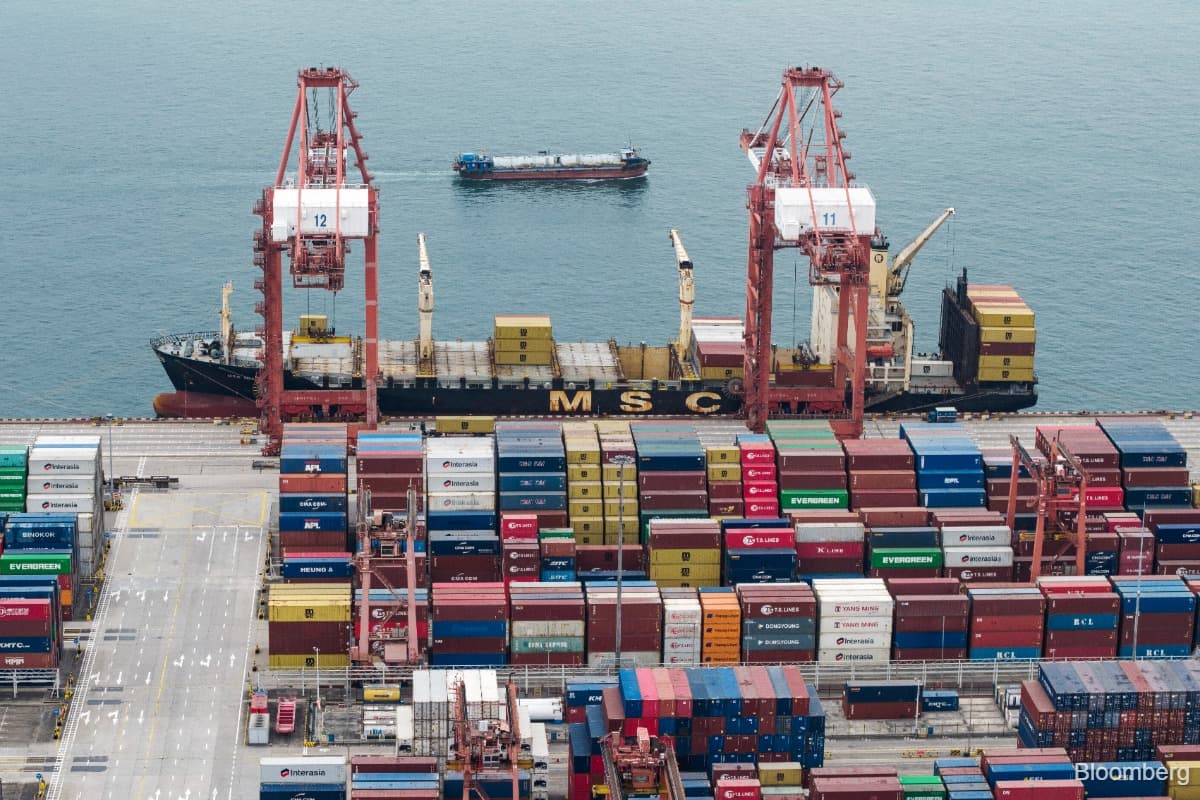
Much of the expansion relies on exports, which have been surging amid the global artificial intelligence investment boom. Monthly data on retail sales, also out on Monday, are expected to show one of the weakest readings in modern history. While the government did intervene with its biggest stimulus push in two years last month, many observers doubt it amounted to any sort of game-changer.
“Without a decisive policy shift towards supporting household incomes and consumption, China is likely to remain trapped in a prolonged period of low inflation and subpar growth,” Michelle Lam, greater China economist at Societe Generale SA, wrote in a report on Tuesday.
Lam, along with most economists, still sees Beijing as having done enough to secure its full-year target. “The bigger challenge lies in 2027, where GDP growth may ease further to below 4.5%,” she said.
The government has been speeding up the sales of public bonds to support the construction of major infrastructure projects. And since late September, officials have rolled out mortgage subsidies, expanded central bank funding support for sectors including technology and infrastructure and granted US$82 billion (RM335 billion) in additional spending power for provinces.
The measures bear echoes of 2024, when GDP growth similarly slipped below target for two straight quarters before officials stepped in. This time, the AI surge is offering a helping hand.
A 36% jump in exports last month likely helped drive an acceleration in industrial output. Production is forecast to rise 5.4% in September from a year ago, picking up from the 5.2% pace in August. The official manufacturing purchasing managers’ index, which measures factory activity, expanded for the first time since June.
“The transmission of the benefits of technology-driven development to average households appears slow,” Standard Chartered Plc economists including Carol Liao wrote in a report. “Despite resilient exports and broadly stable headline growth, household demand remains subdued, while retail sales have weakened again as the boost from goods trade-in subsidies fade.”
China’s reliance on trade to power growth also poses a risk at a time of growing protectionism, with the European Union now joining the US in raising barriers to Chinese goods. It also leaves the country exposed to the ebbs and flows of the investment frenzy around AI.
China’s more frequent economic setbacks are also starting to call into question its longer-term prospects, with consumer demand being persistently weak and showing no sign of recovery. Earlier this week, the International Monetary Fund projected China’s economy will slow to 4% in 2027, in its latest global outlook.
That would be a significant downgrade from the 6%-plus annual growth rates in the years leading up to Covid, and even the 4.9% pace achieved since 2020.
The latest monthly figures are likely to show a continuation of an historic slump in fixed-asset investment, as the property depression continues and private businesses remain pessimistic. The gauge is expected to fall 7.3% for the first nine months of the year compared with 2025 — roughly on par with the 7.2% drop recorded in August.
Still, as extreme weather events subsided and a low base of comparison from last year kicked in, there’s a chance that investment improved on a single-month basis. The year-on-year contraction likely narrowed to 8% in September from 10.8% in August, according to Goldman Sachs Group Inc’s estimates.
As for retail sales, they likely inched up 0.5% in September from a year ago, after a 0.4% gain in August, among the worst readings in modern history. The slight improvement might reflect a boost from an earlier public holiday this year — the mid-autumn festival fell in September this year instead of October last year, potentially boosting tourism expenditures for last month.
Still, consumers continued to tighten their purse strings, and per-trip tourism spending has been declining in recent years. In addition, car sales slumped 24% in September from a year ago, according to the China Passenger Car Association, extending a historic plunge that began late last year.
As for how much more stimulus to expect from the government, Goldman Sachs Group Inc’s chief China economist, Hui Shan, says “not a whole lot — just enough to get to 4.5% growth.”
“We’ve seen this move over and over again,” she told Bloomberg Television on Friday. “The broader backdrop is that, one, exports have been doing pretty well. And, number two, fiscal constraints are getting more and more challenging.”
Uploaded by Evelyn Chan