

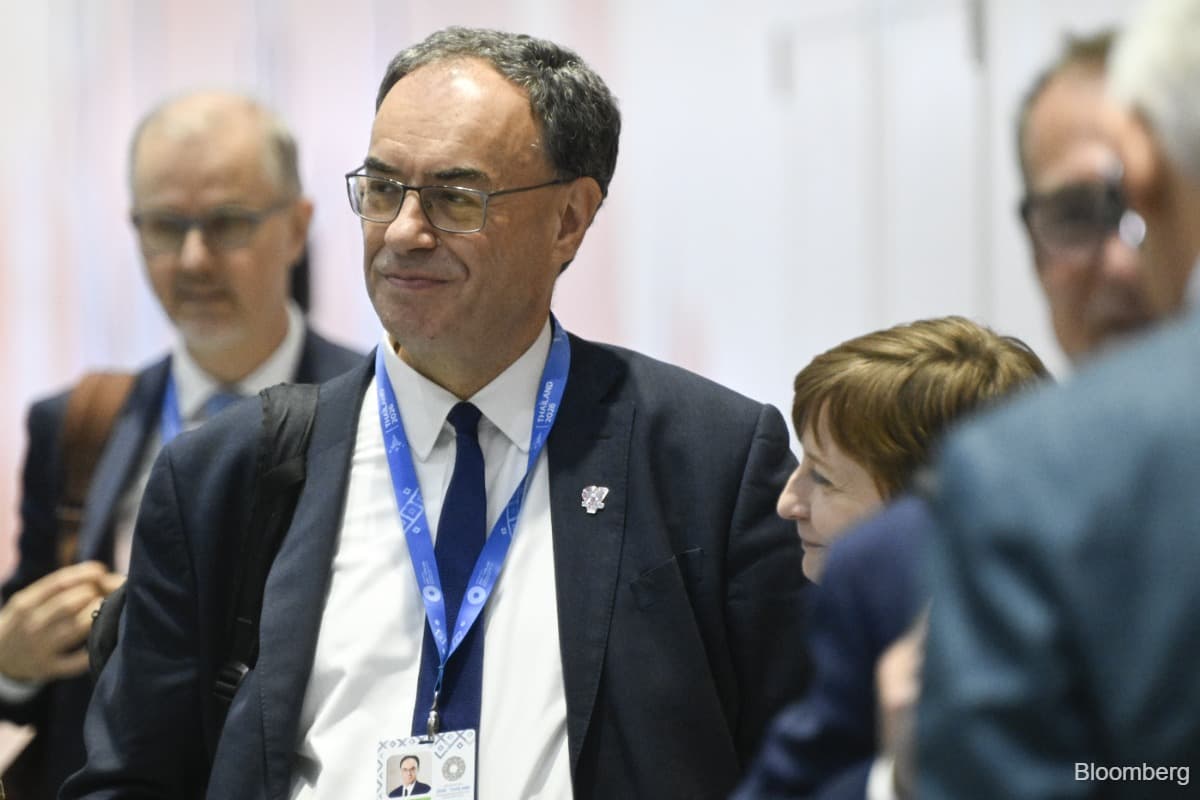
(Oct 16): Bank of England governor Andrew Bailey said there is little evidence yet of inflation becoming embedded in UK price and wage-setting.
The central bank is watching closely for signs that companies and workers are pushing up prices and wages to cover their own rising costs, setting off a second round of the inflation shock, Bailey said on Friday at the Institute of International Finance annual meeting in Bangkok.
“To the extent we have seen evidence, it’s quite subdued,” the governor said. “It’s too early.”
Inflation is above the BOE’s 2% target at 3.1% and forecast to rise to 4% in the coming months, a level that the bank itself says should provoke a policy response.
Bailey and his colleagues on the Monetary Policy Committee make their next interest-rate decision on Nov 5, when the markets expect a quarter-point hike to bring the benchmark to 4%.
The committee is increasingly split over policy and its last vote in September was tight, with a 6-3 vote in favour of holding rates.
Two of Bailey’s committee colleagues — external member Megan Greene and chief economist Huw Pill — have warned at other events in Bangkok against waiting for more inflation evidence. Both have been voting for rate increases, citing concern about the potential for second-round effects and the need to move fast.
Bailey has argued that policy is restrictive because the BOE was going to cut rates this year before the Iran conflict began in February. At that point, “the market was pricing a couple of cuts, and I thought that was probably pretty reasonable,” he said on Friday at the IIF event.
He was speaking after the International Monetary Fund raised its growth forecast for the UK to 1.3% this year from 1% and official UK GDP data this week showed the economy is expanding faster than expected. GDP rose 0.7% in the three months to August.
The UK economy is proving to be “more resilient than we expected it to be,” Bailey said.
Uploaded by Evelyn Chan