

_20260507205656_Bloomberg_1.jpg&w=1920&q=75)
(Oct 16): The European Union (EU) is preparing to create new trade powers that could completely shut off access to its single market as part of a dramatic new push to cut the trade deficit with China.
EU leaders meeting in Brussels on Thursday asked the European Commission, which handles trade matters for the bloc, to develop a proposal by the end of the year, according to people familiar with the matter. The powers would be deployed in an extreme case where a rival, such as China, was seen as attacking the EU’s economy.
“If China engages in certain unfair trade practices, we could restrict the entry of Chinese products into the European market, including a complete closure of our market,” Lithuanian President Gitanas Nauseda told reporters on the sidelines of the summit. “That would be an extreme measure, a drastic instrument.”
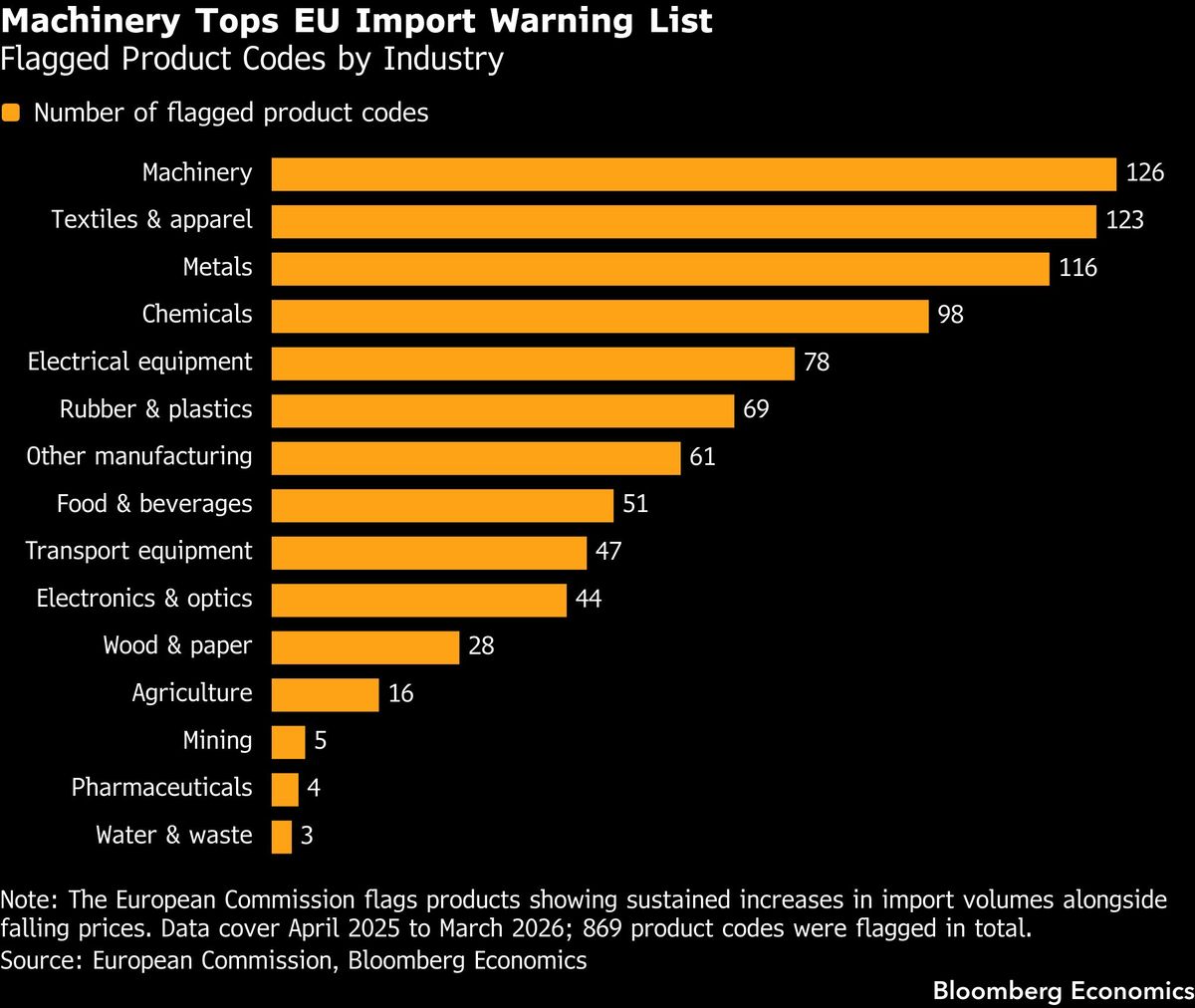
As part of a rapidly expanding arsenal of trade powers, the commission has also begun evaluating trade data as a first step towards replicating a cap on hybrid car imports in other sectors where shipments from China — or other countries — may be surging, said a separate person, who spoke on the condition of anonymity. The commission is assessing industries including chemicals and machinery as potentially in need of safeguard measures.
European chemicals stocks got a boost, with BASF SE rising as much as 0.8% after the news, Arkema SA gaining as much as 1.2% and Lanxess AG climbing as much as 1.8%.
A spokesperson for the commission didn’t respond to a request for comments.
The EU’s aggressive change in stance reflects increasing alarm, particularly in its German manufacturing powerhouse, over the pace at which Chinese rivals are increasing their share of markets all around the world. EU officials are trying to calibrate their policy response to stop China from flooding the continent with low-cost goods, but without triggering a trade war.
China has said it would retaliate if the EU introduces new trade tools or discriminatory restrictions targeting Chinese companies or products beyond the cap on hybrid vehicles that was agreed during talks in Beijing last week.
Germany has traditionally been much more cautious about imposing any protectionist measures on China because its export-driven economy has deep commercial ties with Beijing. But German Chancellor Friedrich Merz has been persuaded that a radical change in strategy is called for after industry lobby groups appealed to the government for help.
“We will no longer stand idly by while other countries harm our economy through high subsidies, artificially devalued currencies, overcapacity and aggressive pricing,” Merz said in a speech to the German Parliament on Wednesday. “Anyone who seeks a trade conflict with us will find that we are now fighting back, with appropriate responses.”
The instrument that could be used to shut off access to the EU’s single market is seen as a so-called second-strike measure, the people familiar with the plans said. Its existence is intended to deter rivals from using unfair policies to weaken European companies or from starting a trade war against the EU with retaliatory measures.
As part of the effort to reset their trading relationship with the world’s second-biggest economy, the bloc’s executive arm is due to present additional proposals ahead of a leaders’ summit in mid-December. That package should also include new powers to incentivise European companies to diversify the range of suppliers they rely on and others to address overcapacity in China.
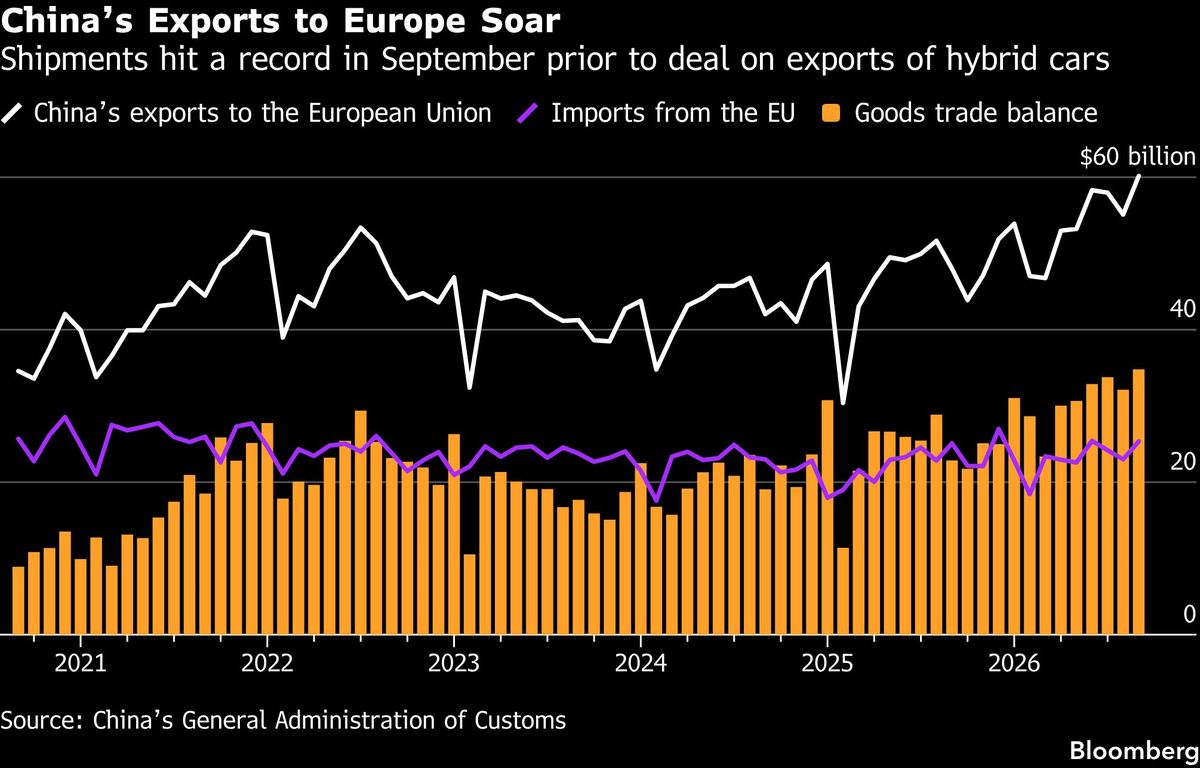
The EU’s trade deficit with China reached a record US$34.8 billion (RM142.1 billion) in September and total Chinese exports surged 36% from a year earlier, according to China’s General Administration of Customs. China’s annual trade surplus this year is on track to exceed the US$1.2 trillion record set in 2025.
Any additional caps on EU imports will likely be based on the understanding that EU officials reached with China to limit imports of hybrid vehicles to 350,000 a year, according to the person. That means the EU will try to find a quota that is low enough to offer protection to its companies, and high enough to persuade Beijing not to retaliate.
Some countries, including Germany, are pressing the EU to quickly impose additional quotas on other types of imports to begin reducing the bloc’s massive trade deficit with China, Bloomberg reported earlier. Berlin is seeking proposals from the commission by the end of the year.
The commission doesn’t have a time frame for the new safeguard assessments, and is focusing on implementing the measures on hybrid vehicles, said the person. That agreement with China would also see Beijing cut tariffs on some EU exports of auto parts, olive oil and ice cream.
The EU is also seeking to improve market access in China and ease export procedures for critical minerals and permanent magnets.
The EU’s trade chief, Maros Sefcovic, is due to take stock of progress and discuss next steps with his Chinese counterparts early next year.
Uploaded by Tham Yek Lee