

(Oct 15): After getting China to accept limits to its car exports, the European Union is already eyeing follow-up action in other industries — setting up their next trade clash.
The sharp divergence in how the two parties view their agreement, which caps sales of Chinese hybrid vehicles, has emerged days after it was reached. It’s jeopardising the wider goal of averting a trade war as EU leaders meet Thursday to debate their next move.
For Beijing, the accord reached last week was a calculated one-time concession — perhaps ceding ground on principle, but sacrificing only a tiny fraction of its more than US$560 billion (RM2.29 trillion) annual exports to the bloc. State media warned of a response “if the EU introduces new tricks while negotiating”.
“This is a special arrangement and will not become a precedent for other sectors,” said Tu Xinquan, a former adviser to the Commerce Ministry. “China understands that the auto industry is of particular importance to Europe”, and its good trade relations with Germany were also a factor.
“If the other side continues to push its luck, then China has no choice except counterattack,” added Tu, now dean of the China Institute for WTO Studies at the University of International Business and Economics in Beijing.
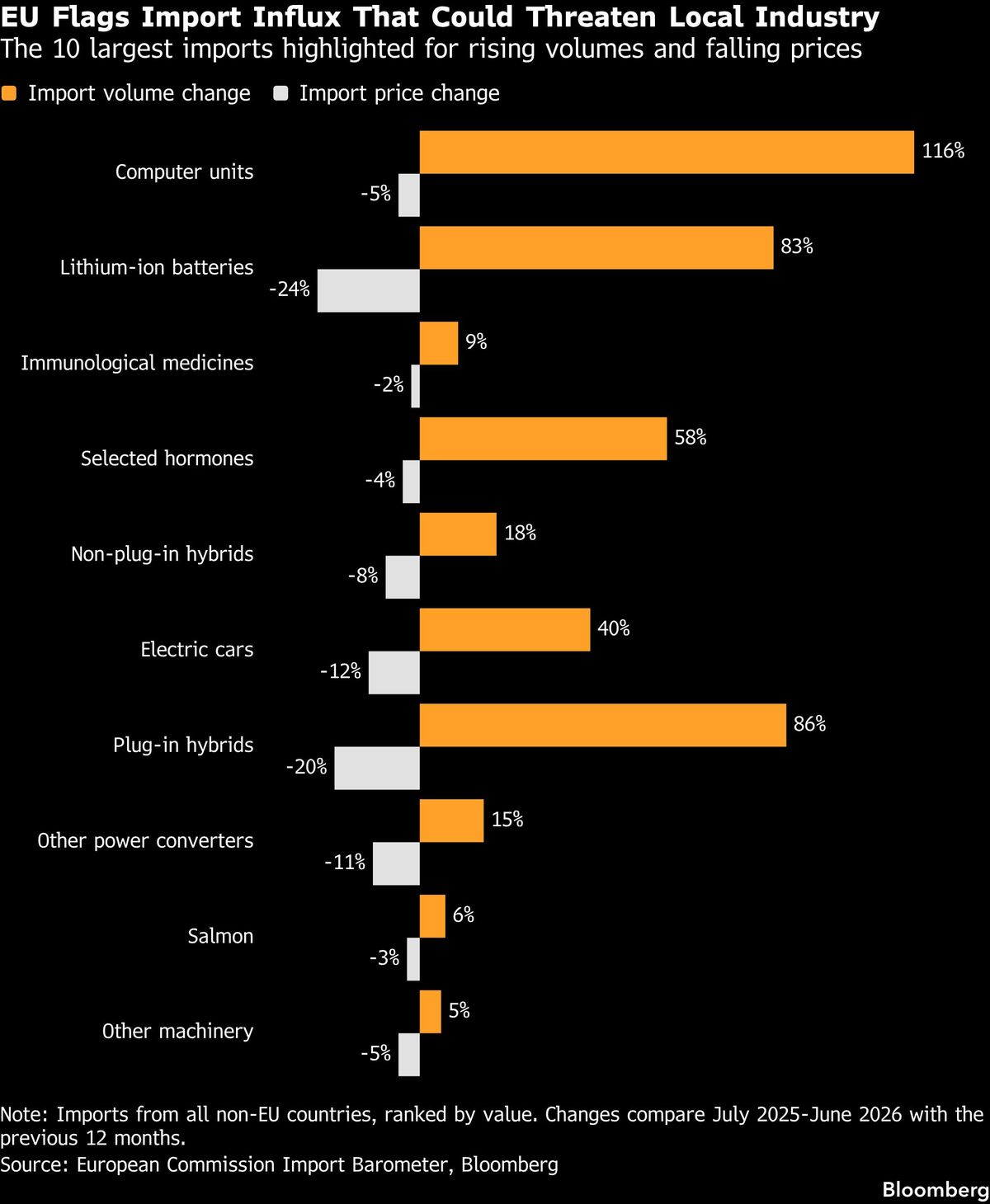
The EU has already made clear hybrid cars are just the first item on its list. Germany will press the bloc to impose similar limits on Chinese imports in industries including chemicals and mechanical engineering, and potentially pharmaceuticals, according to people familiar with the matter.
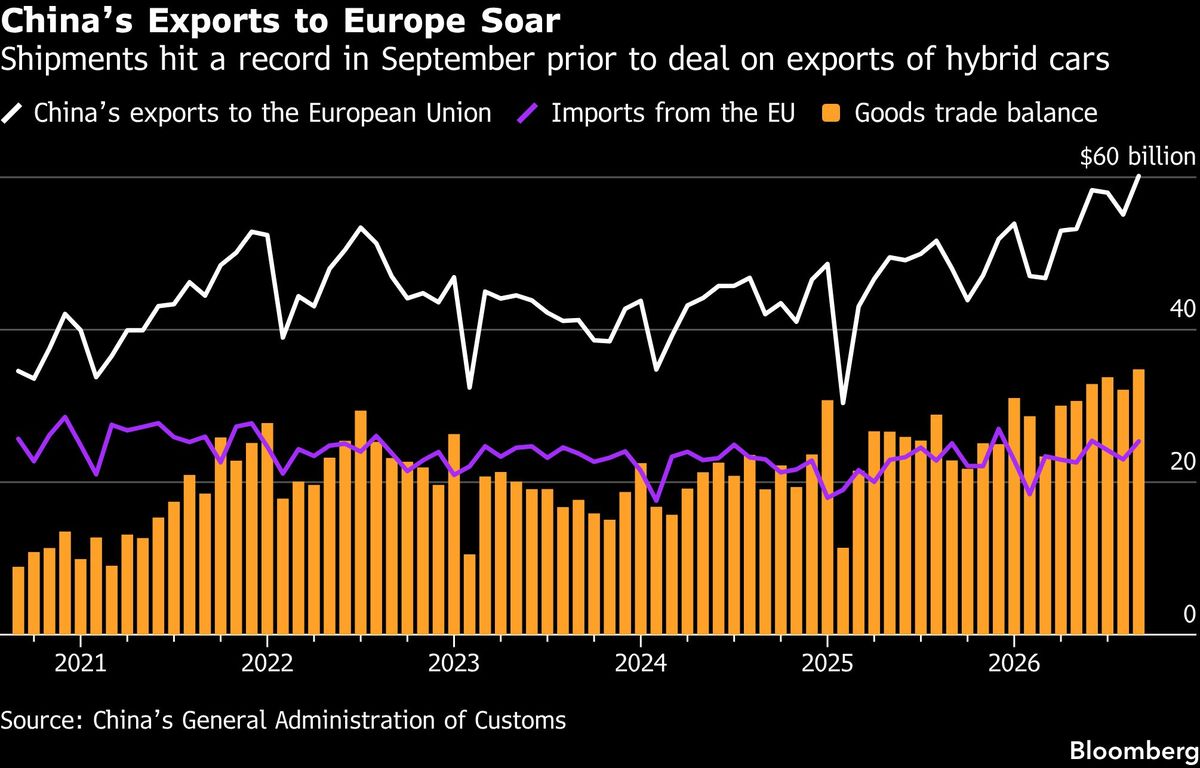
Brussels has also identified products such as furniture and scooters where surging Chinese imports threaten local manufacturers. If the car deal is all the bloc can get, the EU’s trade deficit with China, which reached a record US$34.8 billion last month, will barely be dented.
Imbalances in EU-China trade “are not limited to automotive”, Valdis Dombrovskis — the bloc’s top economic official — told Bloomberg News in Bangkok on Tuesday. “We need to continue this work also across different other sectors.”
Even the auto deal has yet to be fully signed off.
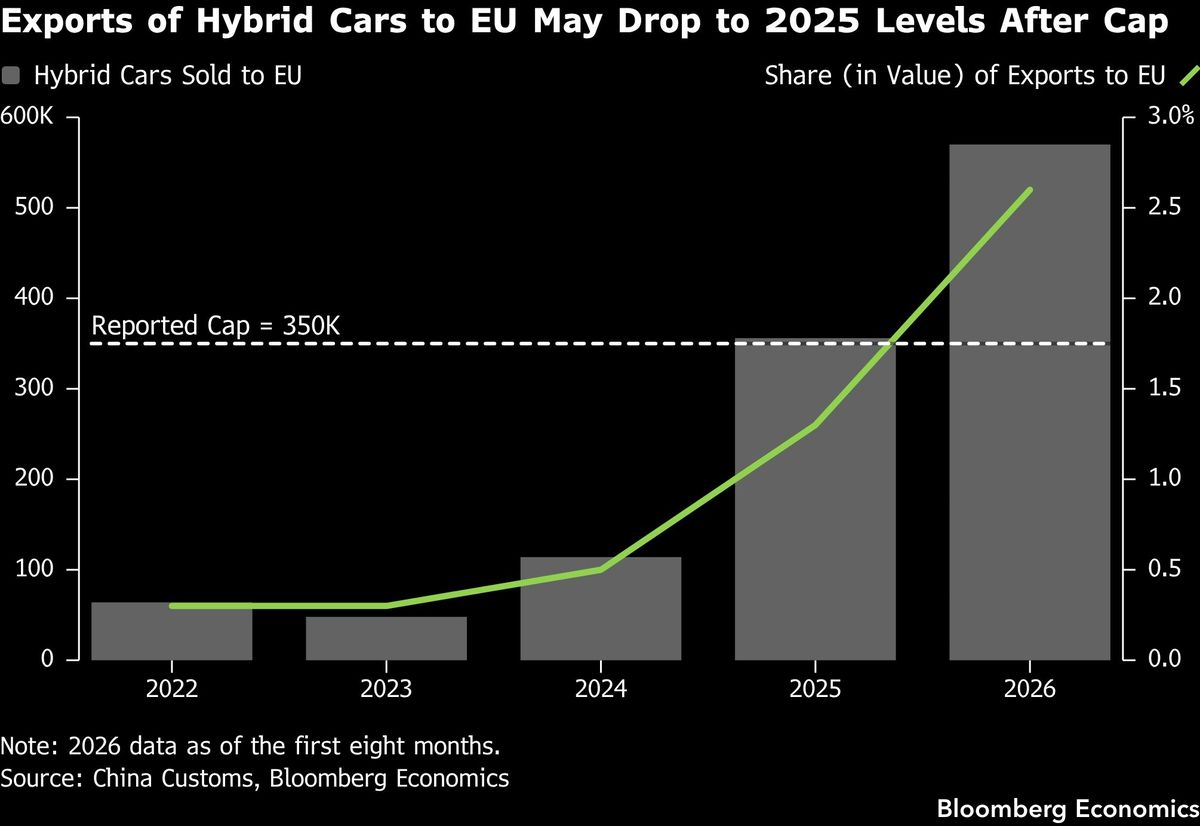
The EU said it will cap imports of hybrid cars from China at 350,000 per year starting from December, less than half this year’s expected number. That would shave about 1.5% off China’s overall sales to Europe and 0.2% from its global exports, according to Bloomberg Economics.
China hasn’t directly confirmed the figure, though it said the two sides envisage an “upward arrangement” from the 2025 sales of 302,000 cars.
‘Sharper toolkit’
An agreement on at least one contentious trade topic could bring a payoff. With a stalling domestic economy, China’s growth relies heavily on exports. Its trade truce with the US has only been extended until January, giving Beijing an incentive to avoid escalation on another front and to mark out ties with Europe as less adversarial.
“If Europe perceived the negotiations as a failure, it could move them more closely to the US position,” said Martin Sebena, a lecturer at the University of Hong Kong. “Which is something China would want to avoid.”
Momentum for a forceful response had been building ahead of Thursday’s EU meeting, where leaders are expected to discuss how to tackle the surge in Chinese exports.
Last week, Germany and France, the bloc’s biggest economies, called for new tools that would empower the EU to exclude China completely from the group’s massive single market — that so-called “second strike” instrument could serve as a strong deterrent to China choking its supply of rare earths.
Those magnets have been powerful leverage for Beijing. It’s in talks with the EU to unwind curbs placed on a Chinese firm in exchange for China restoring flows of the metals to a European company in the ASML Holding NV supply chain, according to people familiar with the discussions. The firm was at risk of going bust without the rare earths.
Beijing’s concessions on cars are aimed at “preventing the European Council from mandating a sharper toolkit”, said Alicia García Herrero, chief economist for Asia Pacific at Natixis.
There’s no guarantee the gambit will succeed. Some Chinese analysts also worry it won’t just be European trade negotiators who see a precedent they can exploit.
“Other governments may conclude that threatening restrictions can extract concessions,” said Sun Chenghao, a fellow at Tsinghua University’s Center for International Security and Strategy in Beijing. “China should take that political incentive seriously.”
‘One-off case’
Western charges of “overcapacity” in the world’s manufacturing powerhouse have largely been dismissed in Beijing, but they’ve gained traction elsewhere. Plenty of countries have sounded the alarm over the scale of Chinese goods flooding their markets, both in the auto industry and beyond.
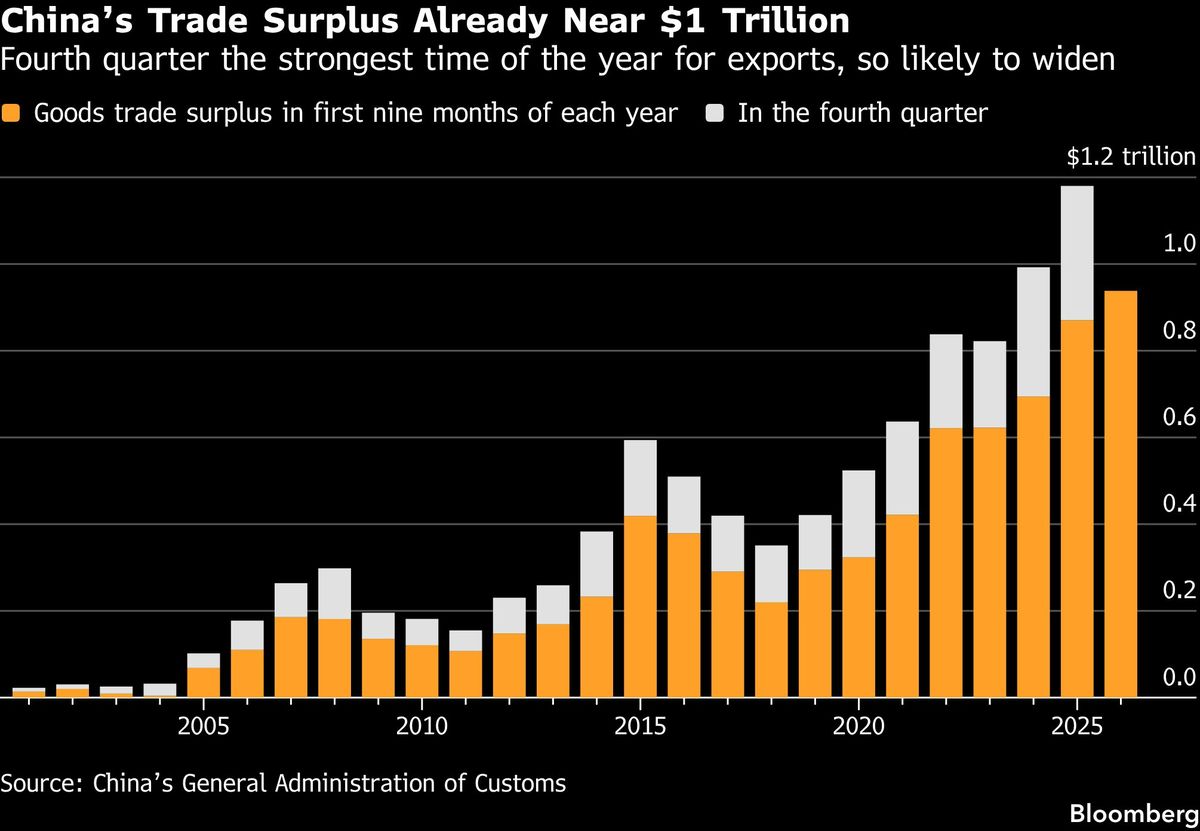
China’s exports so far this year put it on track to exceed the record US$1.2 trillion surplus posted in 2025, although surging prices for chips and commodities like oil are inflating the figures.
Still, there’s not much risk of a worldwide domino effect from China’s concession to Europe, according to Gerard DiPippo at the Eurasia Group.
“Will other trading partners try the same? Few countries have the EU’s leverage,” he said. “I doubt Beijing will grant uniform treatment to all counterparties who complain.’
That still leaves the possibility of escalation with Europe, if or when the bloc’s leaders come back asking for concessions that go beyond cars.
The agreement also does little to help European automakers beyond their home market. They will probably continue losing ground to Chinese rivals in China and elsewhere outside the US, Eurasia Group said in a note.
Tu, the former Commerce Ministry adviser, said the EU would find it hard to replicate the car deal, as WTO rules have a high bar for imposing “safeguard measures” — giving China plenty of room to delay the process.
“If one strictly nitpicks the provisions, there are certainly places where the EU is non-compliant with WTO rules,” he said.
Uploaded by Chng Shear Lane