

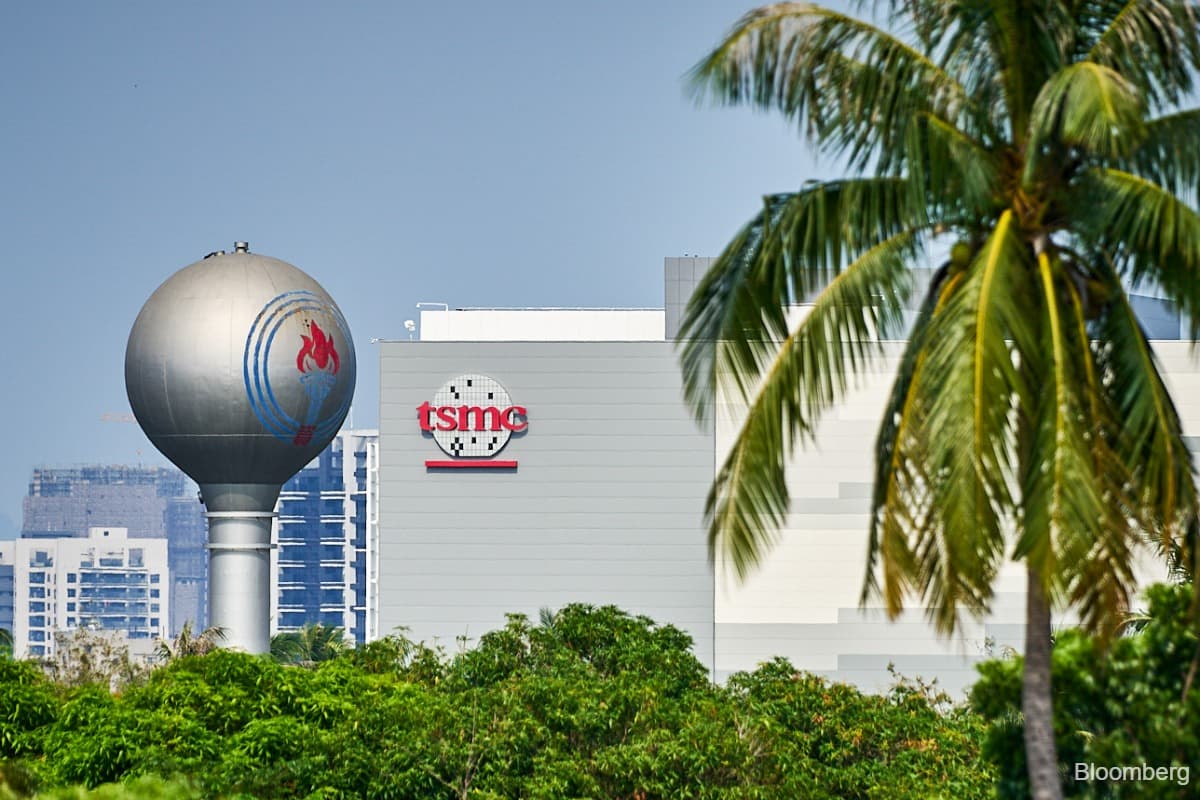
(Oct 15): Taiwan Semiconductor Manufacturing Co (TSMC) delivered a better-than-expected revenue outlook, sustaining a torrid pace of growth yet failing to dispel rising concerns about the sustainability of a global artificial intelligence (AI) buildout.
The chipmaking linchpin is projecting sales of as much as US$54.3 billion (RM221.7 billion) in the December quarter, handily beating expectations. That should translate into a roughly 44% rise in 2026 revenue in US dollar terms, and followed a better-than-expected 69% jump in profit for July to September. TSMC’s upbeat projection however failed to stem a global tech stock rout, as selling of AI names extended into the European day.
The main chipmaker to Nvidia Corp on Thursday reiterated its long-held stance about the resilience of demand for AI as the technology evolves and transforms global economies. chief executive officer CC Wei stressed that Taiwan’s largest company remains in prudent expansion mode, exploring a new manufacturing site in Texas while discussing a potential tie-up with Elon Musk’s Terafab chipmaking endeavour.
“TSMC’s results are a much-needed vote of confidence in the AI demand story, but I would stop short of calling them an all-clear for the sector,” said Charu Chanana, the chief investment strategist at Saxo Markets.
While the outlook suggests AI demand remains robust, moderating margins, rising costs and overseas expansion raise questions about how much of that growth will translate into higher profitability. “I see this as reassurance rather than a reset of expectations,” Chanana said.
TSMC’s outperformance follows a spate of positive results from big industry names including ASML Holding NV, though solid numbers and commentary have so far failed to arrest a sell-off triggered by growing signs of stress among AI data centre players such as CoreWeave Inc.
Wei sounded a note of caution about the need to remain disciplined in spending. TSMC is sending its own teams to the US to survey the progress of data centre construction and power supply availability, gathering intel on the ground in addition to relying on partners such as Nvidia and Apple Inc. Yet he clearly signalled TSMC would pursue growth.
“We are using multiple levers to do everything we can, whenever we can, as fast as we can to maximise the support to our customers,” Wei told analysts on a conference call. “We have no intention to leave food on the table for others, and we want to capture every piece of business possible.”
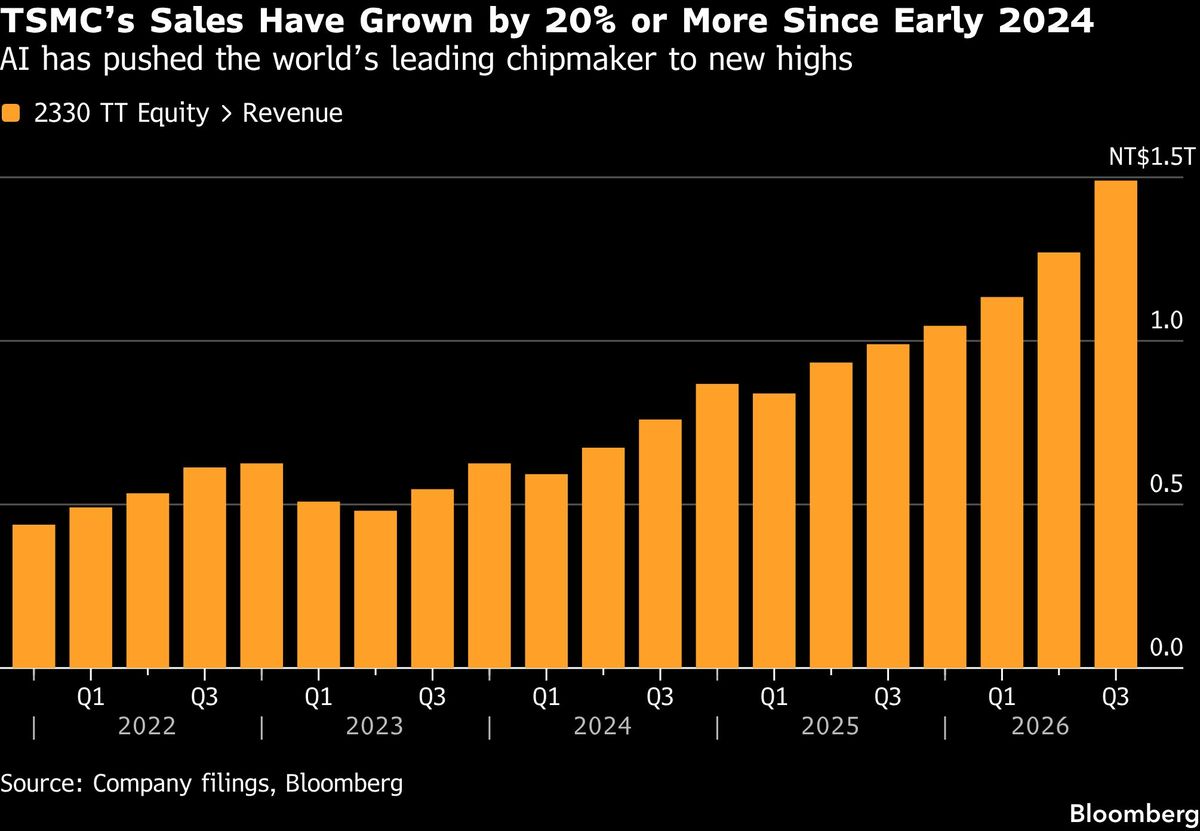
Hsinchu-based TSMC serves as a key barometer of global AI demand as every major industry player including Nvidia, Advanced Micro Devices Inc and Alphabet Inc’s Google relies on the Taiwanese chipmaker to turn their most cutting-edge designs into reality.
TSMC, for its part, has so far managed to accelerate sales growth and ramped up capacity expansion. The company reiterated its capital expenditures will reach as much as US$64 billion, a record, this year.
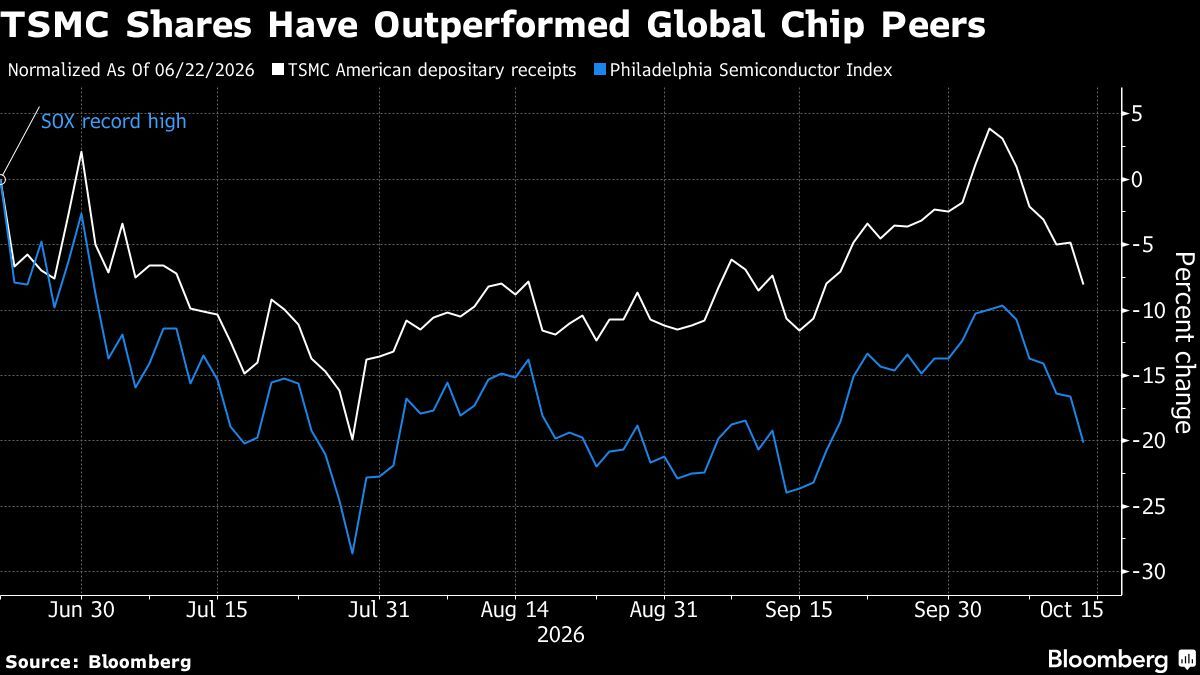
Its shares touched an all-time high this month, among the first chip stocks globally to reach new records after a July market rout. It’s been outperforming peers thanks to a dominant position in the manufacturing of processors needed to power AI. Yet it got caught up in the broader pullback in tech stocks over the past week.
The company is now trying to build and furnish about 20 factories at home and overseas, an unprecedented pace for a company that typically works on four or five new buildings simultaneously.
Consensus estimates have been climbing for the Taiwanese firm’s 2027 capital spending, a key indicator for the industry. Goldman Sachs Group Inc now targets US$85 billion and UBS Group AG sees US$90 billion, compared with the US$75 billion average of firms polled by Bloomberg.
Uploaded by Chng Shear Lane