

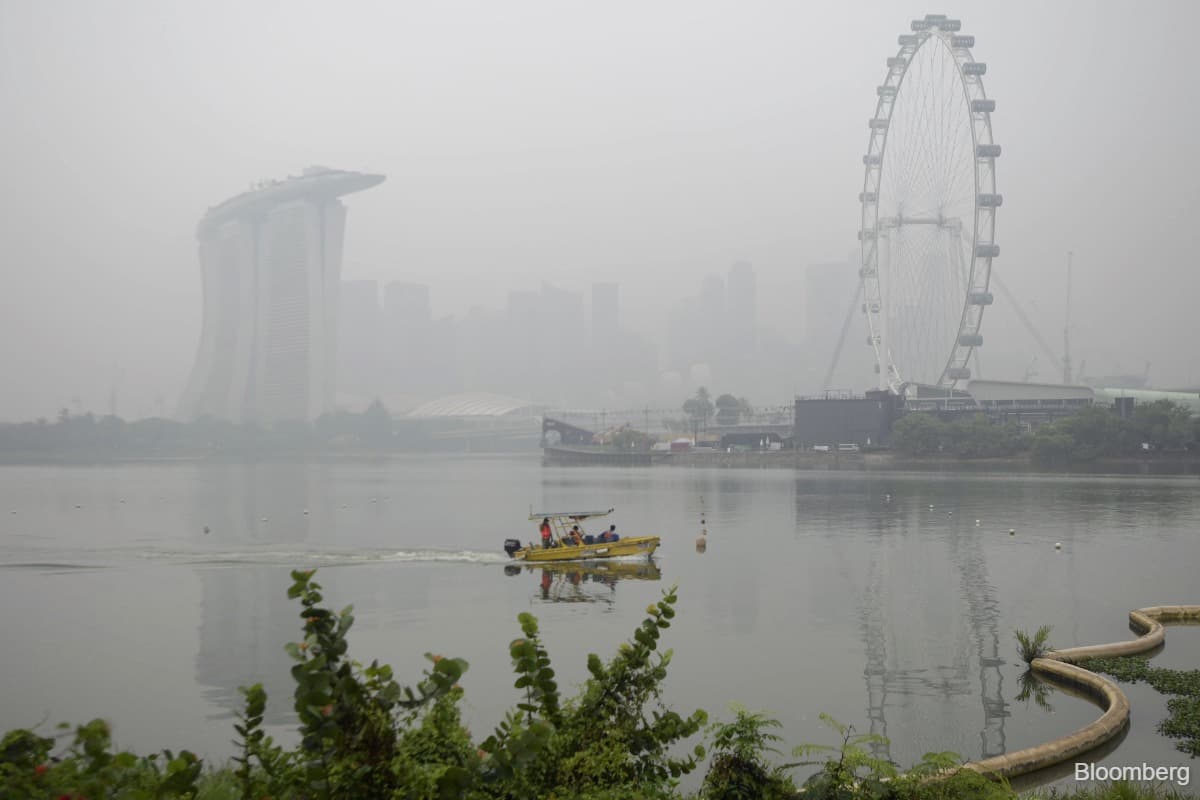
(Oct 15): The thick haze blanketing Singapore as wildfires rage in neighbouring Indonesia is driving a surge in demand for air purifiers and face masks.
Several air purifier models from brands including Xiaomi Corp and Dyson Group Plc were sold out, according to their websites.
Sales had surged more than 19-fold year-on-year in the first half of October, which left all 18 of Xiaomi’s Singapore stores without air purifiers, a spokesperson said by email. A new batch began arriving at stores on Thursday as the company expedites replenishment and adjusts supply to meet demand, the spokesperson said.
At home-appliance retailer Gain City, sales of air purifiers have jumped to around nine times the levels recorded since the start of the haze season in August, said marketing director Candy Cao.
“Demand remained particularly strong over the weekend, with some popular models selling out and some customers opting to purchase display sets so they could bring their products home immediately,” Cao said, adding that the retailer will continue to replenish stocks to meet demand.
Residents are also stocking up on N95 face masks as the city-state chokes in the worst episode of smog in over a decade. Multiple listings at several online drugstores and pharmacies showed the disposable masks were sold out or will be “available soon.”
A Singapore gauge of air quality deteriorated to the highest category in parts of the city-state on Wednesday, exacerbating health concerns as smoke from Indonesian fires envelop parts of Southeast Asia for weeks. Singapore ranked second on the list of the world’s most polluted major cities, behind Malaysia’s Kuala Lumpur and ahead of Indonesia’s Medan and its capital Jakarta, according to data compiled by IQAir.
A 24-hour measure of air quality showed all five regions in Singapore at the “unhealthy” level as of Thursday afternoon.
Prime Minister Lawrence Wong’s administration convened its Haze Task Force on Oct 9 and started distributing N95 masks to vulnerable Singaporeans on Wednesday. The island also opened haze shelters at community spaces, curtailed outdoor activities for military personnel and students as well as closed some sports facilities.
The National Environment Agency said some stores may temporarily run out of the masks, though retailer warehouses and government stockpiles have sufficient supplies. The government is working with retailers to replenish the stocks.
Singapore officials are collecting data and keeping open the possibility of legal action under its transboundary haze law, said Sustainability and Environment Minister Grace Fu. Companies that cause or condone fires can face fines of as much as S$2 million (RM6.4 million).
In Malaysia, school closures have affected millions of children and low-cost carrier Firefly cancelled flights to Singapore’s Seletar Airport through Friday, citing the “persistent weather and haze situation.” Malaysia's Queen Raja Zarith Sofiah donated 73,000 masks to residents, according to a Facebook post by the king’s office.
The Civil Aviation Authority of Singapore and Changi Airport Group said they are prepared to increase spacing between takeoffs and landings, and switch on airfield lights during the day if the haze worsens. They are coordinating with airlines and unions to maintain safe operations at Changi and Seletar airports.
Sixteen flights were diverted from Seletar between Oct 5 and 11 and some airlines have adjusted or cancelled services based on conditions. Singapore Airlines Ltd said its operations were unaffected, adding that “safety is the top priority.”
Indonesia has recorded more than 8,000 fire hotspots this month, the most for October since 2015, according to its Forestry Ministry. Poor visibility has hampered aerial firefighting. Authorities are testing aircraft that scatter dry-ice pellets over south Sumatra in hopes of bringing rain. Indonesia expects its rainy season to start later than usual, in November or December.
Uploaded by Evelyn Chan