

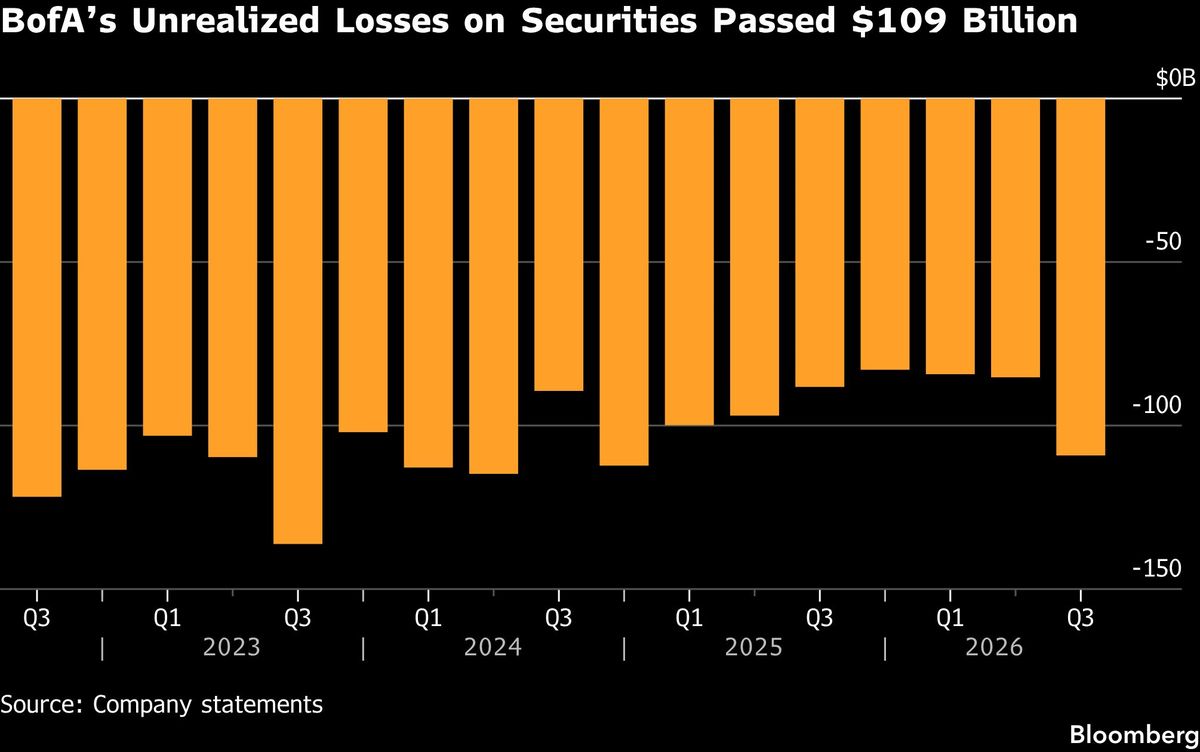
(Oct 14): Paper losses on Bank of America Corp’s bond portfolio rose past US$100 billion (RM408.2 billion), bringing the spotlight back on a pain point that was at the heart of the 2023 regional-banking crisis.
Yields on seven-year and 10-year Treasuries are now above 5%, pushing down the market value of those bonds. That drove its unrealised losses on its total debt securities to more than US$109 billion in the third quarter, up 28% from the end of June, according to filings.
JPMorgan Chase & Co, Citigroup Inc and Goldman Sachs Group Inc “are sitting pretty while we all kind of forget that Bank of America is a mess”, Bill Moreland, founder of BankRegData, wrote in a newsletter this month.
Still, the US banks that have reported so far haven’t been immune. The impact of market swings on these securities’ portfolios filters through earnings via the firm’s so-called accumulated other comprehensive income. The AOCI losses more than doubled in the third quarter at JPMorgan and Wells Fargo & Co.
“We all knew rate marks were coming, still there is some sticker shock seeing AOCI nearly double in the quarter,” Truist Securities analysts including Brian Foran wrote in a note to clients Tuesday. As AOCI dragged down banks’ capital levels, it made investors wonder if banks will slow down share buybacks, according to Foran.
As of August, analysts predicted that large banks would repurchase US$207 billion of shares by the end of 2027, Foran noted.
On Tuesday, JPMorgan said it cut repurchases by almost 90% in the third quarter from a year earlier. JPMorgan CEO Jamie Dimon downplayed the impact of seasonal market swings on its decision to reduce share buybacks.
“So the positive news is the main reason the buyback is down — and it’s got nothing to do with AOCI or guessing about the environment or even Basel III — we believe now, which is different than we told you in the past, that we can redeploy that capital at very good returns over time,” Dimon said on a conference call Tuesday.
Those unrealised losses eased earlier this year as rates fell. But the recent reversal in rates has brought the issue back to the fore. While the portfolio isn’t an existential threat for Bank of America, which has average deposit balances of about US$2 trillion, the swings in the portfolio have been a headache for the bank.
“It’s hard to avoid it, but if you are really underwater, then I think you might get more negative attention,” said Nathan Stovall, a managing director at Performance Trust Capital Partners, speaking broadly about investors’ expectations on bank stocks. Investors will want to know, "Did you learn from that experience?”
The issue has lingered over Bank of America since the Federal Reserve began its latest rate-hiking cycle in early 2022. The company has been the worst performer among the half-dozen biggest US banks in that period, with shares returning about 21% while the stocks of Goldman, Citigroup and JPMorgan more than doubled.
Bank of America’s current securities portfolio is still the biggest among peers and yields the least. The firm’s executives have said that as the low-yielding bonds approach maturity and roll off, the bank can reinvest those into securities with higher yields.
Those portfolios were at the centre of the turmoil that brought down the likes of Silicon Valley Bank and First Republic Bank in 2023. What’s different this time is that banks aren’t facing the same liquidity crunch, making industry experts believe it will be manageable.
The bank failures have also prompted banks across the industry to shore up their defences against swings in interest rates. Many have sold underwater bonds at a loss and reinvested the proceeds in higher-yielding securities to boost what they can earn on those portfolios. More banks are now exploring similar moves.
JPMorgan booked US$658 million of investment securities losses in the third quarter to replace lower-yielding securities. Also in July, Banc of California said it sold off US$2.3 billion of low-yielding securities and redeployed some of those proceeds into higher-yielding assets.
“I would say it is absolutely a concern, again,” said Scott Hildenbrand, chief balance-sheet strategist at Piper Sandler Cos. “I’ve been exploring in a lot more conversations with banks around restructurings.”