

(Oct 14): Germany will press the European Union to quickly place quotas on additional sectors of goods being imported from China, replicating a cap the bloc is planning to impose on hybrid vehicles.
Germany will seek EU safeguard measures to limit the import of goods from additional sectors, including chemicals, mechanical engineering and potentially pharmaceuticals, according to people familiar with the matter. Safeguard measures allow the EU to restrict products from a sector if there’s been a surge of imports.
The German government will press the European Commission, which handles trade matters for the bloc, to come up with proposals by the end of the year, said the people, who spoke on the condition of anonymity.
A request for comment sent to the German chancellery wasn’t immediately returned.
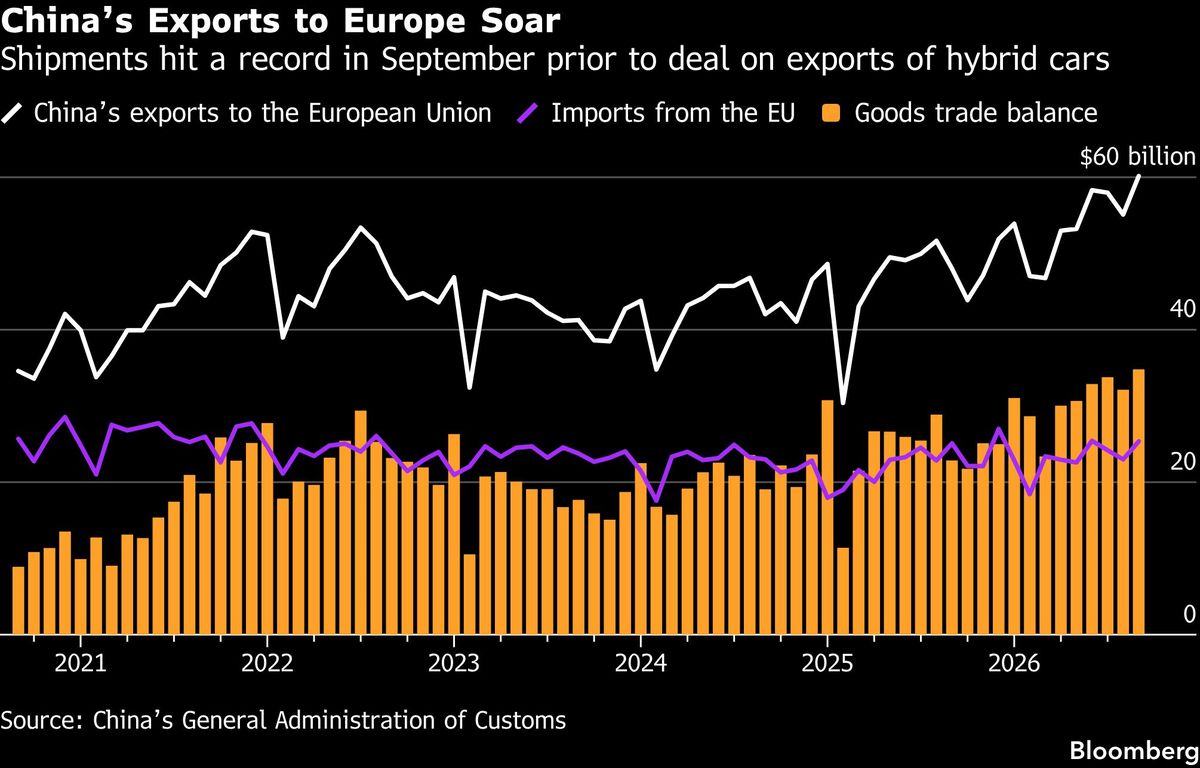
EU leaders will meet in Brussels Thursday to discuss the bloc’s massive trade deficit with China, which reached a record US$34.8 billion (RM142.05 billion) in September. They’ll discuss ways to stop China from flooding the continent with subsidised, low-cost goods that erode local industry — an effort that would need to go far beyond the measures on hybrids.
Talks between Beijing and Brussels last week resulted in a 16-point agreement spanning trade and investment, export controls and intellectual property rights. The EU said it would institute a cap of 350,000 on the number of Chinese hybrid vehicles that can enter the bloc, a win for the EU’s domestic auto industry.
The German push for stronger measures marks a radical shift in the country’s approach to China. Berlin has traditionally been more cautious given its export-driven economy and deep commercial ties with Beijing. Merz has accused China of keeping the yuan artificially weak and said earlier this year that “we underestimated China’s power and economic strength.”
“There have been two main drivers of the German shift on China: the mounting worries of German industry, especially the carmakers, and the emerging consensus elsewhere in Europe, led by Brussels and Paris, that bolder action is needed,” said Noah Barkin, a senior adviser with US research consultancy Rhodium Group. “The fear of Chinese retaliation is still there, however.”
The German government welcomed the hybrid agreement as a positive signal and step in the right direction, according to officials. But Berlin sees that deal as a first step in addressing the EU’s broader trade deficit with China.
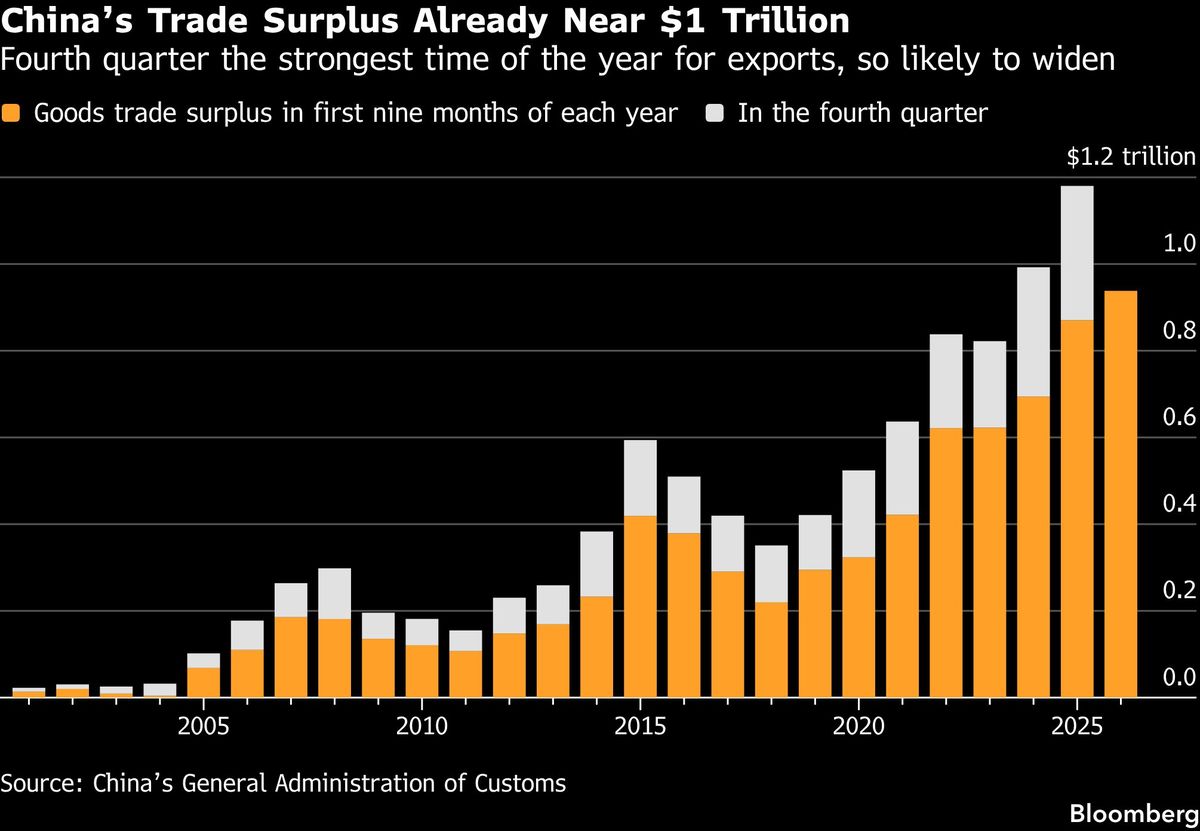
Chinese exports surged 36% last month from a year earlier, according to China’s General Administration of Customs, with its trade surplus this year on track to exceed the US$1.2 trillion record set in 2025.
The year-to-date measure of the difference between what China exports and what it imports is already at US$938 billion — almost 8% more than during the first nine months of last year.
The EU’s economics chief, Valdis Dombrovskis, said on Tuesday that the deal to cap the import of hybrid vehicles from China was only the first step as trade asymmetry goes far beyond cars.
“It’s clear that those economic and trade imbalances are not limited to automotive,” Dombrovskis said in an interview in Bangkok. “We need to continue this work also across different other sectors.”
German Chancellor Friedrich Merz and French President Emmanuel Macron are pushing for a political agreement of all leaders to give the commission the mandate to come up with proposals for stricter trade measures. On the sidelines of the summit, Merz and Macron are expected to discuss a package of additional measures to support the bloc’s ailing car industry, according to officials.
The outlines of a compromise deal would see France meeting Germany halfway on the phase-out of internal combustion engines while, in return, Germany would relax its critical stance on "Buy European" requirements, according to the officials.
There is a “good chance” that both leaders might announce an agreement on the sidelines of the EU summit in Brussels later this week, one of the officials said.
Uploaded by Arion Yeow