

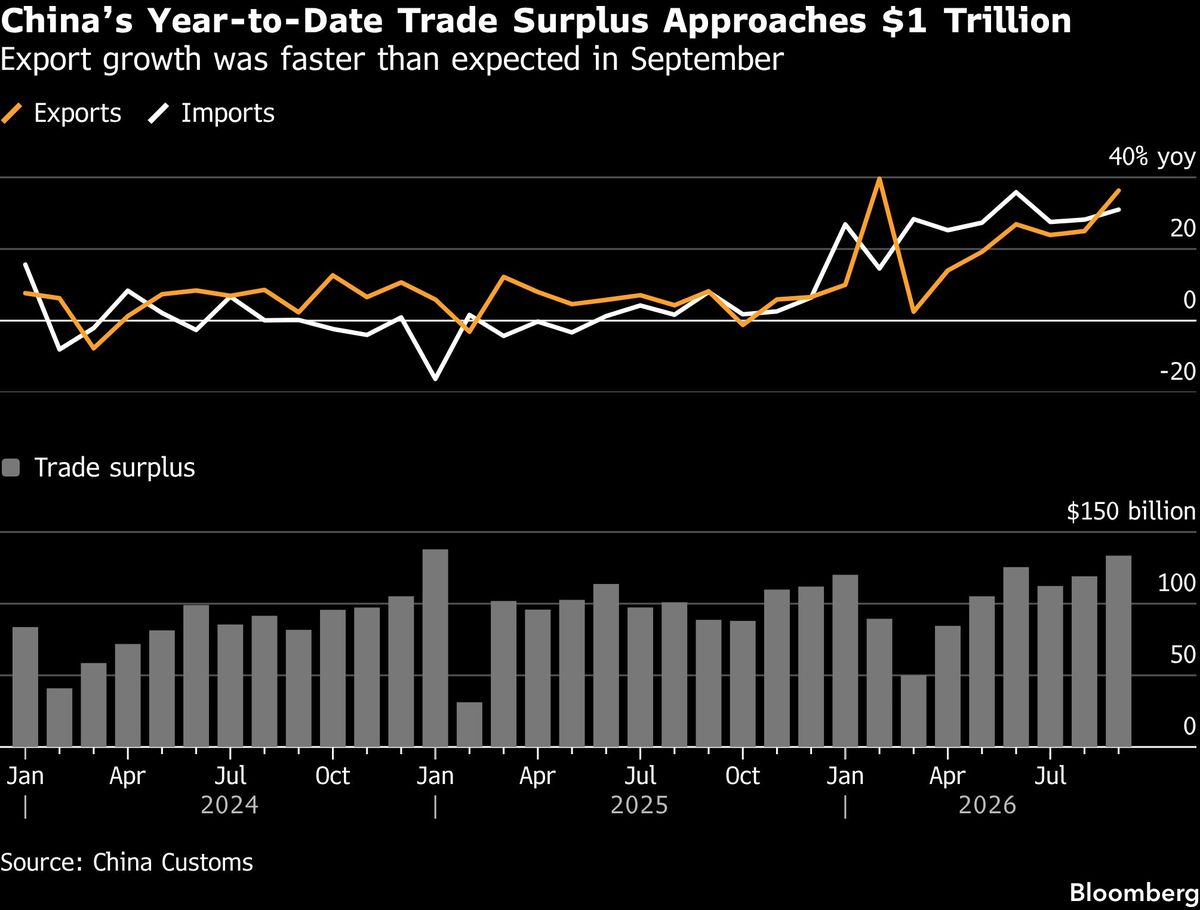
(Oct 14): China’s trade surplus ballooned to US$938 billion (RM3.83 trillion) for the first nine months, keeping it on pace to exceed last year’s record as export growth surged faster than expected in September.
Exports soared 36% last month from a year earlier — the fastest since February — after an increase of 25% in August. Imports jumped 31%, data released by China’s General Administration of Customs showed on Wednesday.
As a result, the trade surplus for September widened to US$133.5 billion, compared with the median estimate of US$117.8 billion in a Bloomberg survey of economists. Its year-to-date level is on track to hit US$1 trillion or more already this month — crossing a threshold that wasn’t reached until November in 2025.
China’s lopsided trade relations with the world have grown even more extreme since the tariff war started by US President Donald Trump over a year ago, especially as global demand exploded for AI services and inputs like chips.
Facing higher barriers in the US, Chinese companies have sought out new markets abroad, with the International Monetary Fund estimating that emerging and advanced Asian economies absorbed about half of the diverted trade, followed by the European Union with near one-fifth.
But as domestic demand stagnates, the booming exports are also generating more pushback from China’s largest trade partners. After months of standoff with the EU, Brussels and Beijing have agreed to cap imports of hybrid cars from China, according to the bloc, though China describes the deal as ensuring “export space and steady growth” for its carmakers.
China reported a record trade surplus of US$34.8 billion with the EU in September, before the two sides announced results from months of negotiations. It was almost 21% higher than in the same month a year ago.
The number of countries running trade deficits above 3% of their gross domestic product with China more than tripled since 2005 to 82 last year, according to economists at Goldman Sachs Group Inc, who estimate that most of them are low-income emerging economies.
Uploaded by Arion Yeow