


KUALA LUMPUR (Oct 14): Renewable energy (RE) stocks were among the biggest decliners on Bursa Malaysia on Wednesday morning, as investors were rattled following news that the effective system access charge (SAC) for third-party access to the national grid has been raised to 18 sen per kilowatt-hour (kWh), from the 14 sen announced last month.
Within the first half hour of trading, Cypark Resources Bhd (KL:CYPARK) led losses, plunging 14.4% or 11.5 sen to 68.5 sen, followed by Samaiden Group Bhd (KL:SAMAIDEN), which shed 32 sen to RM2.71.
Northern Solar Holdings Bhd (KL:NORTHERN) declined 9.3% or 11 sen to RM1.07, triggering a suspension of intraday short selling from Bursa after hitting an intraday low of 96.5 sen, which was a 10.6% drop.
The suspension was automatic, and is activated when a stock’s last done price drops more than 15% or 15 sen from its reference price. Intraday short selling for the counter will resume on Thursday.
Solarvest Holdings Bhd (KL:SLVEST) dropped 7.8% or 32 sen to RM3.78, with 1.54 million shares traded while Pekat Group Bhd (KL:PEKAT) also fell 7.2% or 21 sen to RM2.70.
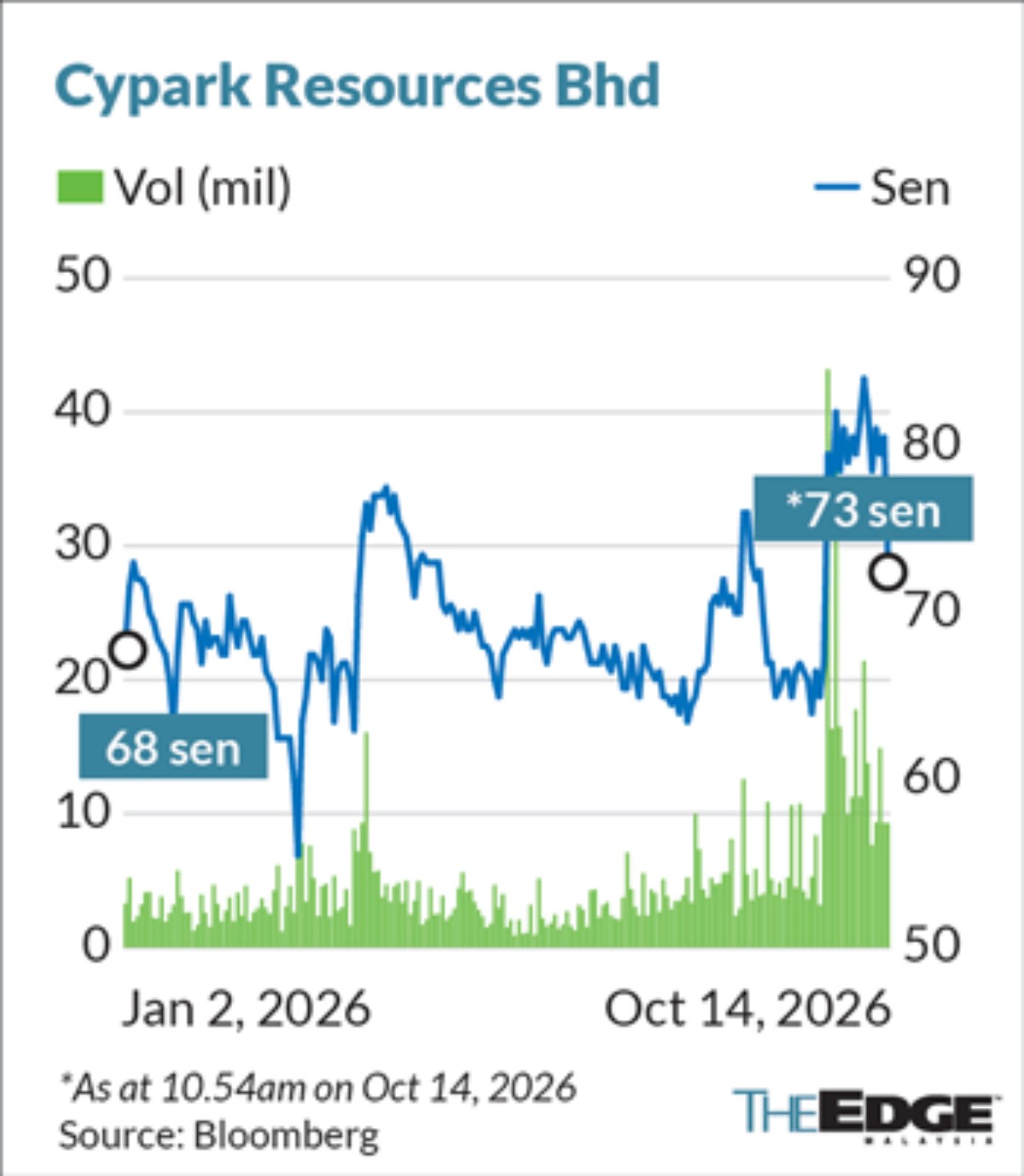
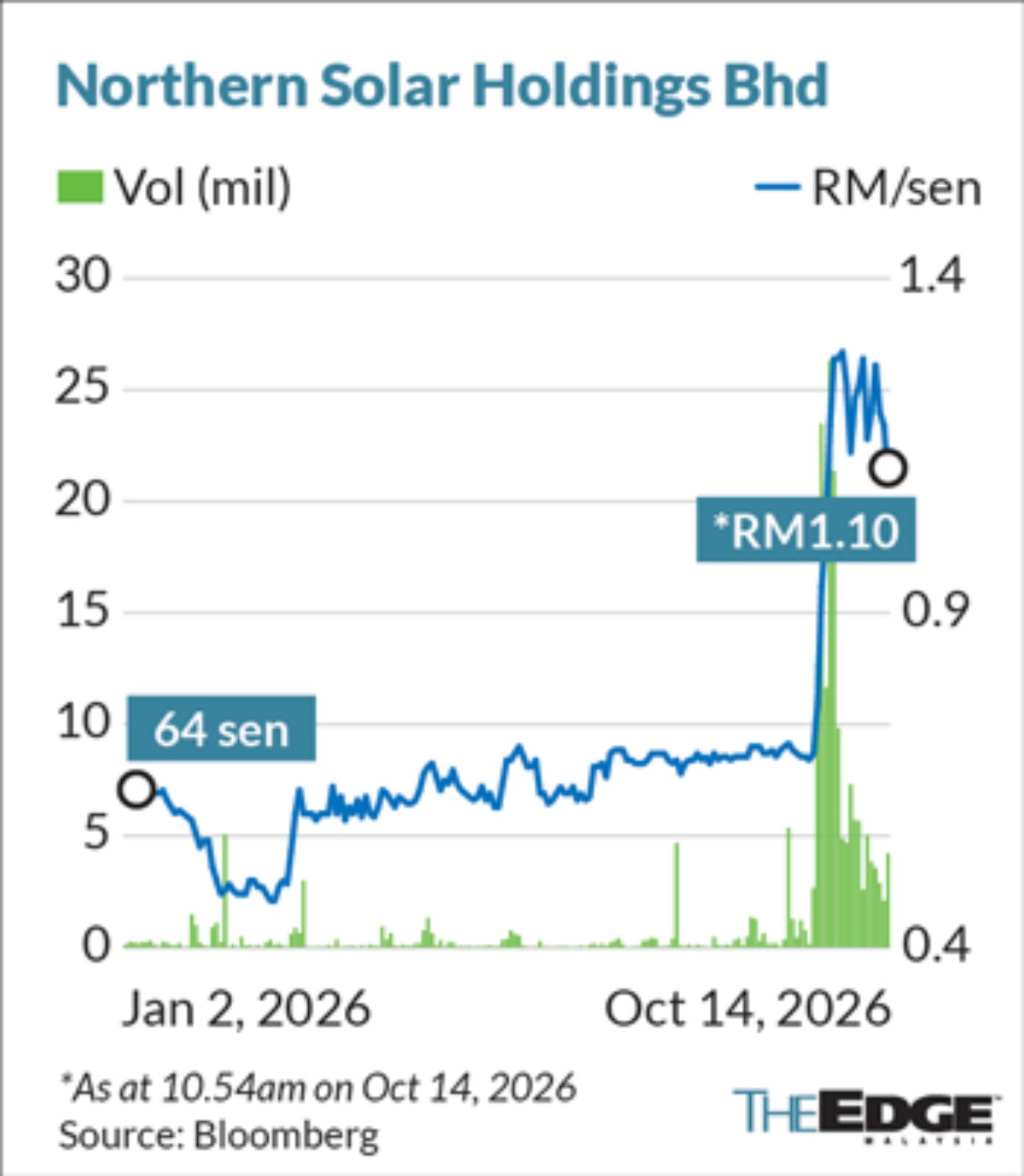
The sell-off followed a clarification by the Energy Commission on Tuesday that the SAC under the Corporate Renewable Energy Supply Scheme (CRESS) comprises two components, which are the previously announced 14 sen/kWh payable by RE developers and an additional four sen/kWh borne by green electricity consumers.
The additional charge applies during the current regulatory period ending in 2027 and is subject to review every three years.
CRESS allows RE developers to sell electricity directly to corporate customers using the national grid operated by Tenaga Nasional Bhd (KL:TENAGA).
In a research note, CGS International said the latest clarification would raise the estimated overall cost of electricity supplied under CRESS by 8% to 9%, to between 48 sen and 50 sen/kWh, from its previous estimate of 44 sen to 46 sen/kWh.
The research house said the higher cost could dampen demand from commercial and industrial users outside the data centre segment, including electrical and electronics manufacturers, hospitals and shopping malls.
It estimated that an additional seven to eight gigawatts of potential electricity demand from these customers could become less certain, as the revised CRESS tariff is now broadly comparable with conventional electricity tariffs before fuel cost adjustments.
Nevertheless, CGS International expects data centres to remain a key source of demand for CRESS, given that the revised green electricity tariff is still below the approximately 60 sen/kWh paid by large data centres for conventional electricity, excluding automatic fuel adjustments.