

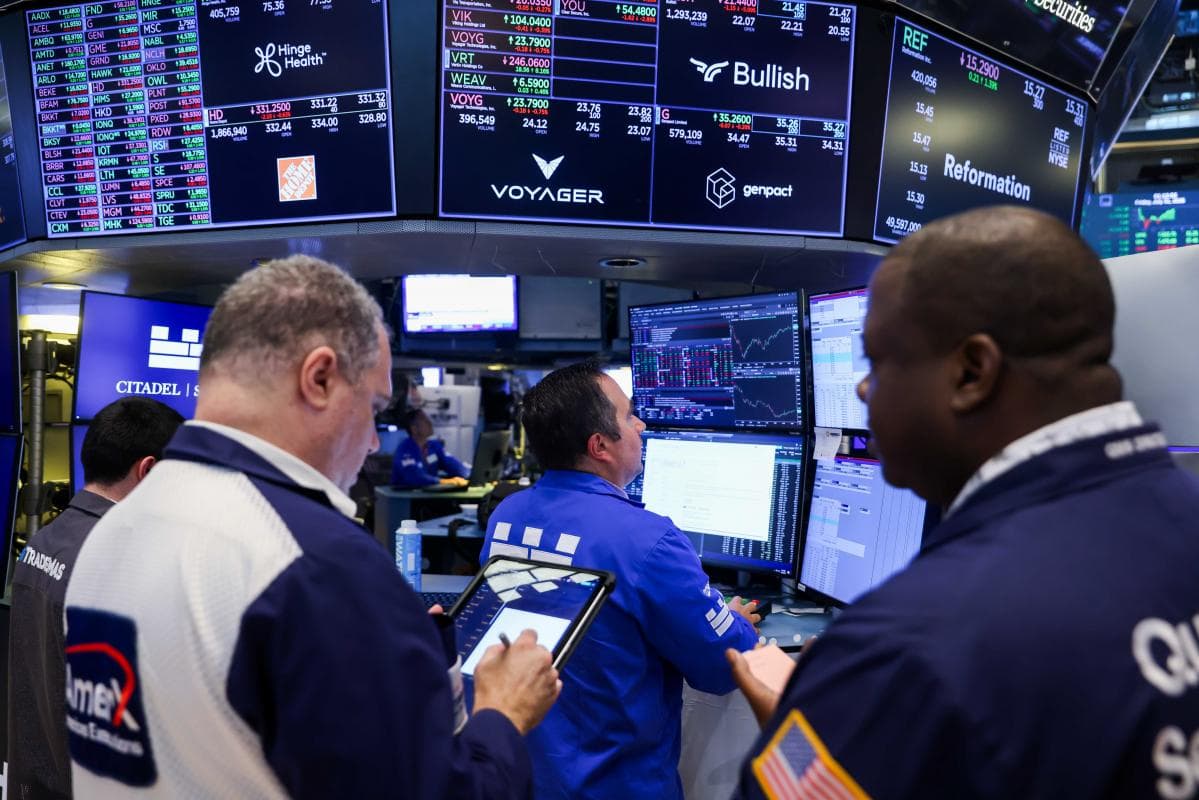
(Oct 14) : Stocks bounced from session lows as speculation the Federal Reserve won’t be forced to raise rates aggressively offset lingering worries about elevated oil prices and the outlook for artificial intelligence.
While the S&P 500 closed little changed, most of its firms rose after Fed Bank of New York President John Williams said he still sees one more hike as appropriate this year, but currently doesn’t believe it will be necessary to lift rates again in 2027. Bond yields fell. A selloff in chipmakers waned, also helping sentiment. Microsoft Corp. rose to a record.
“I haven’t changed my view that it may be appropriate to have one more rate hike,” Williams told Bloomberg News. “I don’t think at this time I have any reason to believe that we would need to do more” after that.
His remarks came ahead of a key reading on consumer prices. Higher gasoline costs probably led to quicker overall inflation in September even as underlying price pressures moderated.
“Confirmation that underlying inflation moderated last month would allow the Fed to approach the timing of its next rate hike with patience rather than urgency,” said Ian Lyngen at BMO Capital Markets.
Fed Governor Christopher Waller said the surge in long-term Treasury yields is helping to curb demand in rate-sensitive sectors such as housing and automobiles, doing some of the work of tighter monetary policy.
“When yields go up, is that going to impact interest-sensitive sectors like housing and autos and other things? Yeah, of course it is,” Waller said at Bloomberg’s New Economy Forum in New Delhi. While that isn’t the Fed’s intention, higher yields are “doing a little bit of the work,” he said.
As the earnings season got underway, JPMorgan Chase & Co., Citigroup Inc. and Wells Fargo & Co. set a fresh record in the third quarter for how much they earned from lending, with customers continuing to borrow even as interest rates increased.
As Wall Street’s fixed-income desks struggled in the third quarter, their rivals in equities seized a rare opening to outshine their market brethren.
Equities divisions at five of the largest US banks are on track to deliver more than US$66 billion of revenue in the first nine months of the year, roughly US$3 billion higher than what’s expected from units handling bonds, currencies and commodities. Part of that was driven by prime brokerage operations catering to hedge funds and other big stock investors.
uploaded by Isabelle Francis