

(Oct 13): Long-term Treasuries advanced as oil prices snapped a three-day rally, aiding the US inflation outlook ahead of Wednesday’s release of September consumer prices data.
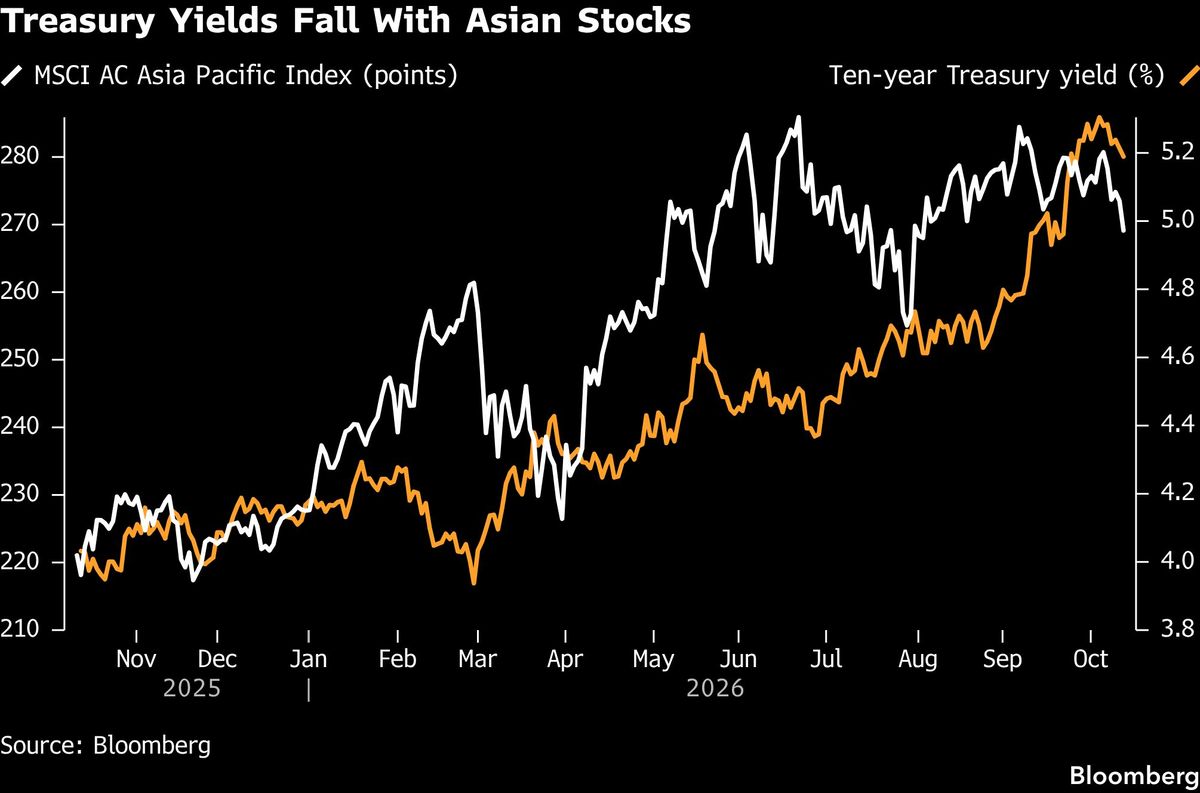
Ten- to 30-year US government debt yields were two to three basis points (bps) lower on the day, maintaining their war-driven connection with oil prices, where US benchmark West Texas Intermediate (WTI) crude futures had pared a 2.2% drop to less than 0.5%. It was the Treasury market’s first trading day since Friday, even as US stock trading took place during Monday’s US bank holiday.
Meanwhile, short-term Treasury yields were 2bps to 3bps higher on the day after erasing declines. They stabilised as expectations for another Federal Reserve interest-rate hike by the end of the year stayed intact. The performance of US stocks remains in focus following last week’s record high for the S&P 500, and semiconductor shares and the Nasdaq 100 pared their initial response to a slump in Asian equities led by Korean chipmakers.
“Geopolitics, AI and rates remain the main themes driving markets,” said Mohit Kumar, chief economist and strategist for Europe at Jefferies.
Stock investors are turning cautious on the artificial intelligence (AI) trade, one of the hottest corners of the market this year, heading into earnings season. Rising competition, stretched valuations and concerns over soaring AI spending have raised questions about whether companies can deliver results that justify the sector’s breakneck rally. A poll by Bank of America Corp showed investors are the most exposed to technology stocks since the Covid pandemic in 2020.
The US benchmark 10-year yield hit 5.36% last week, the highest since 2002, amid growing worries over the nation’s fiscal deficits and as elevated oil prices boosted bets on Fed hikes. Rising global borrowing costs have fuelled concern about economic growth, increasing scrutiny over equity valuations.
US inflation gauges, while far below their 2022 peak levels, have been reinvigorated by rising oil prices since the US attacked Iran in late February, disrupting Middle East supply. The Fed’s favoured inflation gauge was 3.4% in August and has exceeded the 2% target level since 2021. A separate gauge, the US consumer price index, also was 3.4% in August and will be updated for September on Wednesday.
Economists in a Bloomberg poll expect a 3.6% CPI reading overall and 2.5% excluding food and energy, up from 2.4% in August.
St Louis Fed president Alberto Musalem last week signalled interest rates should increase over the next six-to-nine months, while his Cleveland counterpart Beth Hammack said on Monday that smaller, more frequent adjustments to policy can help inflation expectations remain anchored. Minutes of the Fed’s September policy meeting showed last week that all 19 officials backed the decision to raise interest rates.
Despite Tuesday’s decline, the prospect of higher yields remains a concern for bond investors, who are also assessing the potential impact from President Donald Trump’s deal on Russian diesel supplies, alongside the outlook for US monetary policy.
A surge in government bond yields is the biggest emerging risk to the global financial system, according to Athanasios Vamvakidis, deputy director at the capital markets division of the International Monetary Fund.
Tuesday’s stock losses in Asia followed a selloff in technology shares on Wall Street that left a US gauge of chip stocks at its weakest since mid-September.
Uploaded by Felyx Teoh