

(Oct 13): Legacy carmakers won’t likely be able to match Chinese rivals on price and may already have missed first-mover advantage on electric and software-developed vehicles, according to a report by Mobility Global Inc’s automotive analysts.
The paper, which the research firm released on Tuesday, projects established automakers will retain the upper hand over newer, China-based peers in areas such as premium brands, safety-based engineering and fleet sales. But Chinese carmakers have an edge in mass-market vehicles from sheer scale, faster development and lower costs.
“The competition is just going to become more intense,” Calum MacRae, an executive director at Mobility Global and one of the report’s authors, said in an interview, noting global demand for passenger vehicles is sluggish. “That competitive pressure is coming within a total industry volume that’s probably not going to grow significantly.”
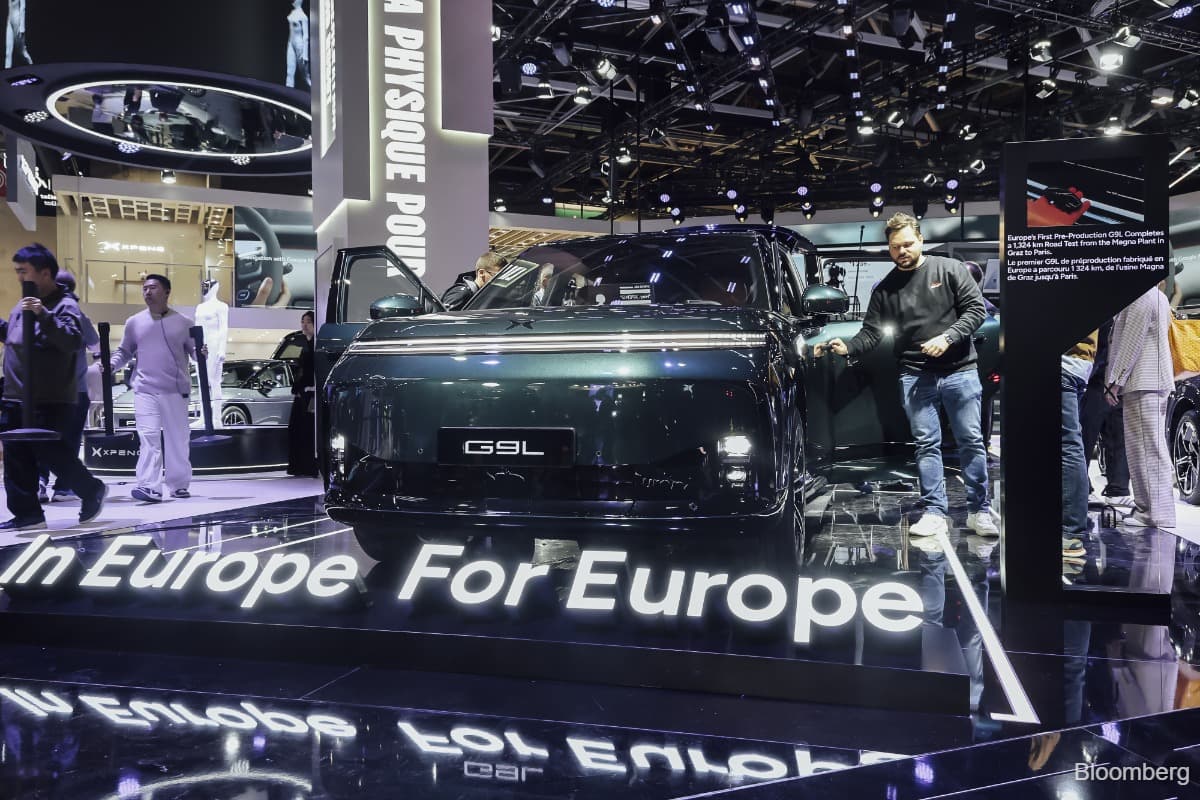
Paris Motor Show opening day
The report, entitled New Order: China, the West and the battle for automotive advantage, said that while China’s rise as a globally competitive auto power echoes that of Japan and South Korea, Chinese carmakers benefit from the widespread impact of software, which is reshaping business models, and easier access to capital as part of China’s effort to foster a home-grown auto industry.
“This shock is different because China’s advantages are much harder to replicate. What is being imported now is either a software-driven experience with rapid feature updates or a cost advantage that is reinforced by preferential financial and supplier-backed working capital,” it said.
The global auto industry is struggling to come to terms with an influx of Chinese-made vehicles. That has led some governments to restrict or effectively ban vehicle imports from China, which Mobility Global views as a precursor to a boom in local production by Chinese automakers in overseas markets — first by investing in existing plants and then building new ones.
China-based manufacturers are already seeking joint ventures with some established European automakers as a way to absorb excess production capacity. That allows them to access existing logistics networks and workforces, while drawing on their own supply chains for core components. As their market share grows, Chinese brands will opt to build new plants on their own.
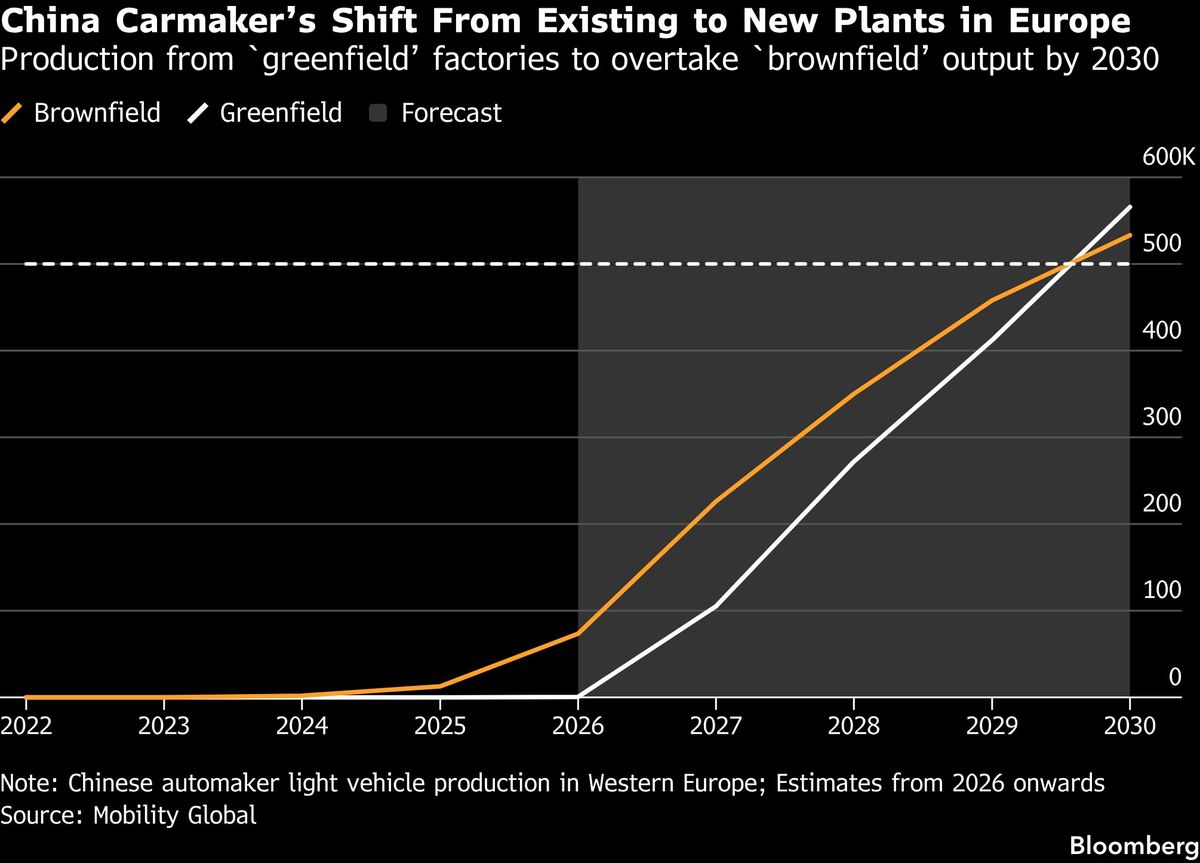
Mobility Global, which spun off from S&P Global Inc in July, projects that output from those newly built, or so-called greenfield, factories in Europe will exceed that from older, or brownfield, facilities as soon as 2030 — when localised production of Chinese brands nears an estimated 1.1 million vehicles.
Brownfields offer a “low risk, low friction option” initially, Mobility Global’s MacRae said, adding that “once you’ve established that you can get a market position, it’s natural that you start localizing production and investing in your own facilities.”
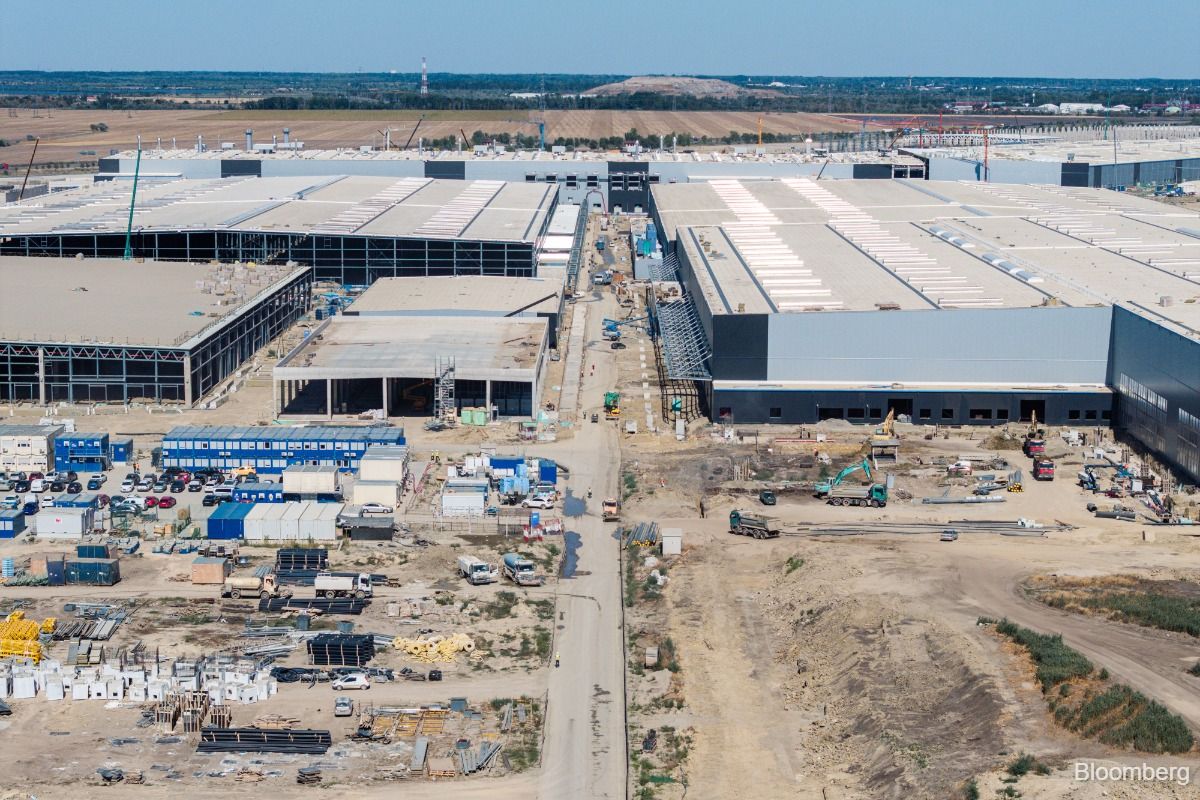
BYD Co, China’s largest carmaker, is looking to skip existing JVs altogether and move straight to building its own factories. Stella Li, who head’s the company’s overseas business, told Bloomberg on Monday that it plans to become a major manufacturer in Europe by the end of the decade, and aims to hire as many as 40,000 workers there. In addition to building a plant in Hungary, it’s eyeing new factories in France and Spain.
MacRae said that it’s difficult to predict whether Chinese automakers will penetrate the US market, where imports from China are largely blocked. But he noted brands like Great Wall Motor Co make a wide range of vehicles such as pickup trucks that might one day appeal to cost-sensitive American buyers.
Uploaded by Felyx Teoh