

This article first appeared in The Edge Malaysia Weekly on October 12, 2026 - October 18, 2026

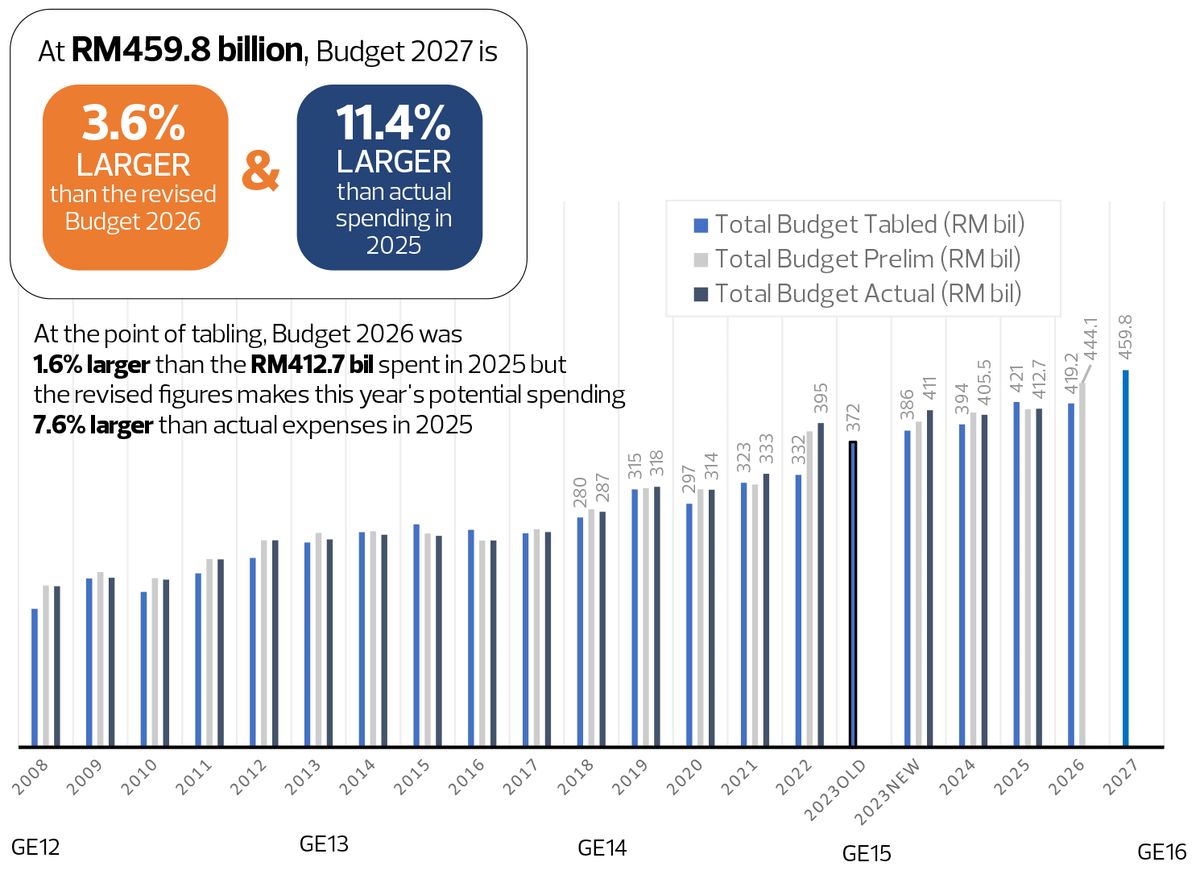
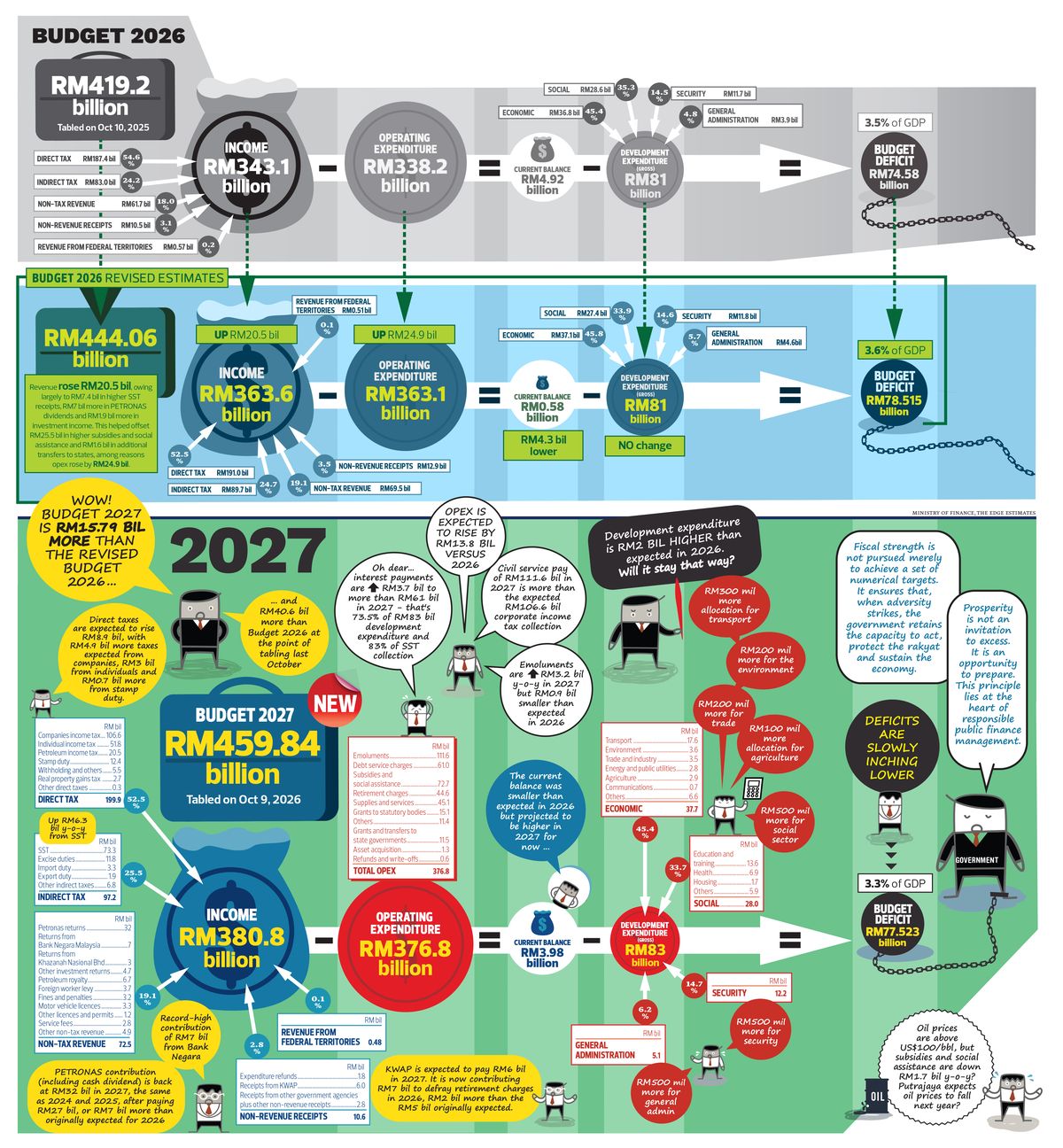
WHETHER or not Budget 2027 is a “sweet pre-election budget”, its RM459.84 billion allocation is substantial, equivalent to nearly 20% of Malaysia’s economy. This is one percentage point higher than Budget 2026 as tabled a year ago, and comparable to the upwardly revised 2026 revenue and expenditure figures.
Higher oil prices are expected to push subsidies above RM80 billion in 2027, including some RM40 billion for fuel. Allocations for Sumbangan Asas Rahmah (SARA) and Sumbangan Tunai Rahmah (STR) will also rise to a record RM16 billion next year, from RM15 billion this year.
Operating expenditure is projected to increase 3.8% year on year to RM376.84 billion, while development expenditure will rise 2.5% to RM83 billion, up RM2 billion, supported by 4.7% y-o-y revenue growth to RM380.82 billion.
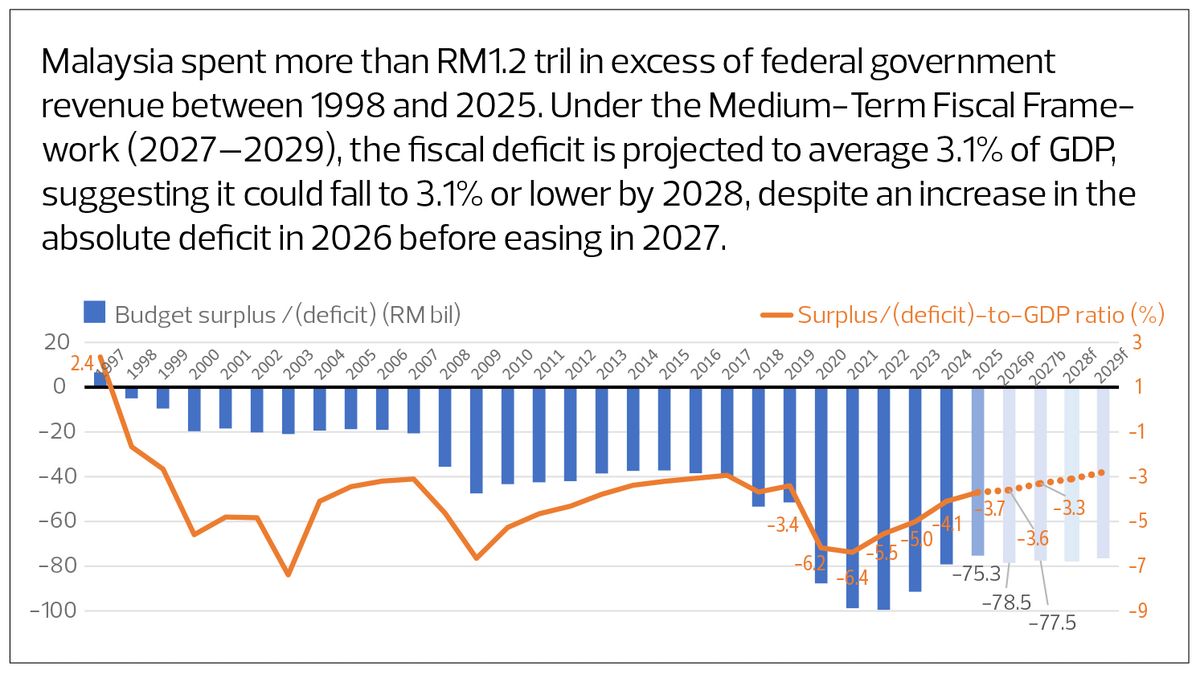
Yet, the fiscal deficit is projected to narrow to 3.3% of GDP, or RM77.52 billion, in 2027, even as Putrajaya raises Budget 2026 by RM24.9 billion, or 5.9%. The 2026 deficit is now forecast at 3.6% of GDP, or RM78.52 billion, up from the 3.5%, or RM74.58 billion, projected last October.
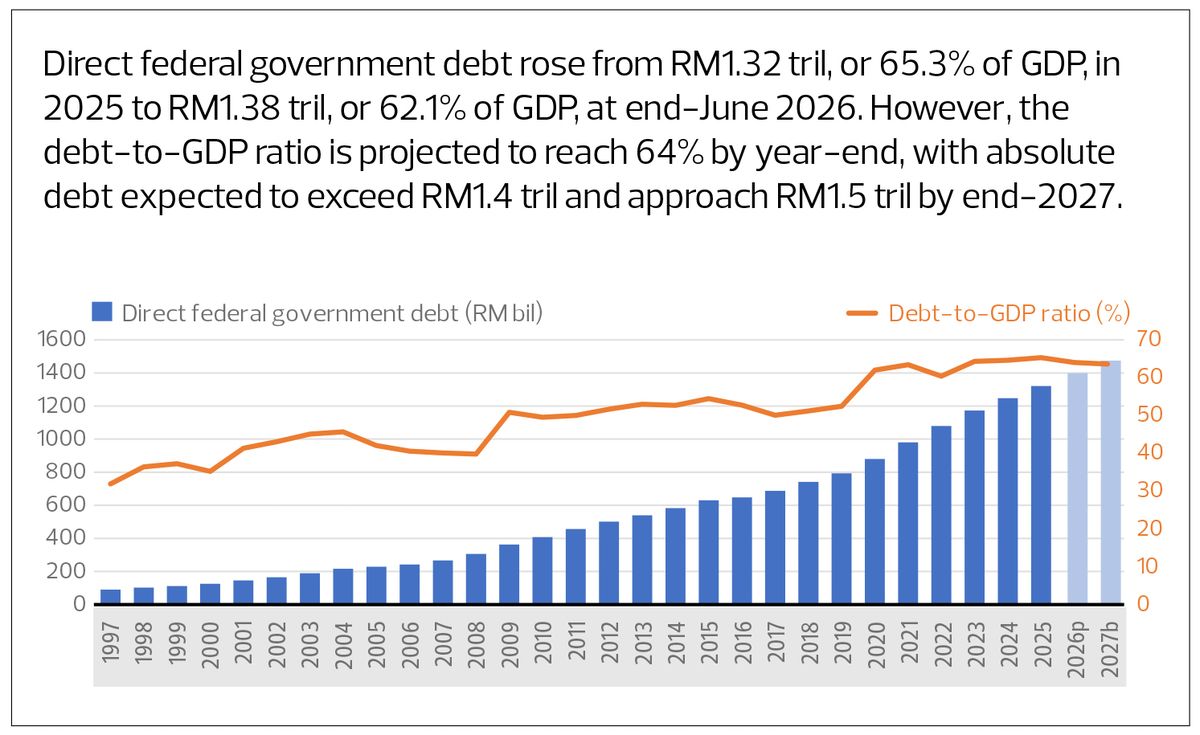
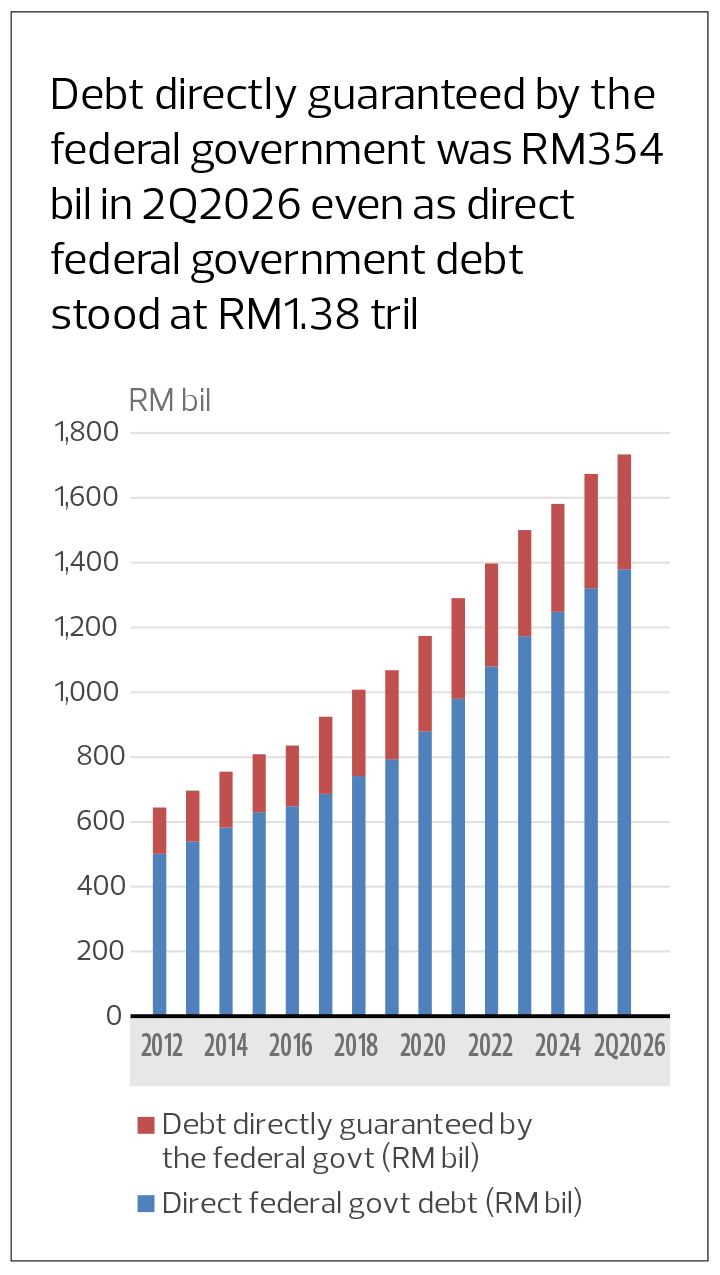
In presenting Budget 2027, Prime Minister Datuk Seri Anwar Ibrahim says Malaysia is on track to reducing the fiscal deficit to 3% of GDP by 2028, and that the country’s headline debt-to-GDP ratio is expected to decline to 63.7% of GDP by end-2027 from 64% of GDP at end-2026 and 65.3% of GDP or RM1.32 trillion as at end-2025.
While stellar economic growth supports Budget 2027’s absolute figures, part of the spending is enabled by Putrajaya leveraging its institutions and other fiscal tools, even as it reiterates its commitment to fiscal prudence. More on this later.
Growth in 2026 revised to 4.8% to 5.3%
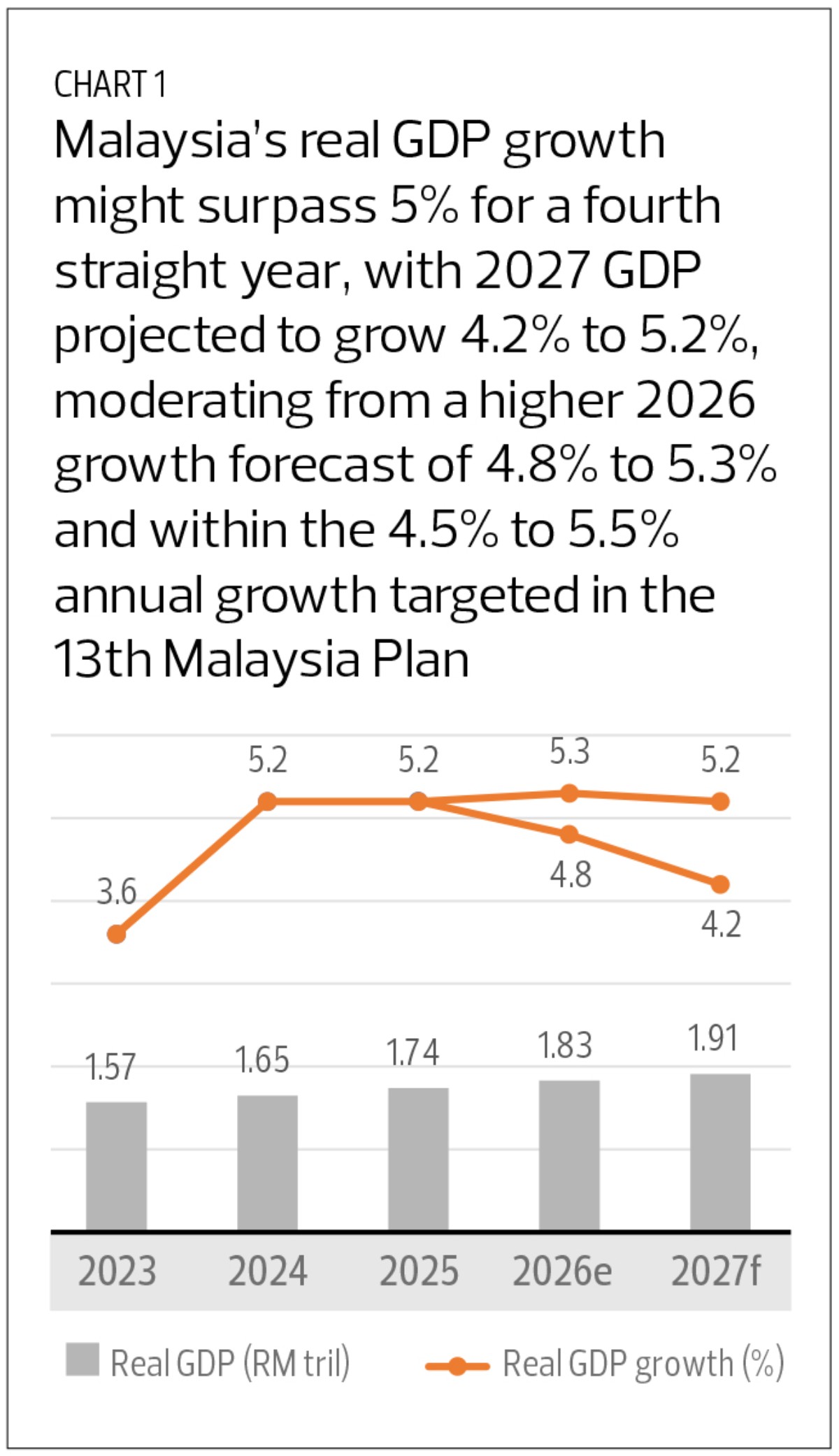
Malaysia’s economy could well grow faster than 5% y-o-y for a fourth straight year in 2027.
Apart from the expected upward revision to the official 2026 GDP growth forecast to between 4.8% and 5.3% from the 4% to 5% projected in October 2025, the Ministry of Finance says Malaysia’s economy is forecast to grow between 4.2% and 5.2% in 2027, albeit on the back of “stable but moderating domestic demand” and policies supporting domestic industries and exports.
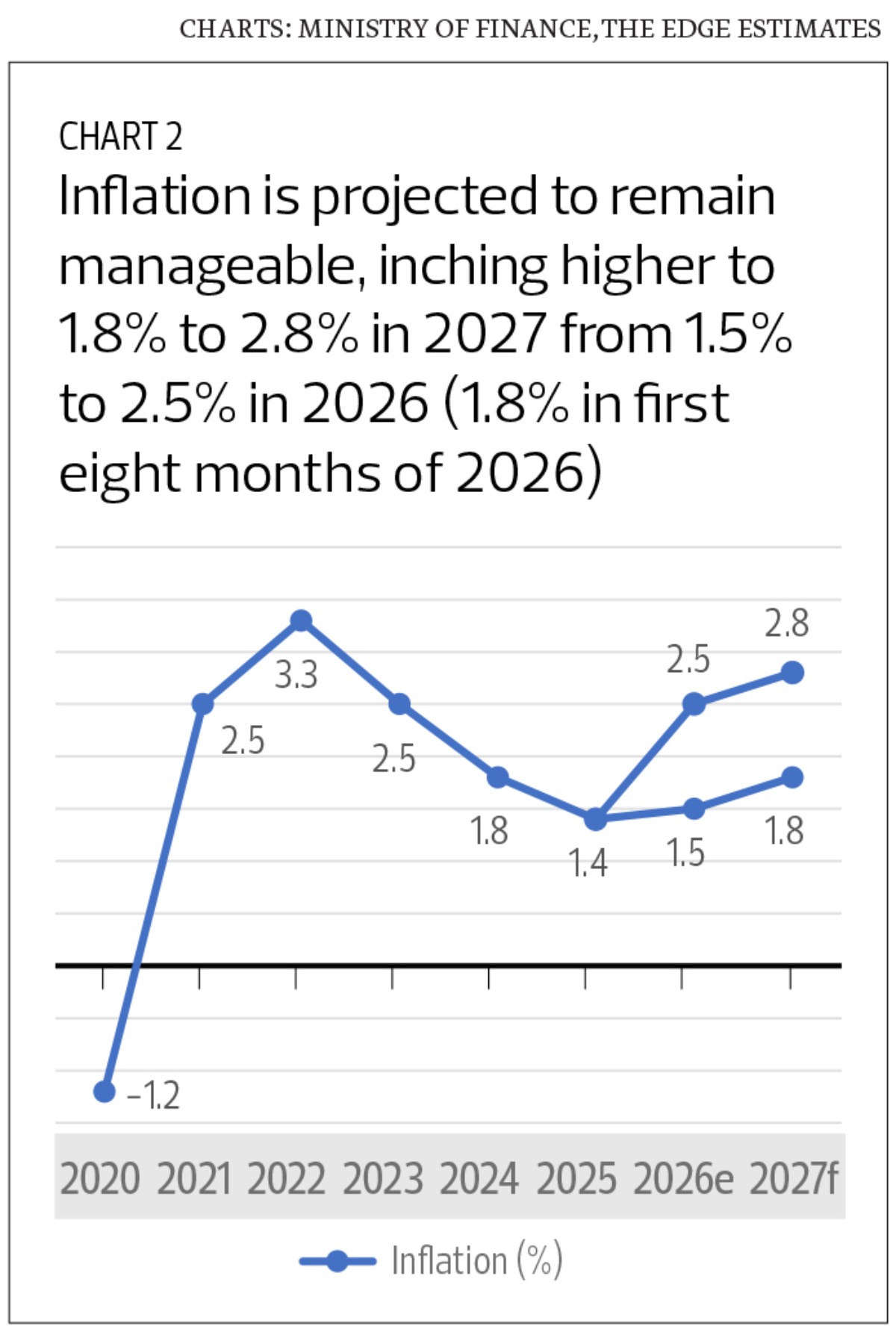
The forecast is consistent with expectations of growth moderating in the second half of this year, with real GDP in the first half averaging 5.6% after an enviable 6% growth in the second quarter. Headline inflation was forecast to range between 1.8% and 2.8% in 2027, higher than the revised estimate of 1.5% to 2.5% for 2026.
Voters tend to favour incumbents when the economy is doing well. Anwar appears, however, to have several other priorities on his to-do list, including launching the Johor-Singapore Special Economic Zone (JS-SEZ) blueprint and master plan with his Singaporean counterpart, Lawrence Wong, later this year, and ensuring investments materialise in other states.
Two days ahead of tabling Malaysia’s largest-ever annual budget, Anwar told news editors that Budget 2027 is not the last one to be tabled in the current parliamentary session, which expires only in February 2028, allowing room for the tabling of Budget 2028 in October 2027 before the country heads for the 16th General Election (GE16). He expressed confidence that Budget 2027 would be passed by Parliament, despite speculation to the contrary.
“The priority ahead is an economic growth that is of a higher value, with greater productivity and inclusivity,” the Economic Outlook 2025 report read, noting that achieving its socio-development outcomes “demands fiscal discipline, sound governance and credible institutions” as well as policy commitment that translates into timely implementation, clear accountability and measurable outcomes.
Putrajaya is clearly set on riding the global artificial intelligence (AI)-related high-tech manufacturing exports and data centre boom by sending all the right headline messages to investors on continued fiscal prudence, while stepping up efforts to ensure that more Malaysians enjoy the strong headline economic growth numbers through better wages, income relief and cash assistance. The latter also powers domestic consumption.
“Prosperity is not an invitation to excess. It is an opportunity to prepare. This principle lies at the heart of responsible public finance management. Fiscal strength is not pursued merely to achieve a set of numerical targets. It ensures that, when adversity strikes, the government retains the capacity to act, protect the rakyat and sustain the economy,” reads Anwar’s message in the preface to the Fiscal Outlook and Federal Government Revenue Estimates 2027, issued alongside the Economic Outlook 2027 report on Oct 9, 2026, in conjunction with the tabling of Budget 2027 — his fifth Madani budget as prime minister — in Parliament.
“Fiscal prudence, however, must not be confused with austerity. Reform does not mean withdrawing support when people need it most. By retargeting subsidies, reducing leakages and improving the management of public resources, the government has been able to direct assistance more effectively while continuing to support economic growth.”
PETRONAS, Bank Negara, KWAP, Khazanah pay more
With oil prices hovering above US$102 per barrel at the time of writing, it comes as no surprise that Petroliam Nasional Bhd (PETRONAS), Bank Negara Malaysia, Khazanah Nasional Bhd and Kumpulan Wang Persaraan (Diperbadankan) (KWAP) had been tapped for additional dividend and contributions for both 2026 and 2027.
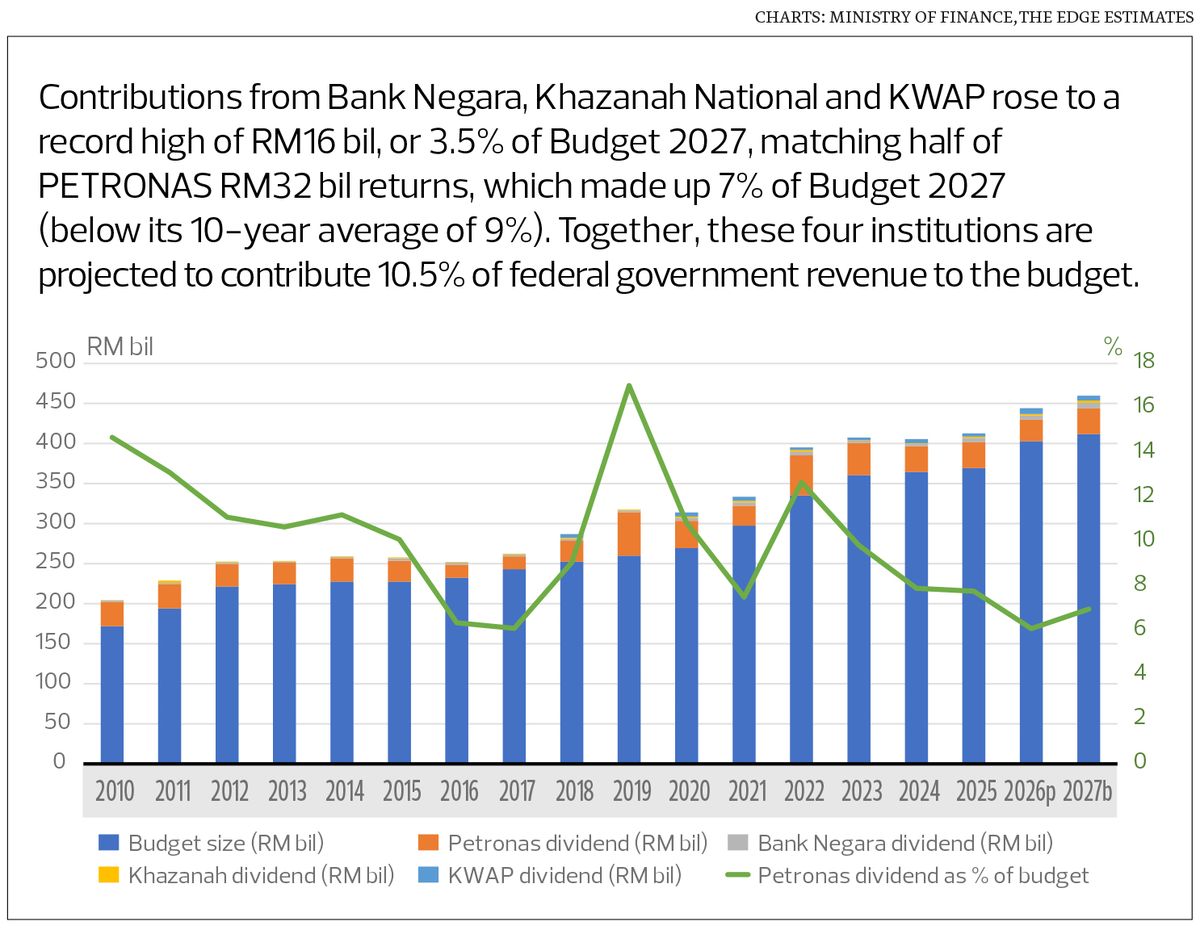
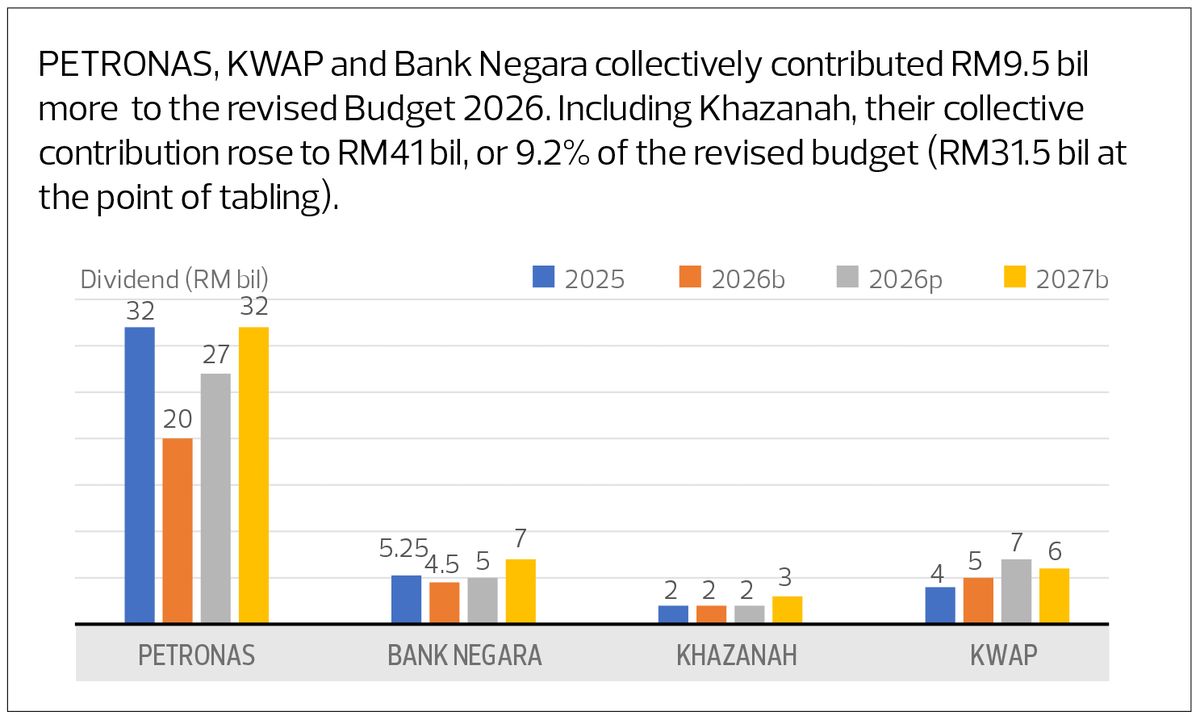
Beyond PETRONAS, which raised its 2026 contribution (including cash dividends) to RM27 billion from RM20 billion and has pledged RM32 billion for 2027, Budget 2027 and the revised Budget 2026 show increased contributions from Bank Negara, KWAP and Khazanah.
Contributions from Bank Negara, Khazanah and KWAP rose to RM16 billion, or 3.5% of Budget 2027 — matching half of PETRONAS’ RM32 billion for next year. Collectively, the four institutions are projected to contribute some RM48 billion, or about 10.5% of federal government revenue, in 2027.
For the revised Budget 2026, PETRONAS, KWAP and Bank Negara are contributing RM9.5 billion more in dividends than the RM31.5 billion originally budgeted when Budget 2026 was tabled last October. Including Khazanah’s existing RM2 billion dividend commitment, the four institutions will contribute RM41 billion, equivalent to 9.2% of the revised budget.
PETRONAS’ RM32 billion dividend commitment for 2027 matches its payouts in 2024 and 2025 but remains below the record RM54 billion paid in 2019. That included a RM30 billion special dividend to help fund RM37 billion in GST and other income tax refunds owed to individuals and businesses.
The record-high RM7 billion dividend from Bank Negara for Budget 2027 is an increase from RM5 billion in the revised Budget 2026 (RM4.5 billion in the original Budget 2026).
KWAP’s dividend payout for the revised Budget 2026 has reached a record RM7 billion, up RM2 billion from the RM5 billion pencilled in when the budget was first tabled. This amounts to 16.4% of the RM42.8 billion allocated for civil service retirement charges in 2026. Its RM6 billion contribution for Budget 2027 represents 13.5% of the RM44.6 billion set aside for civil service pensions and gratuities next year.
Khazanah’s RM3 billion dividend for Budget 2027 matches its record payout in 2011, when its earnings were bolstered by the privatisation of PLUS Expressways Bhd.
KWAN commencement not set yet
At least 0.1% of the federal government’s projected revenue and 2% of PETRONAS dividends would have to be channelled into the National Trust Fund (KWAN) under the KWAN 2026 Act, passed in July to strengthen intergenerational savings from non-renewable resources. Although the Act had received royal assent, it had yet to come into force pending gazettement and the determination of a commencement date. Neither the fiscal nor economic report provided an update on its implementation.
KWAN’s assets could double in about 10 years through mandatory contributions and investment returns, even with initial contributions of about RM800 million and annual returns of 4% to 5%, Deputy Finance Minister Liew Chin Tong told Parliament when winding up the debate on the KWAN Bill 2026. This suggests KWAN’s estimated RM24 billion in assets at end-2025 could grow to RM48 billion within a decade, highlighting the importance of gazetting the Act and bringing it into force as soon as possible.
The delay in KWAN’s commencement is not entirely surprising, given the increased demands on government-linked investment companies (GLICs) to contribute to federal coffers amid higher subsidy and cash assistance bills.
Anwar told editors at a briefing last week that the government intends to implement KWAN, but did not specify a commencement date.
Debt service charges is 83.2% of SST haul
Still, whoever attains Putrajaya would need to rein in the growth in operating expenditure or expand revenue collection to allow for more productive development expenditure.
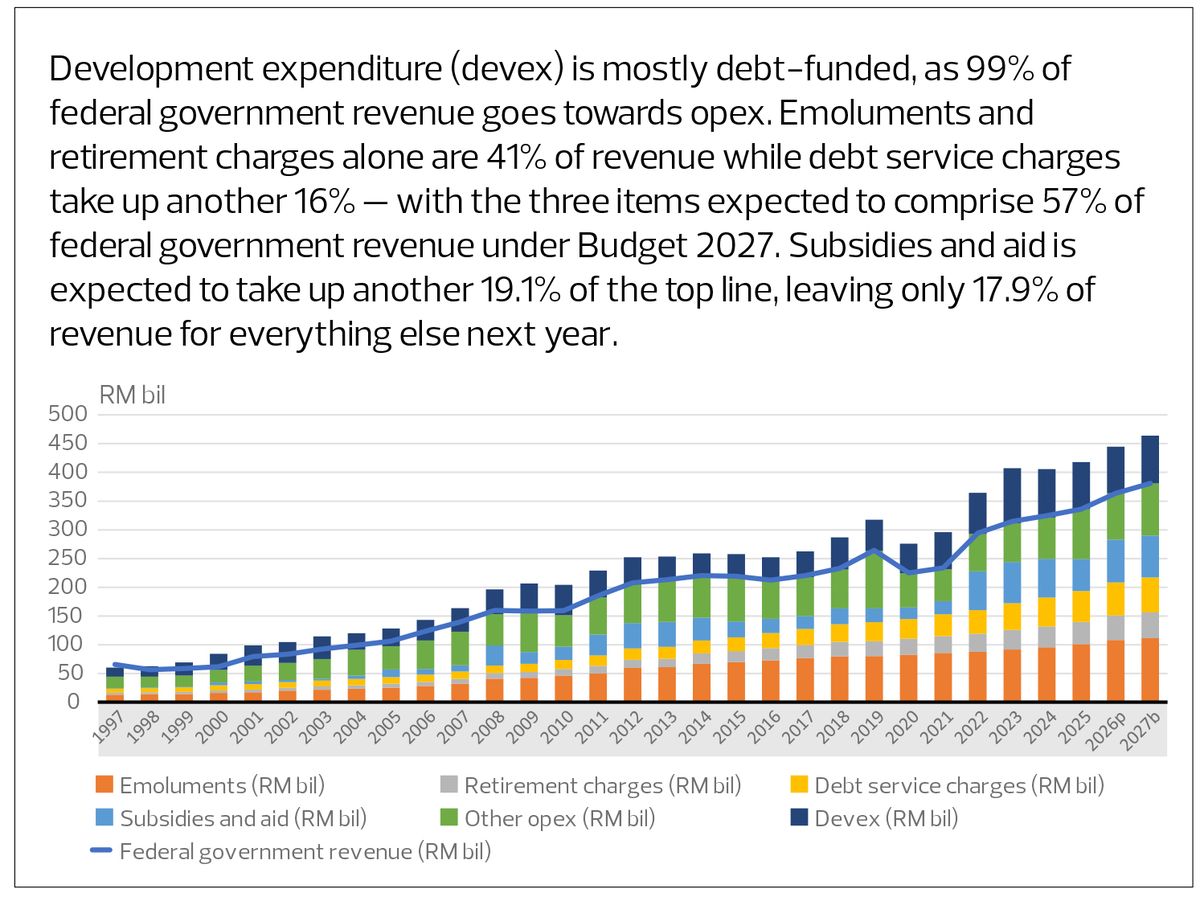
Operating expenditure has taken close to 99% of federal government revenue for nearly two decades, leaving little choice but to borrow for development.
Between 1998 and 2025, Malaysia spent more than RM1.2 trillion beyond its revenue, helping drive direct federal government debt to RM1.32 trillion, or 65.3% of GDP, in 2025.
Federal government debt service charges are projected to reach RM61.01 billion in 2027 — 1.2 times the RM51.8 billion expected from individual income tax, more than 83% of projected collections from the expanded sales and service tax (SST), 73.5% of the RM83 billion allocated for development expenditure and 57% of the RM106.6 billion expected from corporate income tax.
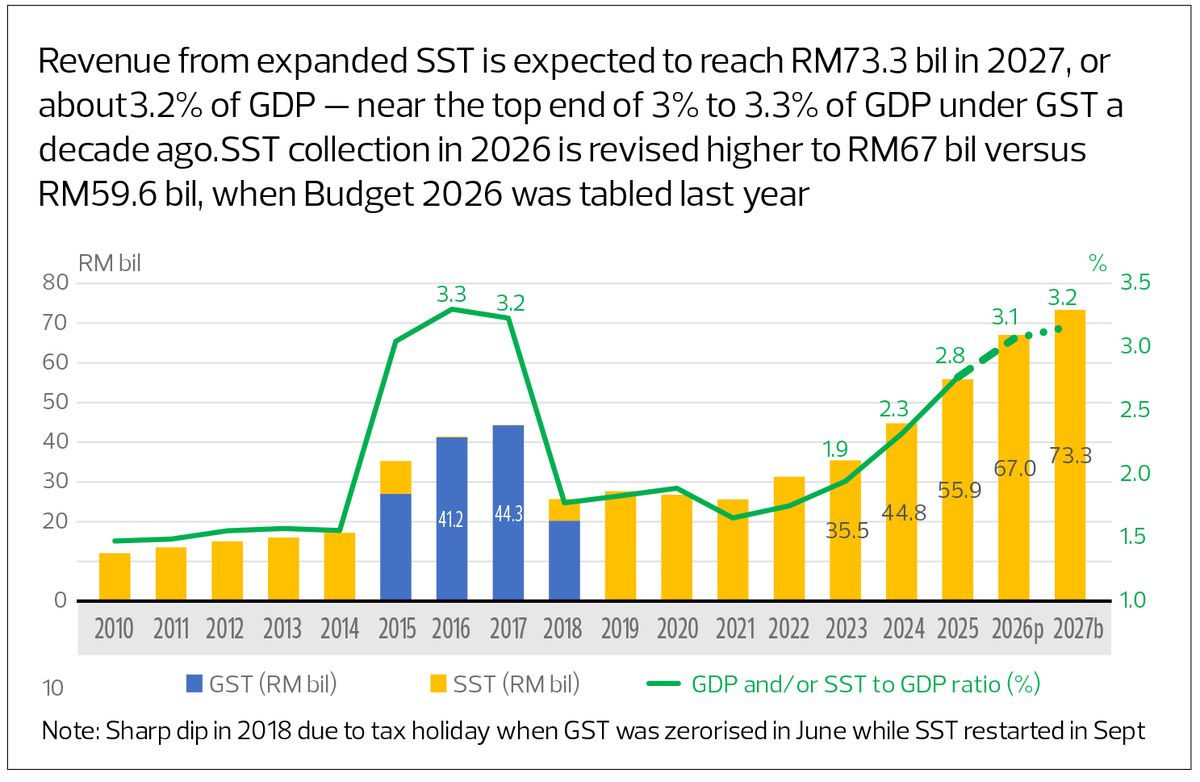
This comes even as SST collections are projected to rise to RM73.3 billion, or 3.2% of GDP, in 2027, from RM67 billion, or 3.1% of GDP, in 2026 and RM55.9 billion, or 2.8% of GDP, in 2025.
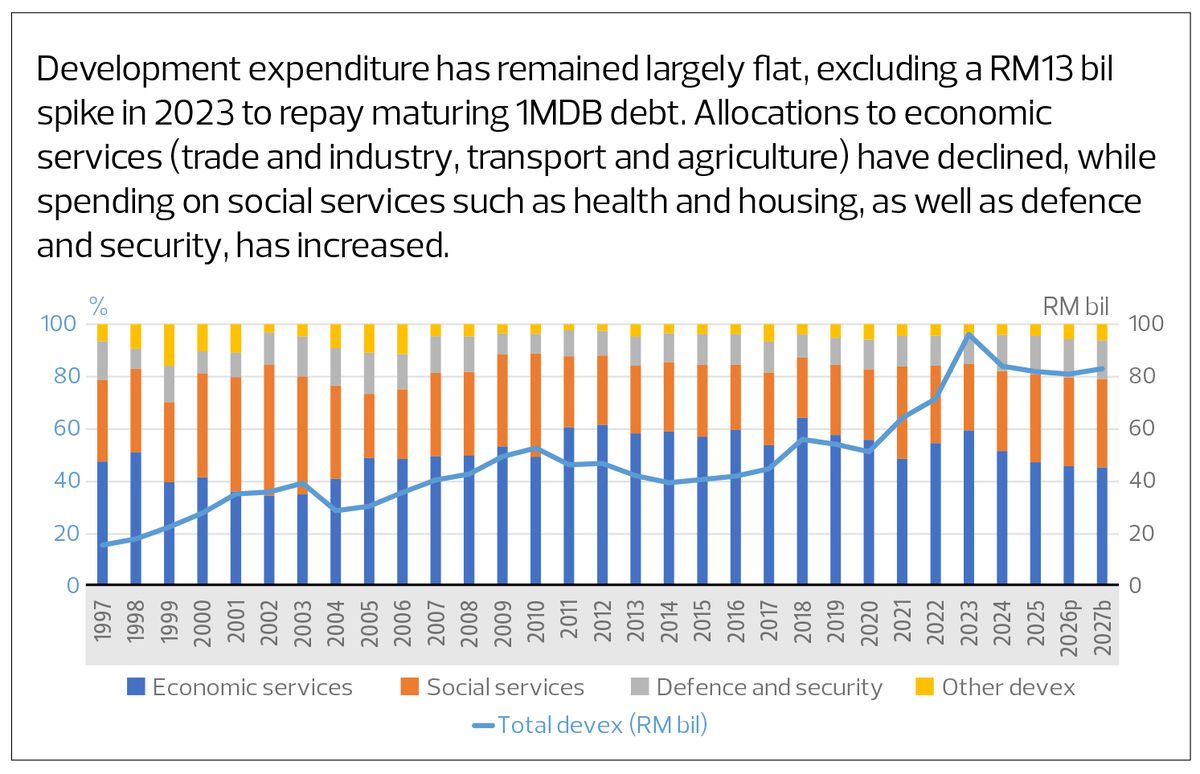
Civil service emoluments and pensions are projected to total RM156.2 billion in 2027, accounting for 41.5% of operating expenditure and 41% of federal revenue. Combined with debt service charges, which will absorb another 16.2% of operating expenditure and 16% of revenue, these three items will consume 57 sen of every ringgit in federal revenue.
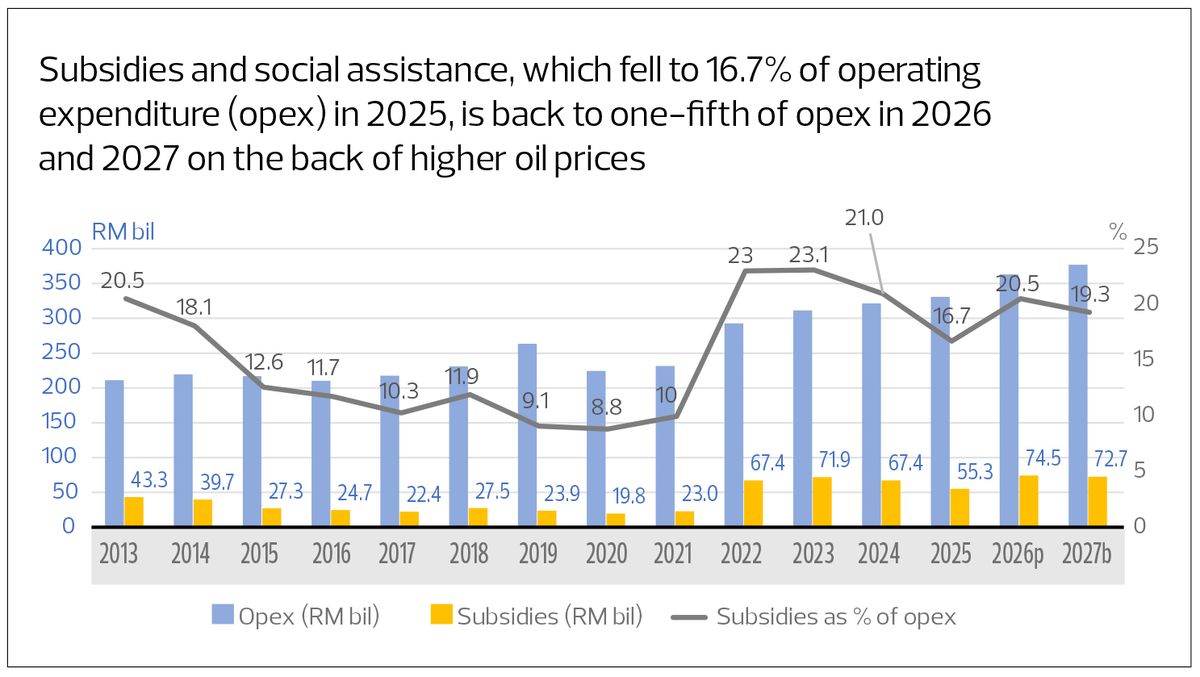
Subsidies and social assistance under operating expenditure are projected at RM72.7 billion in 2027, equivalent to 19.1% of revenue, down slightly from RM74.5 billion, or 20.5% of operating expenditure, in 2026.
Operating expenditure often grows faster than development expenditure, leaving limited room for manoeuvre without major reforms that could face strong political pushback. This may explain why GLICs are being asked to consider catalytic investments to strengthen the economy, strategic capabilities and business ecosystem under the Government-linked Enterprises Activation and Reform Programme (GEAR-uP).
RM459.84 bil or RM510 bil?
Rather than the RM459.84 billion budget allocation, Putrajaya is highlighting RM510 billion, or 22% of GDP, as the headline figure for Budget 2027. This broader total includes RM25 billion in GLIC investments under GEAR-uP, RM11 billion from public-private initiatives (PPI), and RM14.2 billion from federal statutory bodies and Ministry of Finance (MoF)-led entities.
Anwar also did this when tabling Budget 2026 last year, placing emphasis on the figure of RM470 billion for 2026, or just over 22% of GDP — including RM30 billion from GLICs, RM10 billion from PPI and RM10.8 billion from federal statutory bodies and MoF-led entities.
For now, strong headline economic growth numbers and investment interest in the AI and chip story are adding to investors’ goodwill and tolerance of the country and on-the-ground noise.
Before concluding his Budget speech on Oct 9, Anwar invoked “intergenerational responsibility”, stressing that each generation has a duty to pass on a better Malaysia. If Putrajaya can ensure that more Malaysians share in the benefits of strong headline GDP growth, they may be more willing to contribute to nation-building.
Save by subscribing to us for your print and/or digital copy.
P/S: The Edge is also available on Apple's App Store and Android's Google Play.