

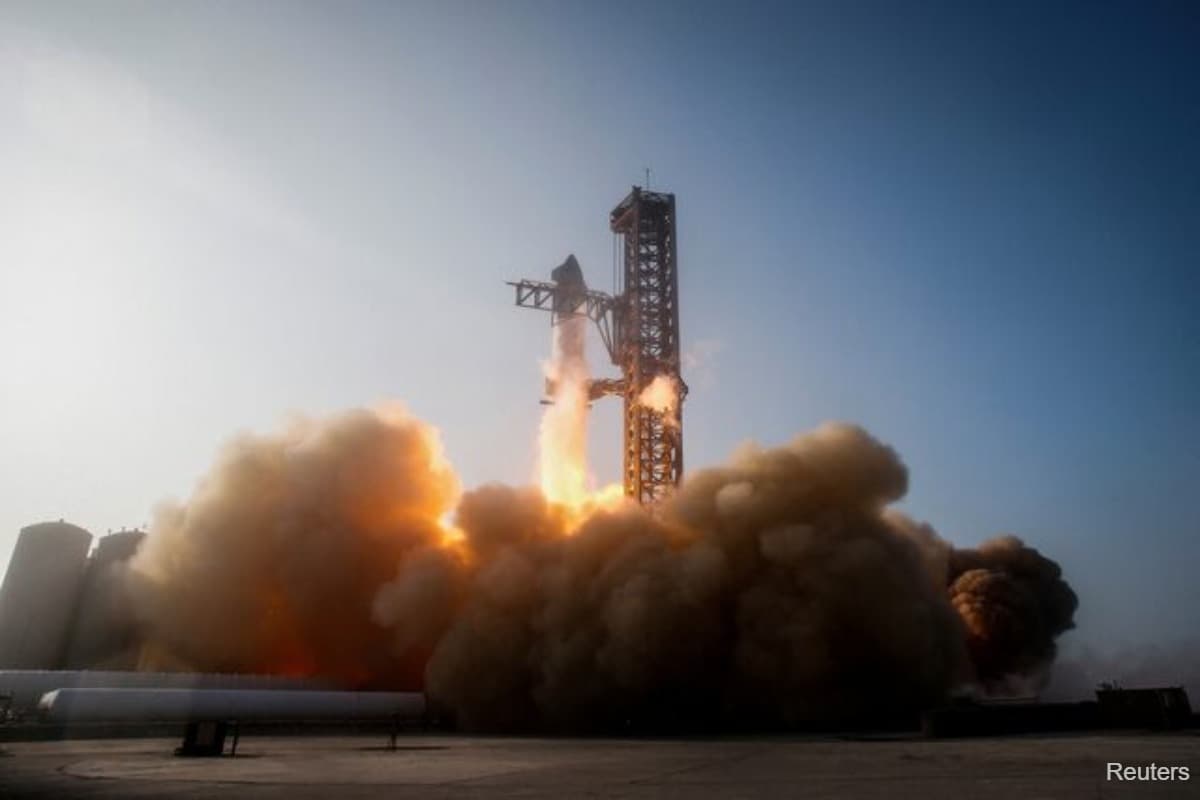
AS a pioneer in terrestrial communication 2G-4G as well as orbital communication of ‘Iridium’ satellite communication for many years, satellite communication sounded to me to be like a technology for astronauts, remote villages, ships, aircraft, or military operations. It was useful, but distant from everyday business life. That is changing fast. The recent Starship test flight by SpaceX shows why satellite-based communication may become one of the most important foundations of the future digital economy.
SpaceX’s Starship — the largest rocket ever built — reached Earth orbit for the first time in late September and deployed the first third-generation Starlink satellites. These satellites are described as being around ten times more powerful than earlier versions. Because of their size, only Starship can carry them efficiently. This matters not only for the space industry, but for almost every company, government, and individual who depends on reliable connectivity.
The reason is simple: our world runs on communication. Banking, logistics, manufacturing, healthcare, education, retail, media, energy systems, emergency services, agriculture, remote work and artificial intelligence all require fast, stable data connections. Yet today, many regions still suffer from weak, expensive, or unavailable internet. Even in advanced economies, networks can fail during natural disasters, cyberattacks, wars, or infrastructure breakdowns. Satellite communication can become a powerful backup — and in many places, the primary connection.
Starlink and similar satellite networks aim to provide internet access directly from space. The next step is even more transformative: communication directly to mobile phones. If 5G-style connectivity from satellites becomes widely available, people may no longer depend only on cell towers. A smartphone could connect in rural areas, at sea, in the air, in disaster zones, on construction sites, in mines, forests, deserts, or developing markets where traditional infrastructure is too slow or expensive to build.
For business leaders, this is not science fiction. It is a strategic signal.
The Starship launch is important because satellite communication needs scale. Thousands of satellites are required to offer fast, low-latency services to millions or billions of users. Smaller rockets can launch satellites, but not in the same quantity or at the same cost. If Starship becomes reusable and reliable, it could dramatically reduce the cost of putting communication infrastructure into orbit. One Starship flight could deliver many times more network capacity than previous rockets. That changes the economics of global connectivity.
Lower launch costs and larger satellites mean more bandwidth, better coverage, and faster service. For companies, this could open new markets and business models. Logistics firms could track goods continuously across oceans and remote routes. Airlines and shipping companies could offer better onboard connectivity. Farmers could use connected sensors and autonomous machines in areas without mobile networks. Mining, energy, and construction companies could operate safer and more efficiently in remote locations. Banks and digital service providers could reach customers in regions where broadband infrastructure is limited.
The impact will also be social. Better connectivity can support telemedicine, online learning, emergency warnings, remote work, and access to digital public services. In a crisis, when ground networks are damaged, satellites can keep communication alive. This makes satellite infrastructure not only a commercial opportunity, but also a resilience tool for societies.
However, business leaders should avoid viewing satellite communication only as “internet from space.” Its real value lies in integration. The future will likely combine terrestrial fiber networks, mobile networks, Wi-Fi, private 5G, cloud platforms, edge computing, and satellite systems. The winning organisations will be those that understand how to use the right connection for the right purpose.
For example, a global manufacturer may use fiber in factories, private 5G on industrial campuses, and satellite links for mobile assets, remote suppliers, and emergency continuity. A healthcare provider may use satellite connectivity for rural clinics. A government may use it for disaster response and national security. A media company may use it for live broadcasting from anywhere. An AI-driven logistics company may rely on satellite links to feed real-time data from vehicles, ships, and warehouses into predictive systems.
There are also challenges. Satellite networks require regulation, spectrum rights, cybersecurity protection, responsible space traffic management, and solutions to space debris. Companies must ask serious questions: How secure is the connection? Who controls the data? What happens if a provider changes prices or priorities? How should satellite services be included in business continuity planning? What regulations apply in different countries?
Still, the direction is clear. Communication is becoming more global, mobile, and infrastructure-independent. The Starship test flight suggests that the space industry is moving from experimental ambition to practical utility. The rocket is no longer only a symbol of Mars dreams; it is becoming a delivery system for the next generation of digital infrastructure.
For business leaders, the message is urgent: do not wait until satellite communication is fully mature before paying attention. Start exploring use cases now. Identify where your organisation depends on weak connectivity. Review supply chains, remote operations, customer access, emergency systems, and digital growth markets. Build partnerships, test pilot projects, and include satellite connectivity in future technology strategies.
The companies that benefit most will not be those that admire the rocket from a distance. They will be those that understand what it carries: the possibility of connecting people, machines, markets, and ideas everywhere on Earth.
Tan Sri Rainer Althoff is a strategic consultant on global digital transformation and a former CEO of Siemens Malaysia.