

(Oct 13): It was a Wednesday evening in late September and analysts covering New World Development Co were getting antsy. The cash-strapped Hong Kong developer was late to report its earnings and executives had not shown up to a scheduled briefing.
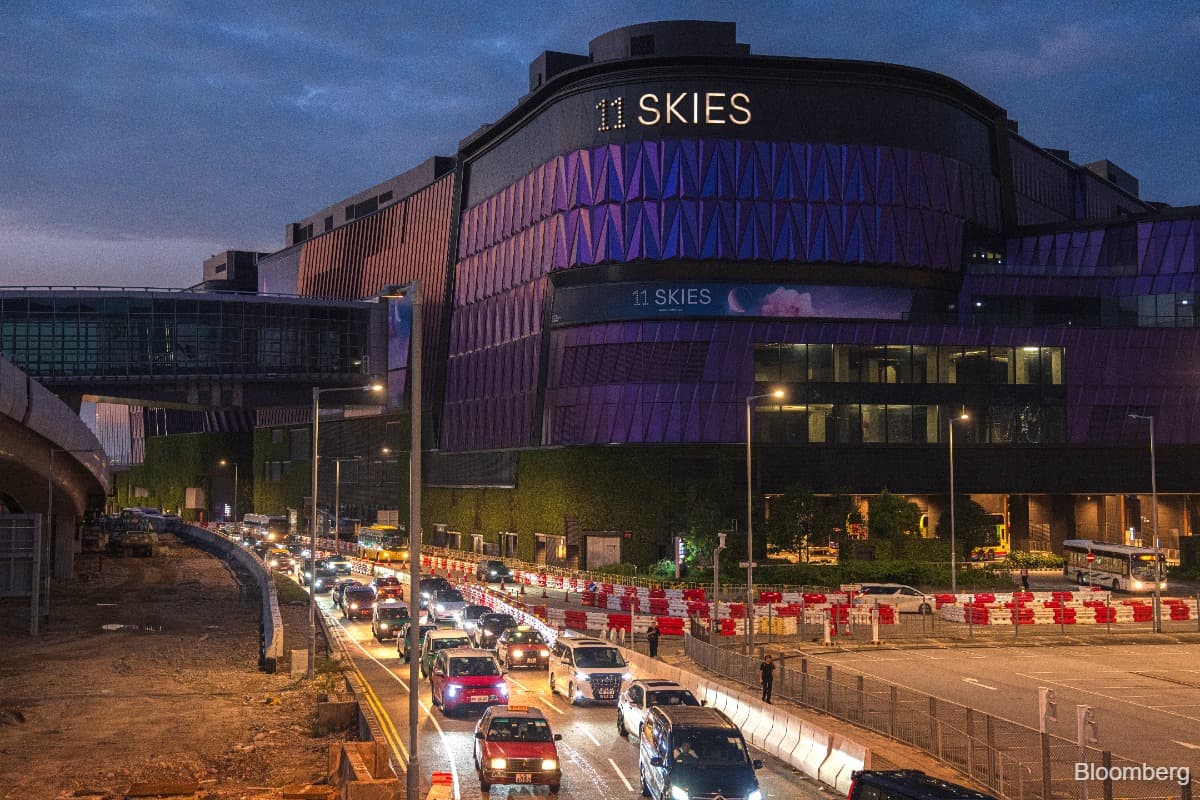
Behind the scenes, New World was scrambling to hammer out a deal that, when announced hours later, would give it a crucial lifeline, according to people familiar with the matter. Hong Kong’s Airport Authority agreed to waive billions of dollars in rent the company had committed to pay for its struggling 11 Skies project near the airport, alleviating its debt burden.
In return, the Airport Authority would fully take over the HK$18 billion (RM9.37 billion) mega mall-and-office complex — and get an option to buy a significant chunk of the developer’s shares at a steep discount. The agreement came with a key condition: the founding Cheng family must remain New World’s largest shareholder.
The unusual deal shows how far Hong Kong authorities are prepared to go to stabilise one of the city’s biggest property developers as New World faces nearly US$11 billion (RM44.96 billion) of debt coming due as early as next year. It buys the billionaire Cheng family more time to shore up a company that posted a record US$3.6 billion loss in its recent fiscal year.
New World will also give HK$3 billion in cash and services to the Airport Authority as part of the agreement.
The pseudo-bailout sends a clear message: the city’s property tycoons, who have built Hong Kong into what it is today but are also responsible for sustaining one of the world’s most expensive and inequitable property markets, are too big to fail.
“The deal highlights New World’s economic and policy relevance to Hong Kong, particularly as the government pushes ahead” with an ambitious plan to develop a new area in the northern part of the city that needs support from developers, said Gary Ng, senior economist at Natixis. “Further financial pressure on New World could increase restructuring or default risks.”
Representatives for New World and the Cheng family did not respond to requests for comment. The Airport Authority declined to comment beyond its earlier announcement on the 11 Skies agreement, which said the project paves the way for further development of the airport area.
New World shares were flat in Hong Kong trading Tuesday afternoon. The stock has fallen nearly 29% this year, compared with a 5.4% drop in the benchmark Hang Seng Index.
The 11 Skies agreement also gives the Chengs breathing room to act on New World’s capital structure — until late 2029. As part of the deal, the Airport Authority can buy 750 million New World shares — about a 30% stake — from the family’s investment arm Chow Tai Fook Enterprises Ltd within three years for HK$2.25 billion, which amounts to about a roughly 43% discount to the developer’s current share price.
But since the option is conditional on Chow Tai Fook remaining New World’s largest shareholder, the Cheng family will need to inject fresh capital or expand New World’s equity base before the Airport Authority can exercise its right.
The 11 Skies exit represents “a great leap toward equity raising” and may implicitly signal an equity deal within three years, UBS Group AG analysts including Mark Leung wrote this month.
Investors hope that the deal will inject momentum into talks between the Chengs and a variety of co-investment partners that have dragged on for more than a year, amid the family’s reluctance to cede power.
Most recently, the Chengs discussed a potential investment with Bain Capital, separate people familiar with the matter said. But macroeconomic uncertainty has made both the investor and the family more cautious about a deal.
Bain didn’t immediately respond to a request for comment.
Discussions with Blackstone Inc over a US$4 billion tie-up ended earlier this year after the Cheng family refused to give up control of the company, people familiar said in May.
Deep ties
The overlap between New World’s fortunes and the Hong Kong government’s ambitions has deep roots. During the city’s property downturn in the 1980s, New World pressed ahead with major investments — like the landmark Convention and Exhibition Centre — to help boost confidence. The Chengs have also been enthusiastic investors in mainland China, including on infrastructure and urban redevelopment projects.
Local regulators have also taken an interest in New World’s stability. When the developer was trying to refinance a record amount of debt last year, Hong Kong Monetary Authority officials contacted lenders directly before a rollover agreement was reached days before the deadline.
The economic backdrop has become less favourable in the past year. China’s efforts to claw back tax revenue from wealthy citizens’ overseas assets and higher interest rates in Hong Kong could threaten the city’s nascent property recovery, which had been one of the few tailwinds for New World.
In the meantime, the Chengs are leaning on other liquidity measures, including debt swaps and extending loan maturities. New World has announced an exchange offer for about US$991 million in bonds due in 2027 and 2028, following a previous 3.24 billion yuan (RM1.98 billion) asset spin-off in Shanghai.
“The Cheng family has been working assiduously to repair New World’s finances but has yet to put any of its additional private capital at risk,” said Brock Silvers, managing director at private equity firm Kaiyuan Capital. “That may soon change.”
Uploaded by Arion Yeow