

(Oct 13): CXMT Corp declared it achieved a breakthrough in chip technology that rivals like Samsung Electronics Co had pursued for years, an unsubstantiated claim that jolted stocks and reflects China’s aggressive push into a critical sphere.
The domestic memory leader plans to roll out a new type of chips with increased memory density thanks to the company’s self-developed new architecture, CXMT president Cao Kanyu told an industry conference in Shanghai over the weekend. The upcoming product for data centre servers sports a so-called 4F² design and should launch before the end of the year, Cao said in comments confirmed by a company spokesperson.
If CXMT has succeeded in achieving the 4F² threshold, that means it got there before Samsung and SK Hynix Inc — despite US sanctions that bar the Chinese firm’s access to tools such as ASML Holding NV’s top-end machines. Cao didn’t provide more details, but the widely reported remarks helped spark a selloff in global chip stocks.
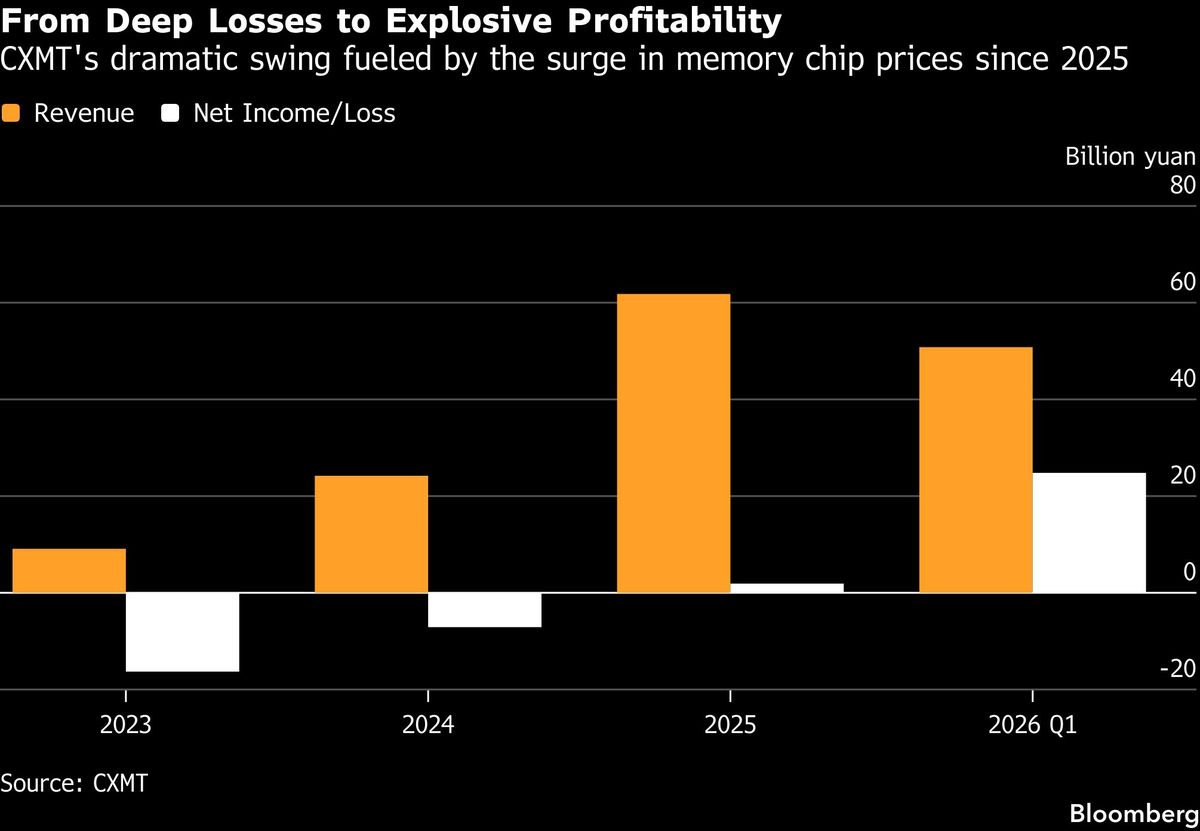
Samsung and SK Hynix shares fell 7.4% and 10%, respectively, in South Korea on Tuesday, weighing down the broader Kospi index, after Micron Technology Inc closed down 4% overnight.
“A successful and earlier implementation of 4F² architecture in DRAM production would vastly improve CXMT’s competitive position versus peers,” said Jing Jie Yu, an analyst with Morningstar. “That said, memory leaders as well as equipment manufacturers have both similarly echoed the difficulty in this technological transition, and we still expect a meaningful time gap between the unveiling of CXMT’s 4F² product and commercialisation at viable yields.”
Cao’s declaration — months after CXMT briefly became China’s most valuable company following a blockbuster summer IPO — underscores its effort to close the gap with foreign rivals in the making of advanced memory chips, an area essential to artificial intelligence (AI) development.
The Chinese firm’s breakthrough shouldn’t pose an immediate threat to Samsung, SK Hynix and Micron’s dominance in high-bandwidth memory, a type of semiconductors that transfers massive amounts of data and is vital to Nvidia Corp AI accelerators.
But it shows how CXMT is incrementally closing the gap in technologies across the broader memory sphere. It’s already on track to produce the latest generation of smartphone memory chips, dubbed LPDDR6, in roughly the same timeline as Samsung and SK Hynix.
The industry’s existing 6F² standard refers to a surface area of 6-times the square of the “feature size” of a chip: the basic line-width between transistors. Samsung and SK Hynix are exploring ways to shrink that to 4F², in theory packing the same cells into a smaller area for greater efficiency.
CXMT’s Cao said it’s changing the way transistors are laid out to squeeze in more cells and hence expand memory density. The so-called Vertical Surrounding Gate approach should reduce leakage and other side effects — a problem long associated with efforts to reduce sizes beyond the 6F² standard.
If successful, CXMT would spearhead a breakaway from current design and techniques. Cao added his company has been working on this since its inception a decade ago, and now holds more patents in this area than rivals. Key to CXMT’s breakthrough was its ability to separate memory cell manufacturing from that of peripheral circuitry, Cao said.
Until now, manufacturers built those two components on the same piece of silicon. Under CXMT’s new technique, the two parts are manufactured on separate wafers, which are then combined using hybrid bonding technology.
It’s unclear what sorts of yields — the proportion of usable chips — CXMT has managed to achieve with that approach. It’s challenging to maintain uniformity in mass production, according to Morningstar’s Yu.
If it works, the new architecture marks the latest example of innovative workarounds that Chinese companies from Huawei Technologies Co to DeepSeek devise to get around US technology curbs. If CXMT succeeds in commercialising the technology, it may boost memory density in the company’s products by 30%, giving it an edge over Samsung and SK Hynix, Yu said.
“In reality, while the Chinese memory makers can potentially become a threat to global demand-supply balance over time, in the short run they continue to face technology hurdles,” said Vey-Sern Ling, a managing director at Union Bancaire Privee.
Huawei in May unveiled its Tau Scaling Law, an alternative to the decades-old Moore’s Law of shrinking transistors to boost chip performance. The Chinese chip champion instead seeks to speed up transmission and increase transistor density within a chip through LogicFolding. It’s already rolled out chips using this technology that run on smartphones launched this year.
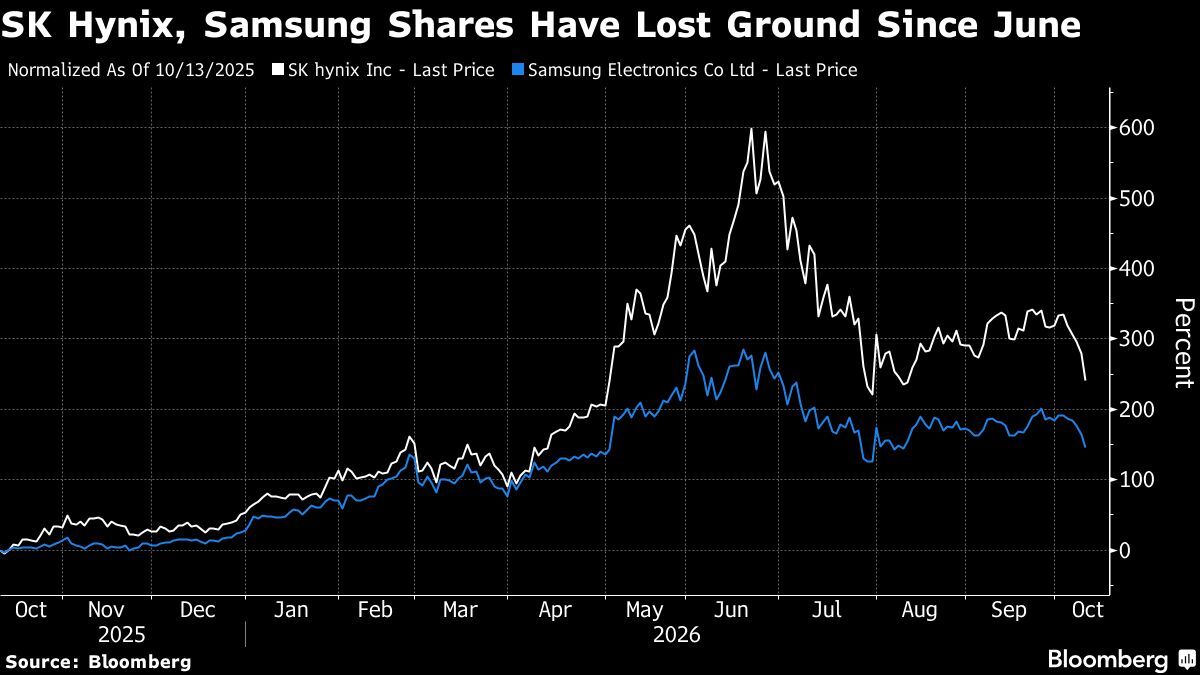
CXMT is racing to ramp up production of advanced memory to meet surging AI demand. The ability to manufacture sophisticated products would also position the company better as a global supply crunch begins to ease in coming years.
It remains a laggard in high-bandwidth memory. Still, it’s making steady progress in the broader DRAM market. The company’s share of that field had expanded to 10% by the second quarter of this year, compared to just 4% a year ago, data compiled by Counterpoint Research shows.
“If CXMT manufactures products using its 4F² architecture by the end of 2026, it will be a significant milestone. However, stabilising mass production yields and securing commercial supply scale for this new technology will be key,” said Jeongku Choi, a senior analyst at Counterpoint Research.
It may “serve as a good example demonstrating the increased self-reliance and technological level of the Chinese semiconductor ecosystem.”
Uploaded by Felyx Teoh