


This article first appeared in The Edge Malaysia Weekly on October 12, 2026 - October 18, 2026
TWO private companies tasked with providing services on behalf of the government are now under scrutiny over the handling of funds collected from the public.
In one case, Zetrix AI Bhd (KL:ZETRIX) and its unit MyEG Sdn Bhd were suspended as collection agents for the Road Transport Department (JPJ) on Oct 5 after failing to remit RM314 million in collected revenue to the government.
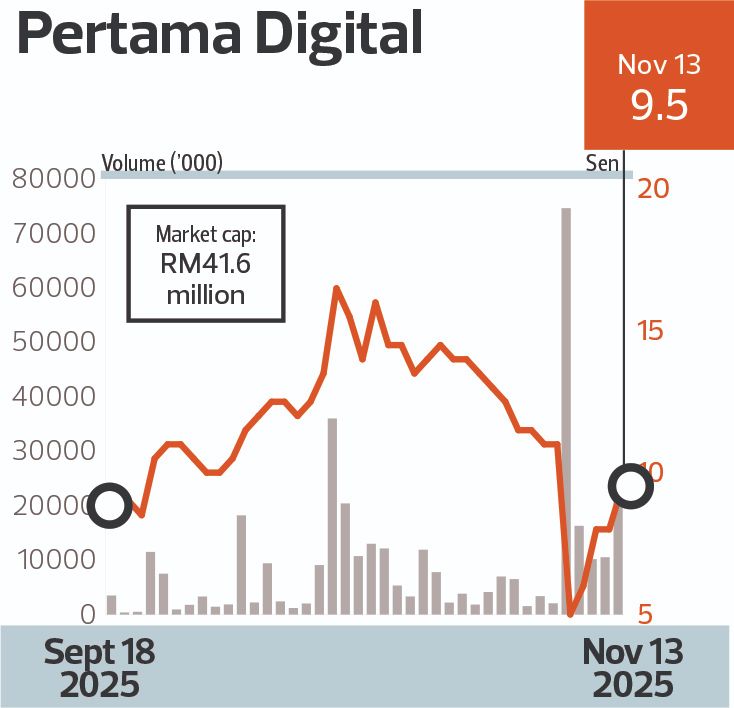
In the other case, Dapat Vista (M) Sdn Bhd, operator of the online bail payment system eJamin and linked to Pertama Digital Bhd (KL:PERTAMA) and HeiTech Padu Bhd (KL:HTPADU), had invested about two-thirds of the active bail deposits under its own name.
While the circumstances differ, both cases highlight governance and contractual gaps with regard to third parties entrusted with public funds.
Zetrix’s RM314 million in unremitted government revenue
Zetrix, formerly known as MyEG Services Bhd, had provided online services linked to JPJ’s services for more than two decades. It collected government revenue on behalf of JPJ and charged users convenience fees, as well as delivery fees where applicable.
Its latest appointment as a JPJ collection agent ran from May 23, 2023, covering vehicle registration services, driver and vehicle licensing and electronic payment of traffic summonses.
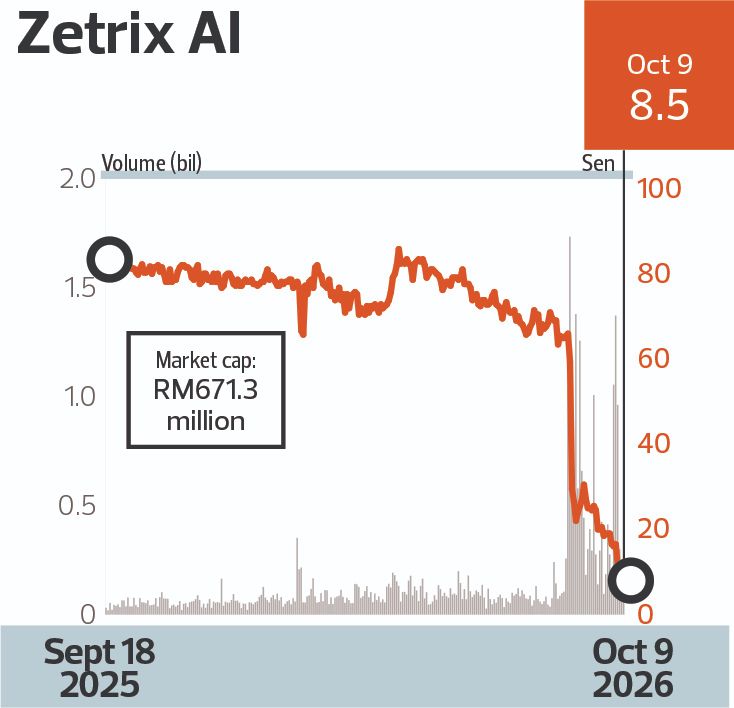
The appointment formally expired on May 22. Zetrix had requested an extension and continued operating as collection agent as usual while the extension was being considered.
Minister of Transport Anthony Loke Siew Fook said MyEG (Zetrix) was required under its appointment terms to transfer collections to the Ministry of Transport’s (MOT) main receipt account within one working day after each transaction, or T+1.
The daily transaction value was at least RM2 million, or about RM70 million to RM90 million a month, according to a source familiar with the matter.
The accumulation of the RM314 million in unremitted government revenue as at end-September began on May 19, just days before the formal appointment expired.
Over the four months, MOT and JPJ held four engagement sessions with Zetrix and issued 35 reminder notices, with deadlines for the arrears to be settled.
Questions about unhonoured cheques and unremitted funds
On Aug 21, Zetrix submitted a post-dated cheque to JPJ to settle arrears then amounting to RM231 million. However, when the cheque was credited on Sept 30, the bank did not process it after Zetrix instructed it to stop payment, according to Loke.
Zetrix subsequently confirmed RM314 million in unpaid arrears for May 19 to Sept 30. It said the amount had been recognised as a payable in its balance sheet for the second quarter ended June 30, 2026 (2QFY2026) and would also be reflected in its upcoming 3QFY2026 accounts.
Its unaudited 2QFY2026 financial statement showed trade payables at RM33.26 million and other payables and accruals at RM57.81 million as at June 30. Digital assets stood at RM532.9 million, rising 41.5% from RM376.61 million as at Dec 31, 2025. Meanwhile, with equity attributable to shareholders at RM4.35 billion, RM541.6 million in cash against RM2.19 billion in total borrowings, the result was a net gearing of 0.38 times.
Zetrix said it had submitted a proposed solution to the government to address the outstanding remittances.
Loke said MyEG had accumulated unpaid arrears to the MOT “from time to time” previously, but these had been settled following reminder notices.
The latest episode raises questions about what changed between the earlier days and the more than four-month period in which the government revenue remained unremitted.
Also, what happened to the government revenue collected during the more than four months when it was not remitted? And why was the RM231 million cheque stopped?
Zetrix declined to respond to The Edge’s queries, saying it did not have any additional information to share.
On MOT’s front, Loke said MyEG was not suspended earlier because about a fifth of users continued to access JPJ services through collection agents such as MyEG.
Zetrix will remain suspended until it fully settles the RM314 million. If reinstated, the ministry is expected to impose additional conditions, including requiring payments to be credited directly to the government.
In the meantime, MOT will consult the Ministry of Finance (MOF) and other agencies on the next course of action to recover the unpaid arrears, including possible civil proceedings.
eJamin’s five years without a formal agreement
In the same week that details of Zetrix’s suspension emerged, the Public Accounts Committee (PAC) revealed that another private company had been handling and investing court bail money without a formal agreement with the government.
Dapat Vista operates eJamin, which has been used across 192 courts since January 2020. Bail is money ordered by the court to secure an accused person’s release from custody while criminal proceedings are ongoing.
The PAC found that Dapat Vista had operated eJamin for five years without a formal agreement with the government. The system averaged RM150 million to RM180 million in bail collection annually.
The arrangement had stemmed from an initial Attorney General’s Chambers’ (AGC) legal opinion in December 2019 that eJamin was a “purely commercial transaction”, with the courts merely acting as users of the system and that a formal government contract was unnecessary.
Dapat Vista had sought a formal agreement from the outset to provide certainty to its investors, but the Office of the Chief Registrar of the Federal Court adopted the AGC’s position and treated eJamin as an optional on-demand alternative to manual bank deposits for posting bail.
The legal position changed after a Prime Minister’s Department audit in December 2023 flagged “uncontracted public bail transfers”, whereby bail deposits collected from the public were being held in private commercial bank accounts.
The AGC subsequently revisited the matter and, in March 2024, concluded that the bail deposits constituted “public moneys” under the Financial Procedure Act 1957 (FPA) — which governs the control and management of public finances, including the collection, custody and payment of public moneys.
The FPA defines “public moneys” as all revenue, loans or monies raised, collected or received by or on account of the government.
The PAC said the AGC’s revised opinion concluded that holding public bail money in private commercial bank accounts, instead of the Federal Consolidated Trust Account, was inconsistent with Article 97(1) of the Federal Constitution and Section 7 of the FPA.
The revised opinion noted the need for a formal contract to protect the bail money and ensure legal accountability.
Investing public monies to fund eJamin
The PAC also raised concerns about Dapat Vista’s investment of the bail funds.
As at end-2024, active bail deposits stood at RM193.71 million. Of this, RM62.3 million was held in bank accounts while RM130.8 million had been invested by Dapat Vista in instruments, including sukuk, Kenanga and CIMB Deposit Fund under the company’s name.
The PAC said the investments were made “without any government approval or authority”.
They generated an estimated RM4 million to RM5 million a year in interest, which Dapat Vista regarded as service income.
Dapat Vista said eJamin was developed as a private finance initiative at no cost to the government or public with the interest generated intended to cover its operating costs.
According to the PAC report, Dapat Vista executive director Sabri Ab Rahman told the committee on Nov 19, 2025 that sureties waived their entitlement to interest yield under eJamin’s initial user agreement.
The PAC nevertheless highlighted the lack of a formal contractual and trustee framework governing the funds.
There was no trustee structure, performance bond or insurance to protect the bail funds, exposing them to risks in the event of Dapat Vista’s insolvency or liquidation, according to the committee.
Dapat Vista, in an Oct 8 statement, said bail funds not needed for daily refunds are placed in deposit and investment arrangements through banks, with the principal amounts held as restricted balances in virtual accounts under sureties’ names.
In August 2025, Dapat Vista proposed three options to the MOF: for the government to buy the system, pay a subscription fee or adopt a hybrid model under which Dapat Vista would build and operate eJamin for five years before handing it over.
The MOF rejected all three proposals and opted to retain the existing system because it came at no direct cost to the government.
However, it said bail funds would have to be placed under a strict trustee structure with safeguards to ring-fence the deposits from corporate liabilities and establish rules governing the selection of banks and treatment of interest.
Dapat Vista is 80% owned by Television Airtime Services Sdn Bhd, which is 51% owned by Pertama Digital, 27% by Sabri and 22% by Khairul Amanda Sabri.
Sabri is also an executive director and substantial shareholder of Pertama Digital, with a 2.33% direct stake and 10.04% indirect interest via MyPay Capital Sdn Bhd. Former chief justice Tun Zaki Azmi is also a substantial shareholder via MyPay Capital and his spouse, with a 12.4% indirect stake.
The remaining 20% of Dapat Vista is held by HeiTech Padu.
Question of CBT raised in Dewan Rakyat
The handling and investment of the bail funds also led to questions in the Dewan Rakyat over whether criminal breach of trust (CBT) could arise.
Deputy Speaker Datuk Seri Dr Ramli Mohd Nor asked Deputy Minister in the Prime Minister’s Department (Law and Institutional Reform) M Kulasegaran whether investing bail money without the owner’s consent could constitute an offence under Section 409 of the Penal Code — CBT by a public servant or agent.
Jelutong member of parliament R S N Rayer subsequently drew a comparison with lawyers handling clients’ funds, saying that using a client’s funds without the client’s knowledge, instructions or permission while obtaining a benefit from it could constitute CBT.
Kulasegaran said he could not give a specific legal view on whether CBT had occurred, noting that the matter is subject to the attorney-general’s view. He also said audits conducted to date had found no misappropriation.
The deputy minister described the bail money as being held in trust by Dapat Vista for the surety until the outcome of the trial, after which it would either be returned or forfeited as government revenue.
Ramli later qualified his remarks as a “passing remark”, saying it should be left to the authorities to determine whether any wrongdoing had occurred.
The PAC recommended that the government establish a legal instrument with Dapat Vista to protect the interests of the government and sureties, while requiring a trustee structure to segregate and fully protect the public bail funds.
Save by subscribing to us for your print and/or digital copy.
P/S: The Edge is also available on Apple's App Store and Android's Google Play.