

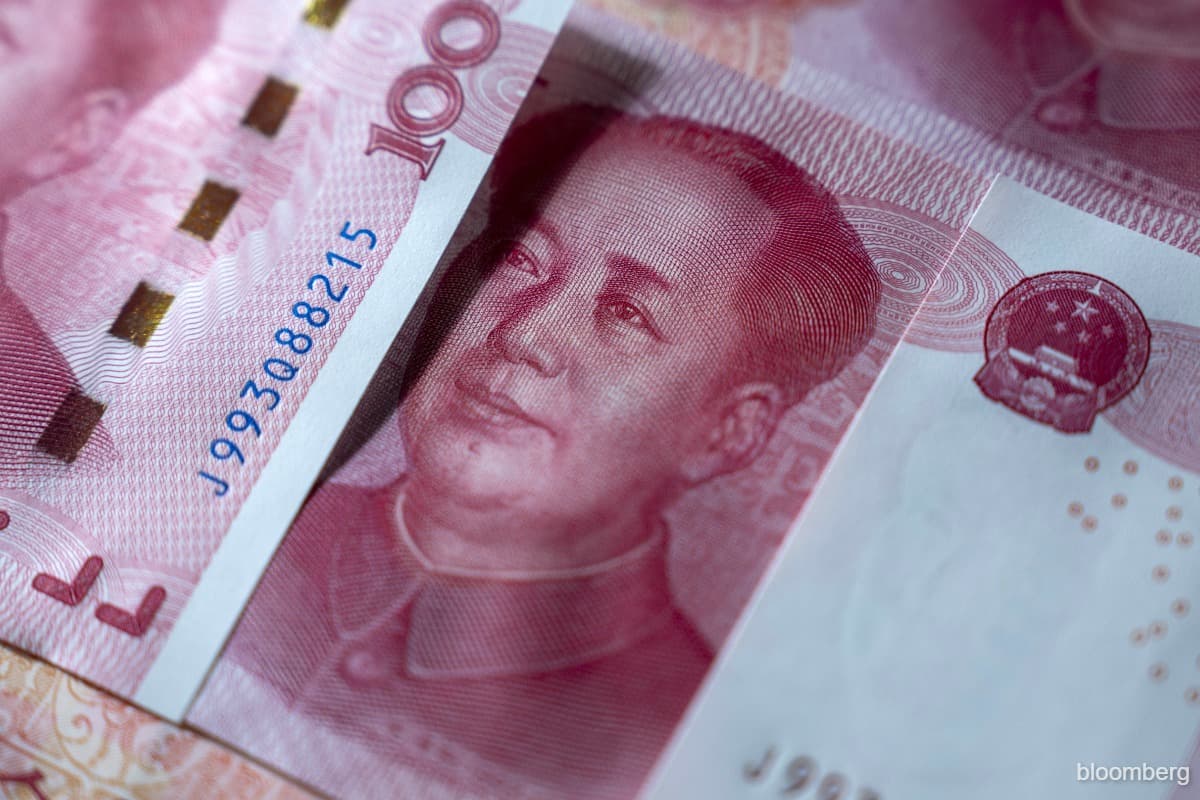
(Oct 13): A stronger yuan is among the most underpriced scenarios in the world’s US$9.5 trillion (RM38.8 trillion)-a-day foreign exchange market, according to Goldman Sachs Group Inc’s Kamakshya Trivedi.
China’s currency is undervalued by around 20% to 25%, an estimate the bank’s global head of foreign exchange, rates and emerging markets strategy research calls “conservative.” He added that the nation’s swelling trade surplus strengthens the case for appreciation.
Goldman sees the yuan strengthening to 6.40 per dollar from around 6.69 in a year’s time, with the firm’s fair-value metrics pointing to a six handle as a future possibility, Trivedi said in an interview last week. China’s currency last traded near 6 in early 2014 amid rapid hot money inflows.
“People underestimate how far this can move,” said Trivedi. “At every stage as we’ve shifted the forecast stronger, I think I’ve been surprised by the extent to which consensus and forward markets still haven’t caught up to that.”
“Our view is very simple: we think it will be a gradual process, but it’s going to be sustained,” he added.
Goldman’s view comes as China confronts growing criticism from major trading partners such as European nations that it is using an artificially weak currency to boost exports. Beijing has rejected such claims, arguing that exchange-rate adjustments won’t resolve structural imbalances in the global economy, while adding that China’s export strength stems from its rising industrial competitiveness.
International pressure on the yuan has intensified even as Chinese authorities have allowed it to rise against most major peers, with the tightly managed currency appreciating to a four-year high versus the dollar. The yuan’s strength makes it one of the few currencies positioned for more sustained appreciation at a time when the greenback has rebounded due to geopolitical tensions and stubborn inflation.
Trivedi said the magnitude of the yuan’s undervaluation would look “much bigger” when factoring in China’s current account and external balance performance. China’s trade surplus stood at US$805.5 billion for the first eight months of the year, official data showed.
“So to my mind, there is no question that currency is significantly undervalued,” he said.
Trivedi said Chinese policymakers may be becoming more comfortable with further yuan appreciation, partly due to the importance of stable trade relations.
China staved off wider trade frictions with the European Union by agreeing to curb exports of hybrid vehicles following talks that ended Friday. The yuan has appreciated more than 8% against the euro this year.
Beijing’s growing ease with a stronger currency also reflects the changing nature of the country’s export machine that is increasingly powered by cutting-edge technologies and advanced manufacturing.
“If you think about it even from China’s perspective, I think what is most important to them is the stability of trading relationships,” he said. “The longer you get stability in the trading relationships, I think they recognise that some degree of appreciation in the currency is consistent with the underlying macro.”
“China’s growing role as a provider of global funding marks a new phase of yuan internationalisation, extending the currency’s reach beyond trade settlement and payments into global borrowing, investment and hedging markets,” said Bloomberg strategists.
Trivedi also sees a stronger yuan aligning with Beijing’s goal of boosting the currency’s global role. Chinese President Xi Jinping had previously pledged to build a powerful currency that is widely used in international trade, investment and foreign exchange markets, holding the status of a global reserve currency.
“Modest, gradual but sustained appreciation I think serves that purpose of internationalisation as well,” Trivedi said. “It makes the return picture in Chinese assets a bit more attractive.”
Uploaded by Magessan Varatharaja