

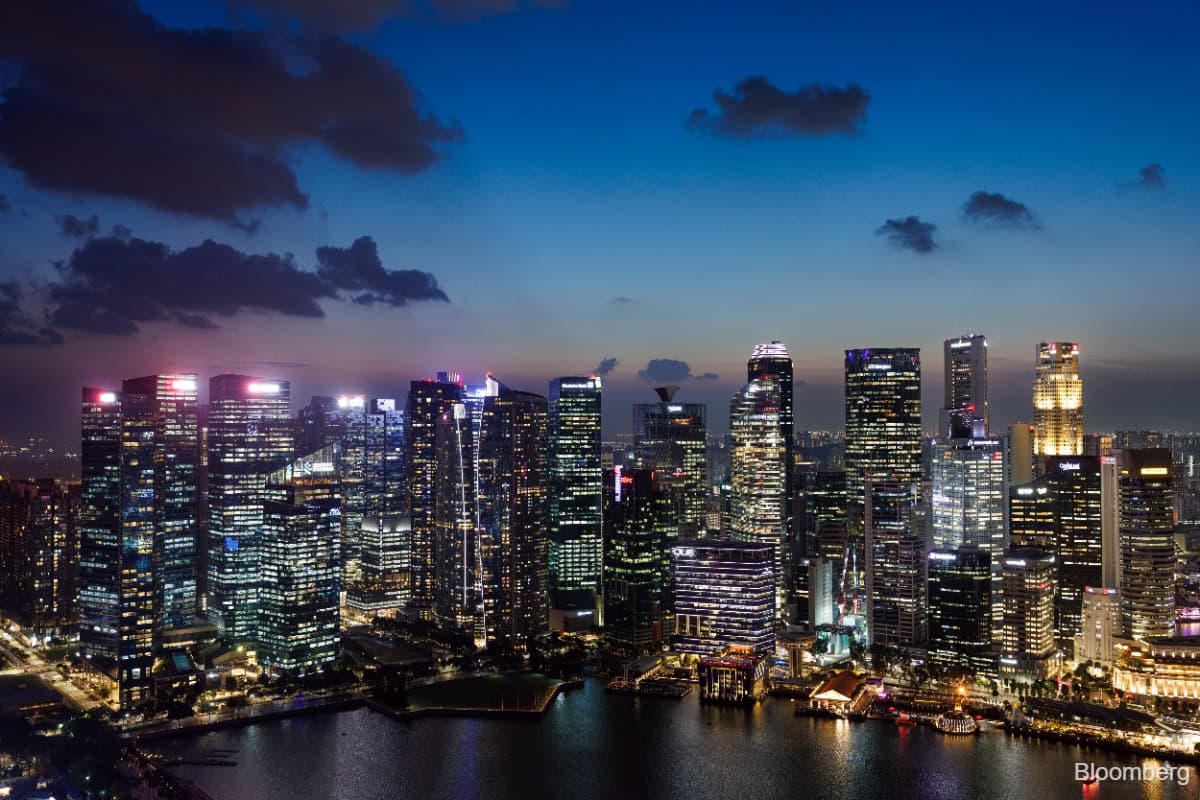
(Oct 13): A sell-off in Singapore bank shares driven by fears of earnings downgrades is threatening one of Asia’s best-performing major stock benchmarks this year, putting the city-state’s safe haven status to the test.
The Straits Times Index has slid 6.6% from its peak more than five weeks ago, dragged lower by DBS Group Holdings Ltd, Oversea-Chinese Banking Corp and United Overseas Bank Ltd. The lenders account for more than half of the benchmark and shed a combined US$22.4 billion (RM91.5 billion) in market value last week alone.
The sell-off reflects growing concern that local banks are entering a tougher phase ahead. Elevated bond yields are eroding the appeal of their dividend payouts, while the lenders will also have to account for losses on their holdings. That’s prompted Wall Street brokers to warn of downside risks to earnings released next month.
“The risk is a longer sell-off that spreads beyond the banks, or earnings and capital returns that start to weaken,” said Alex Ho, a sales trader at CMC Markets Singapore. “November’s results will be the first real test.”
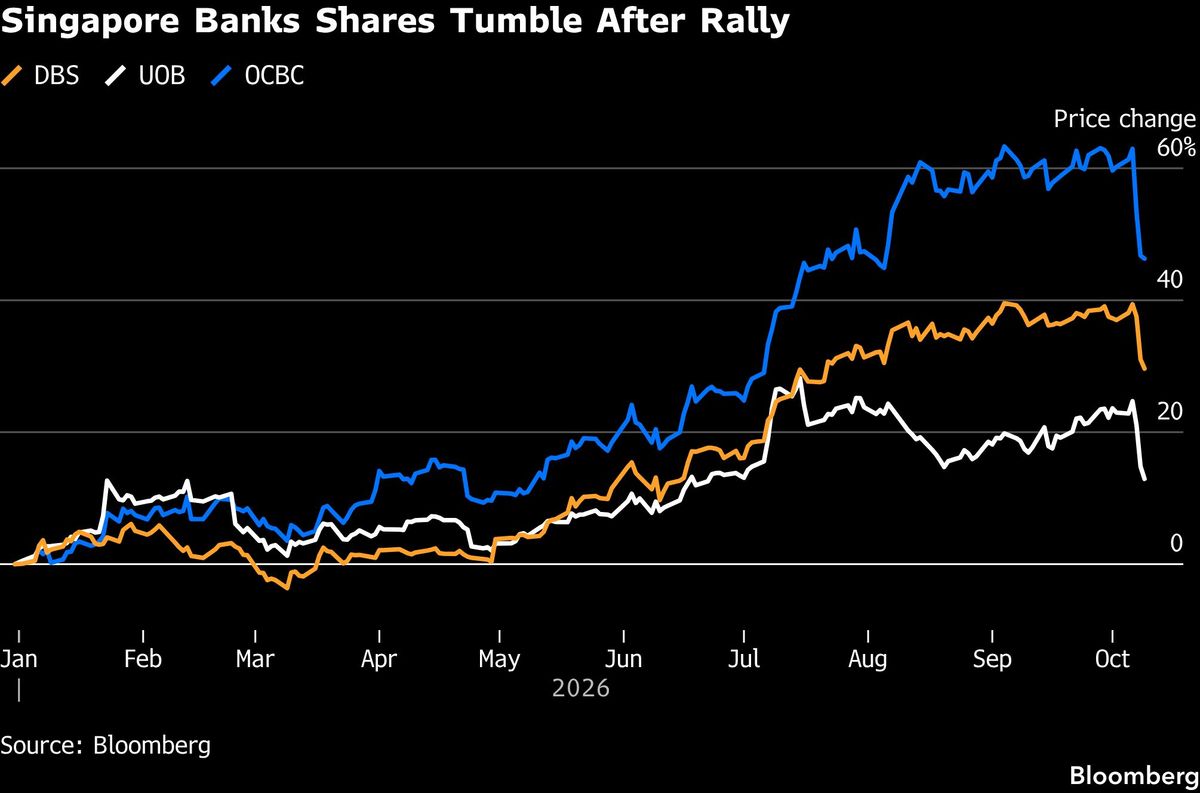
Prior to the recent slump, Singapore stocks had hit a string of highs as earnings growth and market stability attracted institutional investors seeking shelter from gyrations tied to the escalating Iran war and AI trade. Investors are now backing away, with analysts increasingly wary about expectations remaining too optimistic into year end.
JPMorgan Chase & Co warned on Wednesday that rising long bond yields will result in high mark-to-market losses on banks’ trading books and hurt capital activity for Southeast Asian banks. Separately, Citigroup Inc downgraded OCBC to ‘sell’ and iterated its ‘sell’ on UOB last week. HSBC Holdings Plc has also cut Singapore stocks to ‘neutral’ as valuations become stretched and financial conditions weigh on the real estate sector.
The strong rally in Singapore banks earlier this year has made the sector an outlier when compared with regional and global peers on a valuation perspective. Even after the recent pullback, DBS — the country’s largest lender — trades at 16.9 times its 12-month forward earnings compared with 13.2 times for MSCI financials gauge.
Not everyone is turning cautious, though. Some strategists argue that Singapore’s growth prospects coupled with the government’s efforts to rejuvenate the equities market should limit downside risks, even if the jury is out on the moves in the shorter term.
“Critically, there are still no overtly concerning signs of bad debt, which tend to characterize bear markets for the banks, while loan growth is relatively healthy,” according to Jen-Ai Chua, Asia equity research analyst at Julius Baer. “As we enter the traditionally turbulent month of October, the only thing we can be sure of is more volatility in price action ahead,” she said.
Uploaded by Magessan Varatharaja