

SINGAPORE (Oct 12): The world may be overexcited by the potential of artificial intelligence (AI) and overlooking its immaturity, tech leaders warned on Monday, arguing that cybersecurity is a bigger near-term issue than AI developing too quickly.
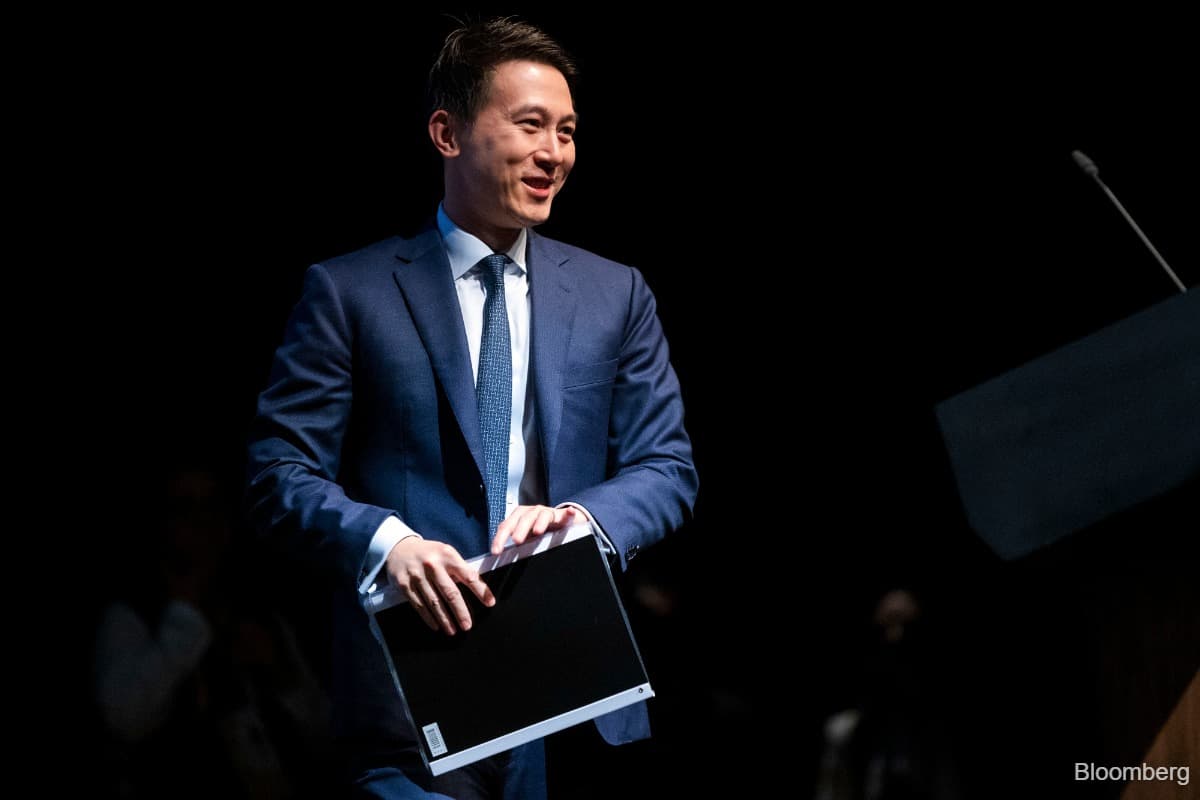
TikTok chief executive officer Shou Chew stressed the advantage that humans continue to have over AI in many areas of creative work at an event in Singapore. The nuances of visual recognition and long-term memory retrieval are still better done by people, he said. At a separate event in the city, Microsoft Corp executive Judson Althoff expressed a similar sentiment urging a sober approach.
Both added to a shift in tone from leading tech companies, which have recently sought to tamp down expectations for the imminent benefits and threats of AI. That’s after they’ve invested hundreds of billions of dollars into AI development and infrastructure.
“On the one hand, I think the technology is not there yet,” Chew said at a conference organised by DBS Bank. “Our brain can do things that the model still cannot.”
Companies are now seeking to strike a balance between evangelising adoption and selling AI products without scaring off customers and the public with the potential pitfalls of such transformative technology.
“I want to separate the hype from the reality of it,” Althoff, the head of Microsoft’s commercial business, said at the company’s event across town. “There’s no path where somehow this notion of infinite cognitive compute capability replaces human purpose.”
Althoff urged the industry to aim for the same level of trust that people extend to a plumber or a handyman visiting their home. Echoing remarks from the leaders of Anthropic PBC and OpenAI in recent weeks — who both attended a meeting on AI safety with other top executives organised by US President Donald Trump — he added that “observability at every layer of the organisation, and every layer of the stack, is super critical.”
TikTok’s Chew, who oversees one of the world’s most influential social networks, put the emphasis on better understanding the cybersecurity risks of AI, which he said are “quite real” in the short run as companies race to adopt the technology.
Uploaded by Felyx Teoh