

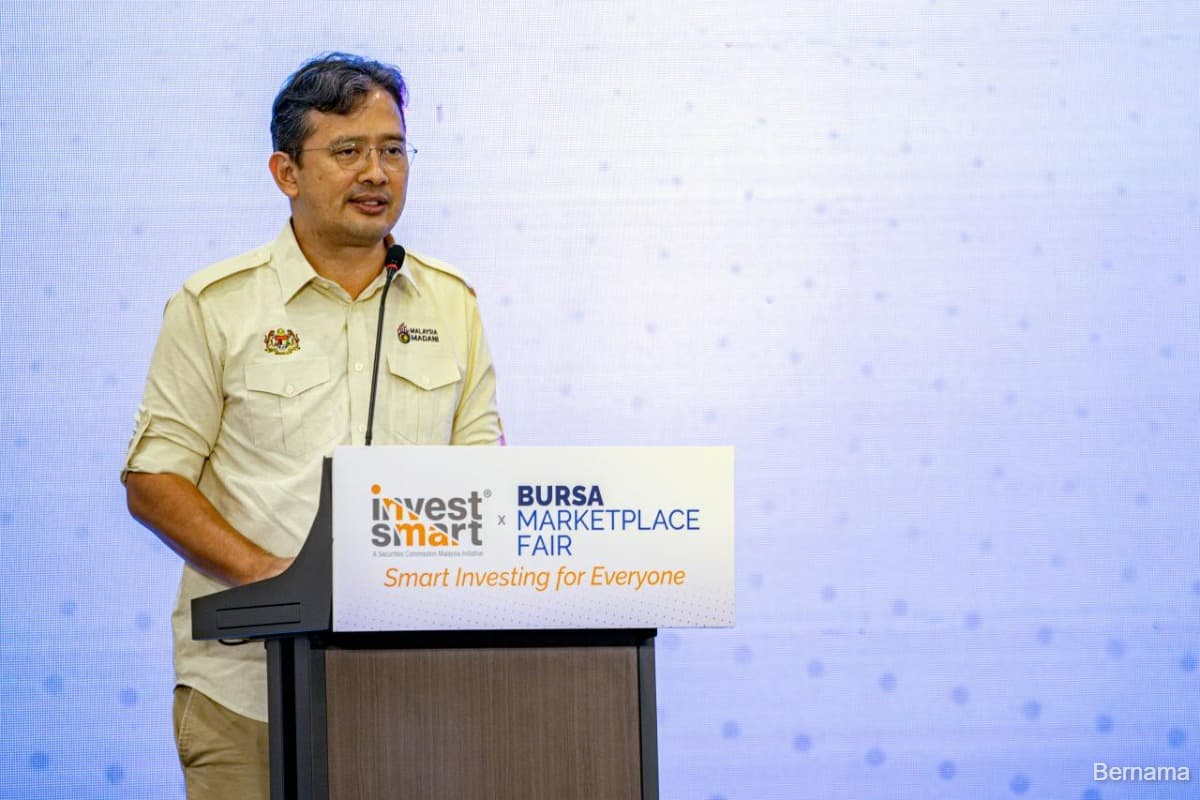
KUALA LUMPUR (Oct 12): The government is open to looking into the suggestion that a portion of foreign worker levy collections be used to fund mechanisation to reduce reliance on foreign labour, said Treasury secretary general Tan Sri Johan Mahmood Merican.
Proposals for incremental revenue from higher foreign worker levies to be channelled to finance mechanisation and related initiatives instead of being paid into the government’s Consolidated Fund have been made previously, he noted.
“This is not something that in principle we’re not open to looking at,” he said at a Post-Budget 2027 discussion on Monday, adding that the approach could be considered as the government pursues its commitment to reduce the country’s foreign worker population.
Malaysia aims to reduce its dependency on foreign workers to 10% of the country’s workforce by 2030, from 15% currently.
The government is open to considering the use of foreign-worker levy collections to help businesses fund mechanisation and productivity improvements as Malaysia seeks to reduce its reliance on foreign labour, Treasury secretary-general Tan Sri Johan Mahmood Merican said.
A policy that has long loomed to address this dependency has been the multi-tier levy system (MTLS).
The proposed policy aims to disincentivise high dependency on foreign labour for operations. Under the 13th Malaysia Plan, it was supposed to be rolled out this year.
Focus on outcome-oriented policies
Earlier in the session, KPMG senior adviser on tax policy Dr Veerinderjeet Singh suggested that the government link policy and tax measures to measurable outcomes to encourage businesses to improve productivity.
He said policies such as minimum wage increases should be accompanied by measures to assess productivity improvement, with incentives designed to encourage businesses to invest in areas such as mechanisation rather than simply absorb higher labour costs.
“The problem with all our special types of taxes is we should link it to outcomes. Minimum wage is still about linking it to productivity. The government talks about it [improving productivity], but there are no real measures on it,” Veerinderjeet said.
Malaysia is raising the minimum wage to RM2,000 per month in June 2027, from RM1,700 currently. The measure, announced in Budget 2027, exempts micro, small and medium enterprises with annual revenue below RM50 million.
Veerinderjeet said an example of where the government employs this outcome-oriented practice is the sugar tax. Revenue from the excise duty on sugar-sweetened beverages is channelled towards public health expenditures.