


This article first appeared in City & Country, The Edge Malaysia Weekly on October 12, 2026 - October 18, 2026
For more than two decades, the Kuala Lumpur City Centre (KLCC) precinct has been synonymous with prime city-centre living. Anchored by the PETRONAS Twin Towers and Suria KLCC, the precinct has grown from a landmark development into an established luxury residential market, surrounded by offices, hotels, retail and lifestyle amenities.
Developed by KLCC (Holdings) Sdn Bhd, the precinct took shape with the groundbreaking of the PETRONAS Twin Towers in 1992. It occupies the site of the former Selangor Turf Club.
But today’s KLCC is a markedly different market from the one that emerged at the turn of the millennium. Its residential base has expanded beyond the expatriate executives who once dominated demand, while buyers now have a far wider choice of prime locations across KL, from Mont’Kiara, Bangsar and Desa ParkCity to the newer Tun Razak Exchange (TRX).
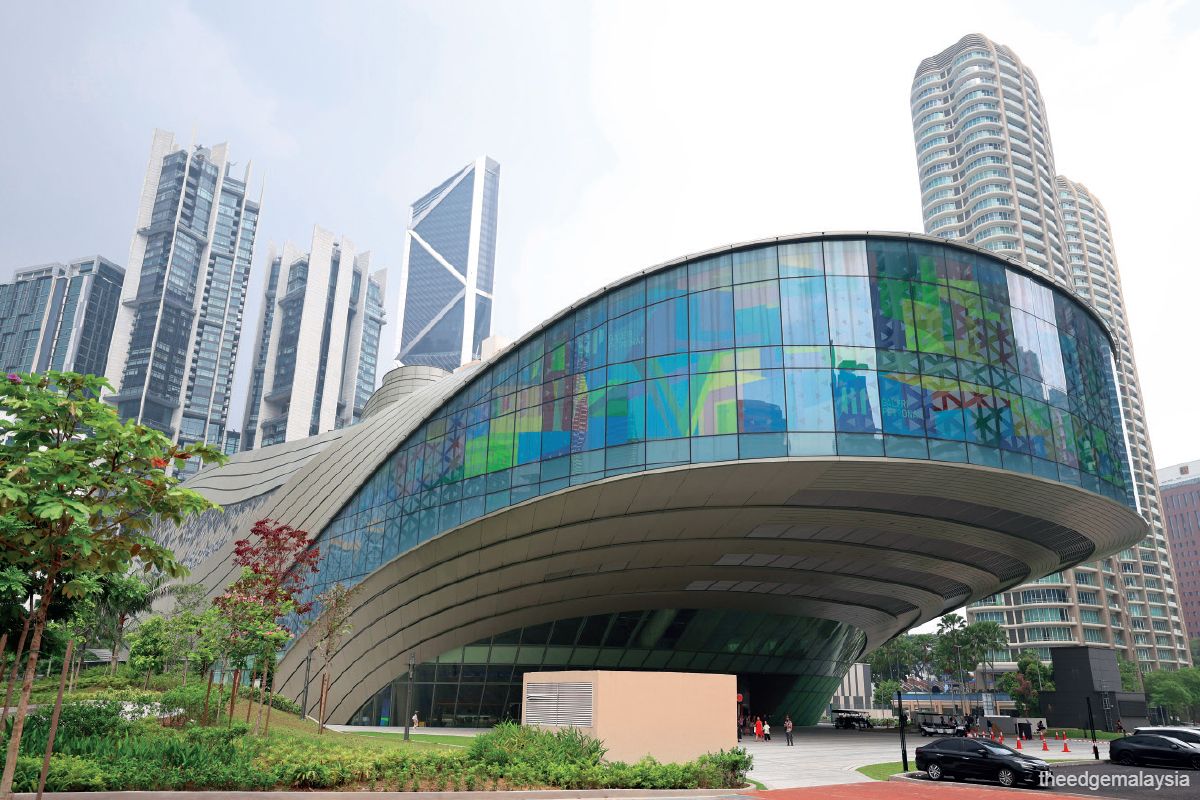
At the same time, the 100-acre precinct itself continues to evolve. The recent opening of Ombak KLCC has added another retail and lifestyle offering to the area, which has seen the ongoing construction of new projects such as Divine KLCC by Chin Hin Group Property Bhd (KL:CHGP), CloutHaus Residences by TA Global Bhd and Armani Hallson KLCC by Armani Group.
KLCC’s own ecosystem continues to evolve, even as much of its established residential stock matures. For buyers, however, location is no longer the only consideration. Zerin Properties Group founder and group CEO Previndran Singhe and Knight Frank Malaysia executive director of research and consultancy Amy Wong highlight the growing importance of the quality and positioning of individual developments.
Broader base of affluent buyers
“KLCC has long been regarded as Malaysia’s premier luxury commercial and residential address,” says Previndran.
According to him, over the past two decades, the precinct has grown into one of the country’s most established prime real estate markets, combining Grade-A offices, luxury residences, internationally branded hotels, premium retail and lifestyle amenities.
Wong describes KLCC as “the nucleus of Kuala Lumpur’s prime residential market”, where accessibility, prestige and convenience continue to underpin demand.

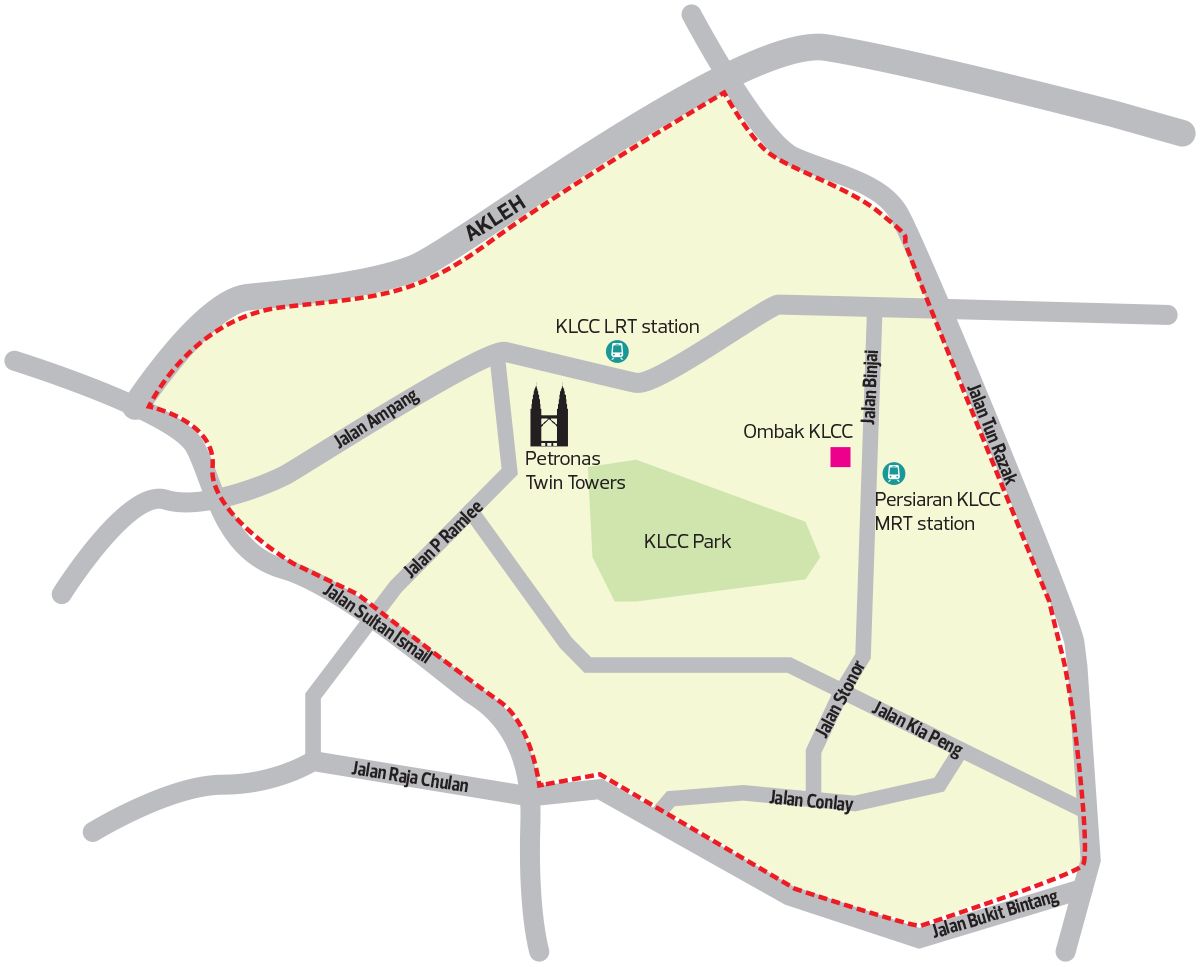
For residential market analysis, both consultants use “KLCC” to refer to the precinct surrounding the PETRONAS Twin Towers, including areas along Jalan Ampang, Jalan Binjai, Jalan Kia Peng, Jalan P Ramlee, Jalan Pinang and Jalan Stonor.
In its early years, the residential market was supported largely by expatriate executives, particularly those employed by Petroliam Nasional Bhd (PETRONAS) and multinational oil and gas companies, as well as professionals working in financial institutions and diplomatic missions.
“This strong expatriate demand laid the foundation for many of the luxury condominium developments that define the KLCC skyline today,” says Previndran.
That market has since broadened considerably. “What was once primarily a corporate and expatriate-driven precinct has evolved into a mature luxury urban district with a broader economic base, more sophisticated residential offerings and a deeper pool of buyers and investors,” says Previndran.
Today, demand comes from domestic high-net-worth individuals, regional investors, owner-occupiers and professionals from the financial, technology and business services sectors.
“The market has become more balanced and less reliant on any single industry,” Previndran adds.
Wong has observed a similar shift, with affluent Malaysians becoming increasingly prominent buyers.
“We have observed growing interest from affluent Malaysians, particularly business owners, professionals and investors looking to diversify their property portfolios,” says Wong.
Expatriates and foreign purchasers remain important, particularly in the rental market, but KLCC is no longer as dependent on overseas demand as it once was.
Competition from other prime locations
KLCC’s evolution has not been confined to its residential population. Transport connectivity, pedestrian links and supporting amenities have strengthened the precinct’s appeal as a place to live, while the broader city centre has continued to add new destinations, with the recent launch of Ombak KLCC as an example.
“Ultimately, what has made KLCC successful is not just the PETRONAS Twin Towers or Suria KLCC. It is the ecosystem that has developed around them over the past two decades,” says Previndran.
The residential product has evolved, too, from conventional high-rise condominiums to branded and hospitality-managed residences, while buyers have become increasingly conscious of design, management, amenities and the overall resident experience.
At the same time, affluent buyers now have a wider choice of prime residential locations across Kuala Lumpur.
Mont’Kiara has established itself as a preferred expatriate location, supported by international schools, larger condominium units and an established expatriate community. Desa ParkCity has built its appeal around green spaces, walkability and a community-oriented township environment. Bangsar offers a mature neighbourhood, dining and lifestyle amenities, alongside a mix of landed homes and upscale high-rises.
According to Previndran, KLCC generally commands higher residential values, with established luxury developments transacting at RM1,200 to RM2,200 psf. Premium branded and park-facing residences can exceed RM2,500 psf, with exceptional transactions above RM3,000 psf.

This pricing is also evident in the primary market. The second phase of Eastern & Oriental Bhd (KL:E&O) and Mitsui Fudosan’s The Conlay Signature Suites, for instance, launched in 2025 at RM2,394 to RM3,318 psf and achieved a 40% take-up rate within less than three months of its launch, according to Previndran.
By comparison, Mont’Kiara generally records transactions of between RM900 and RM1,300 psf, while Bangsar and Damansara Heights typically range from RM1,100 to RM1,900 psf, he says.
“Rather than viewing these locations as direct competitors, it is more appropriate to see them as complementary prime residential markets catering for different lifestyles, buyer profiles and investment objectives,” he says.
The more recent addition to the city’s prime residential landscape is TRX, which has quickly established itself as another premium address.
Based on recent sub-sale transactions, TRX Residences has recorded an average transacted price of RM2,307 psf, while Core Residence @ TRX averaged RM2,266 psf, Previndran says.
Meanwhile, monthly rents ranged from RM4,200 to RM15,000 in 1H2026, according to Previndran, based on a sample of four properties: The Mews @ KLCC, Quadro Residence, St Mary Residences and The Binjai on the Park. Gross yields for these properties ranged from 3.3% to 5%.
Wong likewise sees a distinction between the various locations. “KLCC appeals to those seeking a prestigious city-centre lifestyle, while Mont’Kiara, Desa ParkCity and Bangsar are generally favoured by families looking for larger homes, greener surroundings and established community amenities,” she says.
For KLCC, its appeal remains closely tied to its combination of business, retail, hospitality and residential uses.
“It offers a true walk-to-work lifestyle within the country’s principal business district, supported by Grade-A offices, luxury retail, internationally branded hotels, cultural attractions and excellent public transport connectivity,” says Previndran.
“It is also the only residential precinct in Kuala Lumpur where residents can enjoy immediate access to globally recognised landmarks such as the PETRONAS Twin Towers and KLCC Park.”
Looking ahead, competition within KLCC itself is expected to come from a new wave of luxury developments. Previndran points to Dawn KLCC, developed by Chin Hin, with indicative prices ranging from RM720 to RM2,143 psf, depending on unit type and orientation. Its sister development, Divine KLCC, an 84-storey serviced residence on Jalan Saloma, has an entry price of RM974,000, or about RM1,940 psf, for a 502 sq ft unit.
Despite the emergence of TRX and new premium developments, Previndran says KLCC continues to benefit from its internationally recognised address, mature secondary market and limited supply of prime development sites.
A more selective market
“Today, the KLCC market is less about location alone and increasingly about the quality of the product,” says Previndran.
Wong concurs: “They are placing greater emphasis on the quality of the development, branded residences, wellness facilities, sustainability features and professional property management.”
Demand remains strongest for certain product types, including well-planned one- and two-bedroom units that are move-in ready, branded and hospitality-managed residences, and properties with unobstructed views of the PETRONAS Twin Towers or KLCC Park.
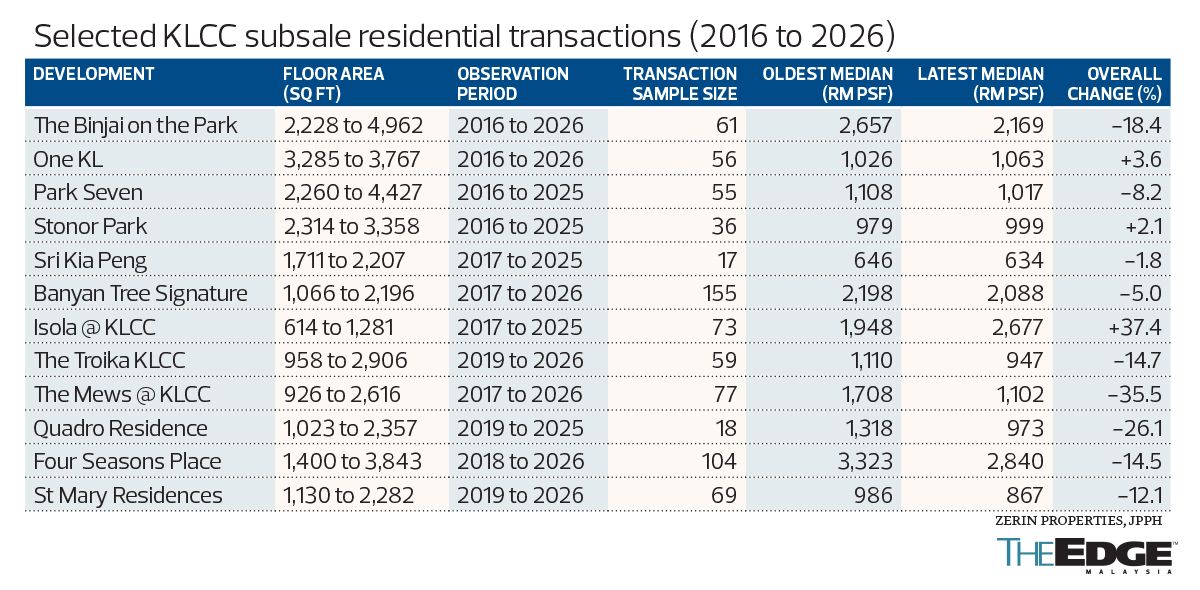
Among the developments analysed, Isola KLCC recorded the strongest capital appreciation, with its median price rising 37.4% over the review period, while One KL and Stonor Park recorded comparatively smaller changes.
Four Seasons Place Kuala Lumpur, The Binjai on the Park and Banyan Tree Signature remained among the higher-priced developments in the sample.
Previndran says the differences reflect the market’s increasing emphasis on individual building quality and positioning.
Performance has varied through several distinct market cycles. Wong characterises the past decade in three broad phases.
The first phase was the correction between 2015 and 2018, following the luxury condominium boom and rising supply. The second came with the Covid-19 pandemic in 2020 and 2021, when international travel restrictions weakened expatriate demand and rental performance. The third has been the gradual recovery following the reopening of international borders, supported by returning expatriates and renewed interest from affluent domestic buyers.
“Overall, we view the KLCC residential market as having transitioned from a speculative growth phase to a more mature market driven by fundamentals, where demand is increasingly concentrated in well-managed, differentiated developments with enduring locational advantages,” says Wong.
Growth through renewal and new offerings
With limited development land in the KLCC precinct, Previndran expects the next phase of growth to come less from developing new residential areas and more from renewing and enhancing existing assets.
He foresees greater investment in refurbishment, repositioning, sustainability upgrades and building management as earlier luxury developments mature. Developments that continue to invest in their quality and competitiveness will be better placed to preserve their capital values and rental appeal, he says.
At the same time, new projects will continue to add to the luxury residential offering. Chin Hin’s Dawn KLCC and Divine KLCC are among the developments entering the market, while UEM Sunrise Bhd (KL:UEMS) and EXSIM KLCC Sdn Bhd are jointly developing a 0.64ha freehold site at the junction of Jalan Ampang and Jalan P Ramlee into a mixed-use project.
For Wong, future opportunities will also lie in redevelopment, asset enhancement and the repositioning of older buildings to meet changing buyer expectations, with greater emphasis on branded residences, sustainability, wellness and smart-building technologies.
“While growth is likely to be more measured than in its early years, the area’s limited land supply, established reputation and role as Kuala Lumpur’s premier business and lifestyle district will continue to underpin demand for quality developments,” she says.
According to Previndran, the limited supply of prime sites remains one of KLCC’s defining characteristics.
“Ultimately, KLCC’s greatest strength is its scarcity. Opportunities for large-scale new developments within the core precinct are becoming increasingly limited, which reinforces the long-term value of well-located prime assets,” he says.
Save by subscribing to us for your print and/or digital copy.
P/S: The Edge is also available on Apple's App Store and Android's Google Play.