

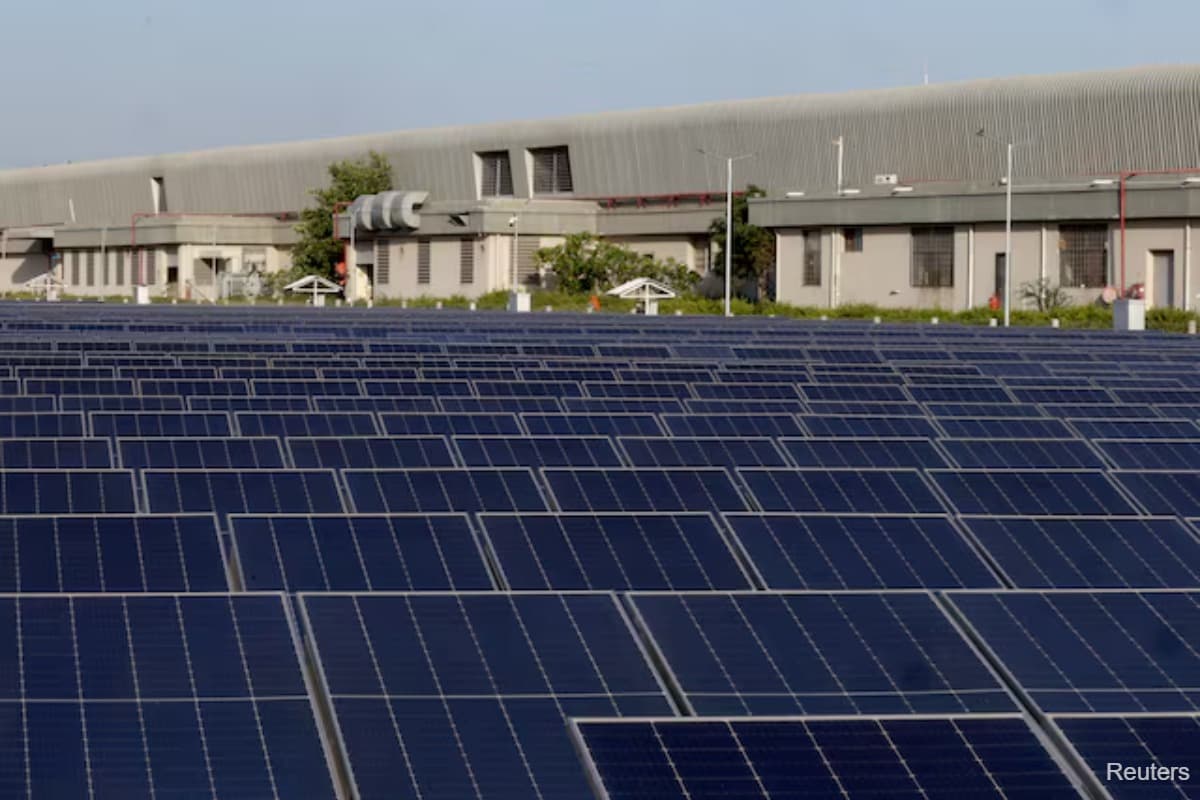
NEW DELHI (Oct 12): India turned away nearly 1.8 billion units of renewable electricity in July and August, even as it grappled with power shortages and dwindling coal stocks at power plants during a period of record electricity demand, a report showed on Monday.
About 4.2% of total solar generation could not be absorbed by the grid in July and August, highlighting inadequate transmission infrastructure, data from the Centre for Research on Energy and Clean Air (CREA) showed.
The data highlight a growing challenge for India as it expands renewable energy capacity to meet its clean energy targets of 500 gigawatts (GW) by 2030 from the present 304 GW.
"Despite record renewable generation, significant volumes of renewable electricity continued to be curtailed because of grid and operational constraints," CREA analysts said.
India, the world's third-biggest solar power generator, held back 14% of its solar power output between April and June, according to government data.
The South Asian nation's transmission network has struggled to keep pace with the increase in green energy, particularly solar, which accounts for about 168 GW, or nearly a third of its power generation capacity, according to government figures.
The clean power curbs came even as peak power demand touched 270 GW in July and coal inventories at power stations fell sharply, the energy think tank said.
Nearly half of the country's coal plants had stocks under four days of their requirement early this month.
India added renewable capacity at a rapid pace over the past year, helping non-fossil sources account for more than half of the country's installed power capacity.
Solar generation jumped 39% from a year earlier during the quarter ended September, while renewable generation excluding large hydro crossed 100 billion units for the first time.
Coal remained the backbone of India's power system during the quarter, supplying about two-thirds of electricity despite record renewable generation, as rising demand and a 20% decline in hydropower output linked to the El Niño weather pattern increased reliance on fossil fuels, the report said.
Uploaded by Liza Shireen Koshy