

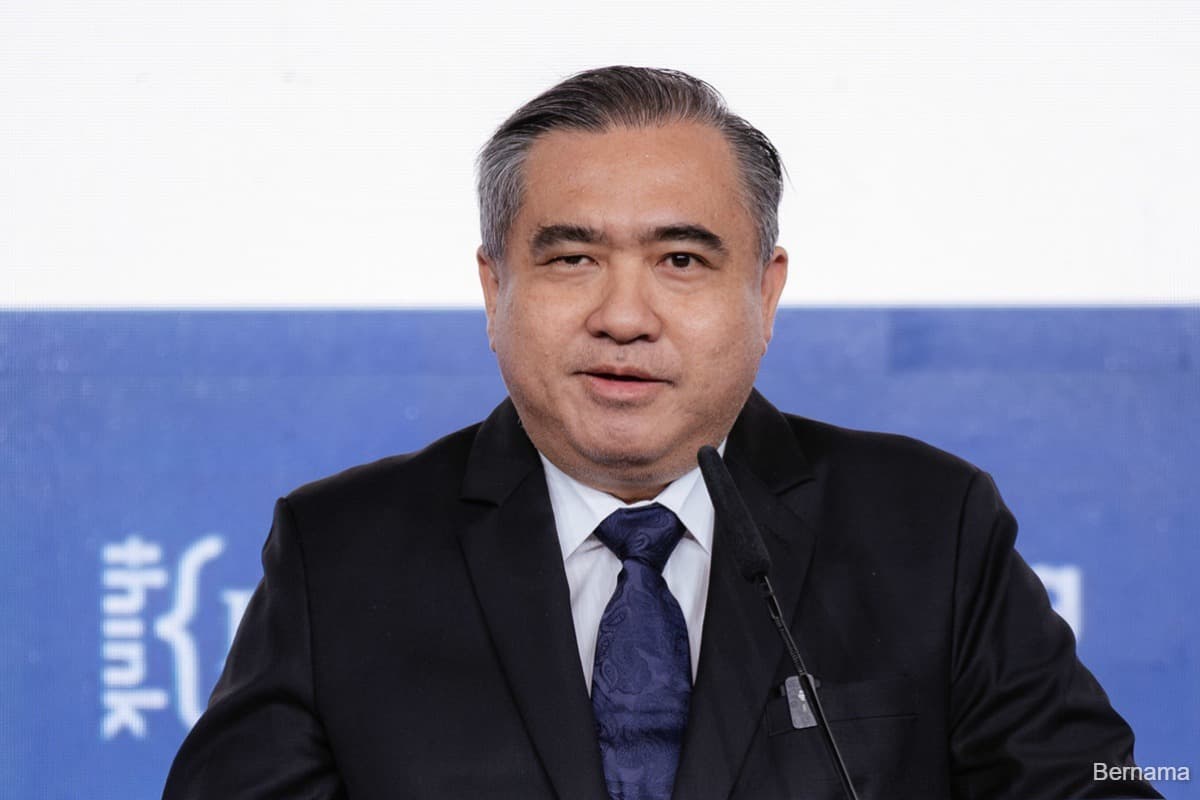
PUTRAJAYA (Oct 12): The proposed amendments to the Road Transport Act 1987 (Act 333) to require drivers under the influence of alcohol or drugs to compensate road accident victims are expected to be tabled at the first parliamentary sitting next year, Transport Minister Anthony Loke said.
He said the Cabinet had approved the policy in principle several months ago, and the Transport Ministry (MOT) was currently preparing the policy paper and draft bill with the Attorney-General’s Chambers (AGC).
"The Land Transport Division is preparing the policy paper and the bill. However, it will take some time before it can be tabled in Parliament, as it involves various technical considerations.
“Perhaps we are targeting the first parliamentary session next year to table. Hopefully, because right now we are still a work in progress," he told a press conference here on Monday.
Prime Minister Datuk Seri Anwar Ibrahim, when tabling Budget 2027 on Friday, said the Road Transport Act would be amended to make it mandatory for motorists driving under the influence of alcohol or drugs to pay compensation to their victims.
Anwar, who is also finance minister, reportedly said that 28 deaths involving drunk or drug-impaired drivers had been recorded up to August this year.
Meanwhile, Loke said the proposed amendments aimed to combine the existing criminal and civil processes to enable courts to award compensation to victims as part of proceedings against offenders.
Under the current system, he said, drivers who caused accidents while under the influence of alcohol or drugs would face criminal charges, while victims seeking compensation had to file separate civil suits, a process that could be lengthy and costly.
“This is where the problem lies because some victims do not have the means to file a civil case and it will take years to get the compensation from a civil case,” he said.
He said the proposed mechanism would allow judges to award compensation to victims when cases were brought before the court, without requiring them to pursue separate civil proceedings.
Loke said the approach was consistent with both universal principles of justice and Islamic principles, which emphasised that victims should receive compensation for the harm suffered.
“This is a universal principle and is very much an Islamic principle as well,” he said, referring to the concept of "diyah", which involves compensation for victims or their families in certain cases.
Uploaded by Liza Shireen Koshy