


(Oct 12): Wheat declined for a fourth day after US President Donald Trump said Russia and Ukraine had agreed to an immediate “energy ceasefire", raising hopes that an easing of hostilities could reduce Black Sea disruptions.
Futures fell as much as 1.3% in Chicago before paring some losses. Russia and Ukraine together account for more than a quarter of global wheat exports, making the Black Sea critical to world supplies. The US Department of Agriculture unexpectedly raising corn output forecasts also pressured grain prices.
“The energy component isn’t necessarily why; just the general theme of de-escalation is weighing on the market," said Joe Davis, director of commodity sales at Futures International LLC.
Escalating hostilities and strikes on port infrastructure in recent weeks have severely disrupted shipments, forcing buyers from Asia to Africa to seek alternative supplies, often over longer routes and at higher premiums.
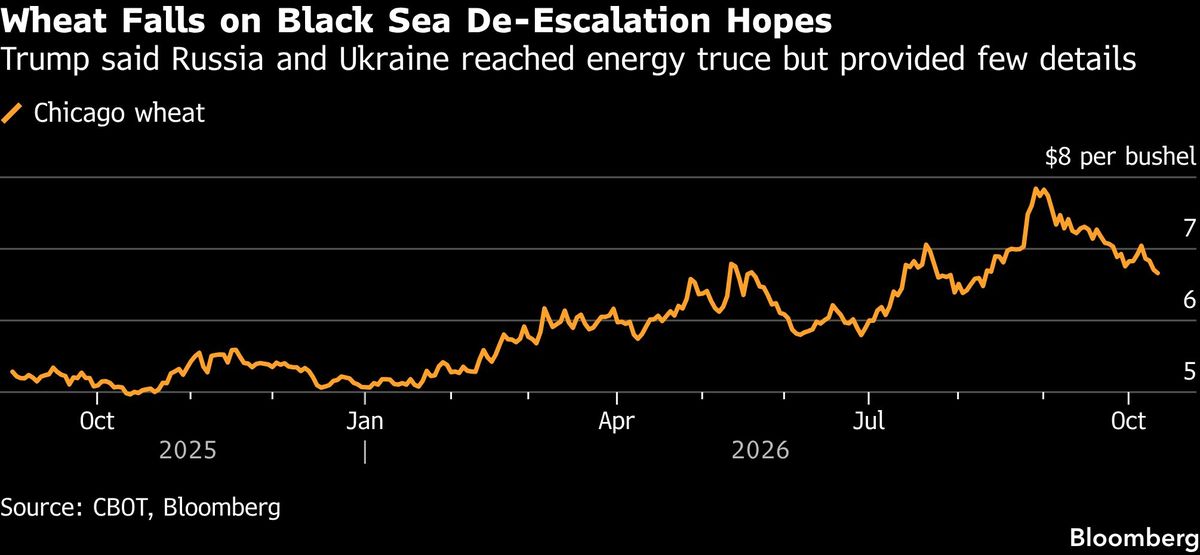
Trump announced the truce on Sunday but provided few details. Ukrainian President Volodymyr Zelenskyy said his country supports the ceasefire but is “awaiting details". Traders will be watching for confirmation from Moscow and Kyiv and signs that the agreement could lead to a broader easing of hostilities.
A sustained reduction in hostilities could remove some of wheat’s geopolitical risk premium, particularly if shipping becomes safer and Black Sea exports recover. Still, an energy ceasefire wouldn’t automatically protect grain infrastructure or commercial vessels, leaving the outlook for shipments uncertain.
Bearish signals from the USDA are also weighing on grain prices, Davis said. “And with harvest pressure for the next month, it’s going to be hard to rally.”
Corn posted its biggest drop in three years on Friday after the USDA raised its yield and production forecasts for the country’s top crop. The selloff spilled into wheat, which fell as much as 3.2%.
Uploaded by Arion Yeow