

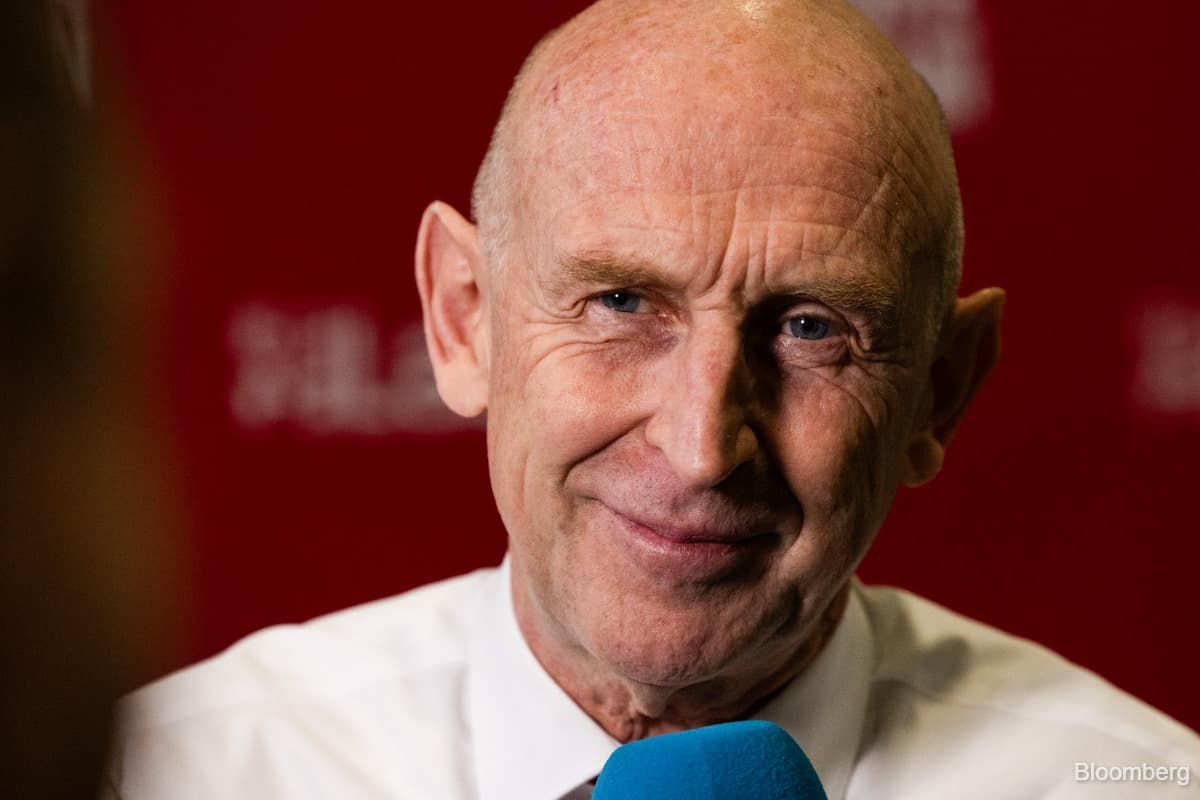
(Oct 12): UK Chancellor of the Exchequer John Healey must find £35 billion (US$46 billion) to meet the Labour government’s spending ambitions, the Institute for Fiscal Studies (IFS) warned ahead of the budget later this month.
The closely watched think tank said that while Healey should have more headroom against his fiscal rules than expected, the credibility of the government’s spending plans was still in the balance.
Inflation will squeeze public spending and leave departments underfunded unless the government intervenes, according to the group. “If you want to put up spending and not squeeze public services, then you have to look at tax rises,” said IFS director Helen Miller.
It came as Healey reaffirmed his commitment to fiscal discipline, as he prepared to travel to Thailand for the 2026 annual meetings of the International Monetary Fund where he will call on allies to work together to limit the impact of global shocks such as the war in the Middle East.
“I will work with our international partners to keep trade moving, support families and businesses, and make Britain’s economy stronger,” Healey said in an emailed statement. “My budget will build on this approach with fiscal discipline helping to deliver economic resilience.”
Prime Minister Andy Burnham’s government is faced with resolving a cost-of-living crisis marked by rising inflation and higher borrowing costs. Healey is due to deliver the budget, the government’s first, on Oct. 28.
The IFS said price pressures will erode the cash value of spending settlements agreed in 2025. Last year’s review implied a £9 billion cut for departments excluding health and defence, and inflation threatens to drive an additional £15 billion hole in those plans. Getting defence spending to 3% of GDP by 2030, as the government has suggested it wants, would cost a further £11 billion.
Miller said the £35 billion bill could be met by scaling back ambitions for public services but “if you are thinking of tens of billions in spending then you should be doing tens of billions in tax.” One option would be “contingent tax rises” that would be triggered if the economy hasn’t improved by a set time.
A tax-raising measure being mooted by Healey was to cut the threshold on the “mansion tax,” an annual levy charged on high-value homes, from £2 million to £1.5 million. But one person familiar with the Treasury’s thinking said such a move was no longer likely, after Labour MPs warned the chancellor that it would damage Labour’s ratings in its central London strongholds. The shift was first reported by the Sunday Times.
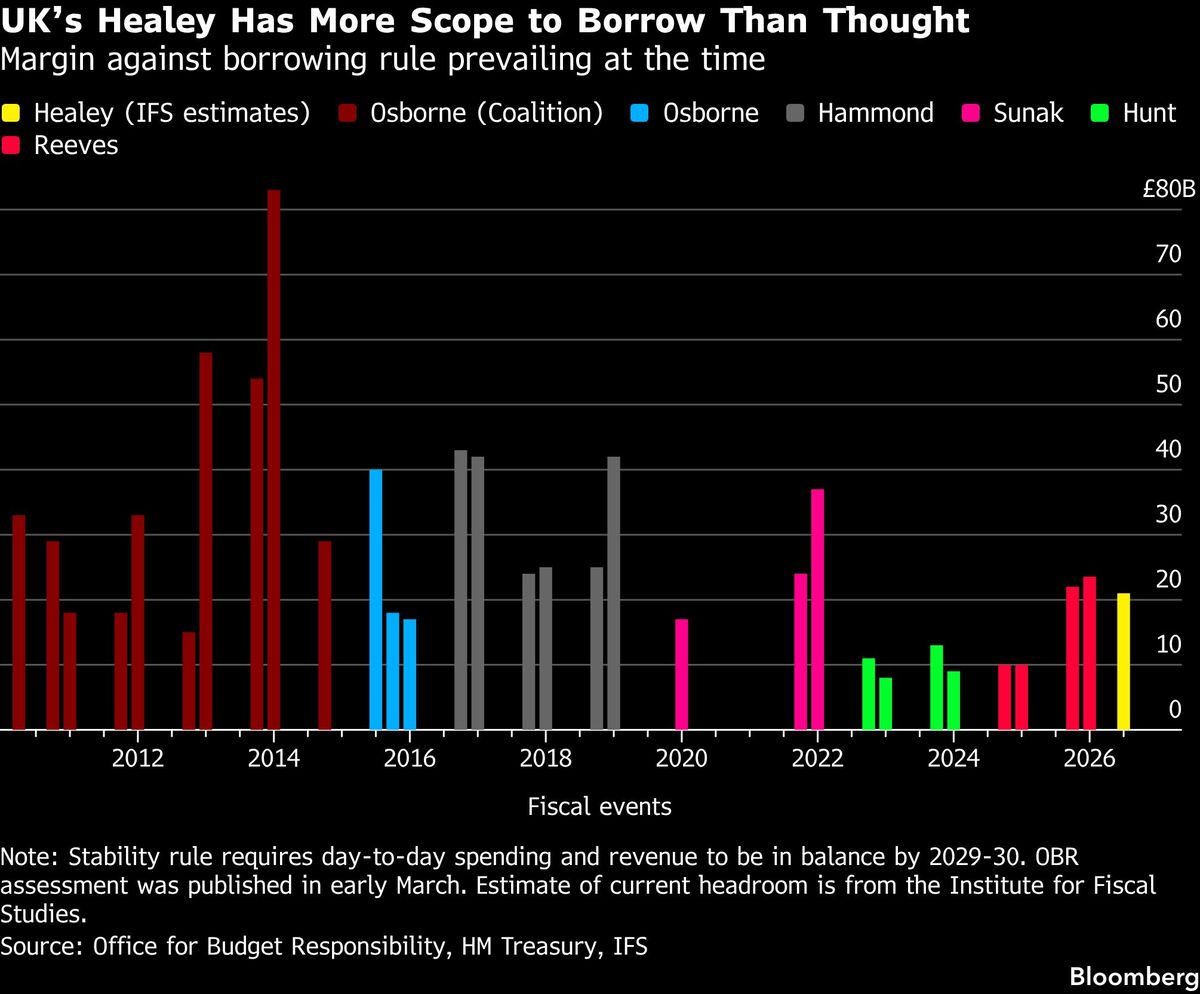
The forecast did offer Healey some relief. The chancellor’s cushion against fiscal rules he inherited has fallen only slightly, to £21 billion.
He is planning a budget that gives households and business “breathing space” after two earlier budgets added £66 billion in taxes and borrowing rose. Healey has promised fiscal discipline and investors have signalled they would tolerate headroom of as little as £15 billion.
“The headroom isn’t going to tell you whether the plan to get borrowing down is credible,” Miller said. “For that, you’re going to need to judge whether the spending plans are credible.” She added that “simply pencilling in implicit cuts” with no intention of delivering them “would make the budget a work of fiction.”
The IFS teamed up with Barclays Plc for the think tank’s annual Green Budget analysis of the current economic challenges, alongside which it publishes updated fiscal forecasts. Earlier estimates by economists suggested the government’s headroom against its main rule that taxes must cover day-to-day spending in 2029-30 would halve to about £12 billion, leaving Healey with a set of difficult decisions to restore the buffer.
However, the IFS and Barclays said a £12 billion hit from higher borrowing costs and £10 billion of extra welfare spending, reflecting the inflation indexing of benefits, would be almost entirely offset by additional tax receipts due to inflation and higher wages.
Miller stressed that there was “huge uncertainty” around the estimates, which could be “£10 billion higher or lower” in the critical 2029-30 financial year.
Barclays chief UK economist Jack Meaning said the market backdrop to the budget was better than in the last two years, when bond investors were spooked by the size of the fiscal events and the thin headroom. The UK “has not been the focus for global bond investors at the moment,” he said.
Uploaded by Liza Shireen Koshy