

KUALA LUMPUR (Oct 9): Bank Negara Malaysia expects around 9,000 micro, small and medium enterprises to benefit from the RM5 billion expansion of SME Stabilisation Relief Facility (SME SRF) which was announced during the tabling of Budget 2027 in Parliament on Friday.
The facility to help MSMEs strengthen business resilience amid the economic impact of the prolonged Iran War was introduced in May with an initial size of RM5 billion.
The top-up announced by Prime Minister Datuk Seri Anwar Ibrahim in his budget speech, brings the size of the fund to RM10 billion and expands access to "affordable working capital". As of Sept 30, RM3.8 billion under the initial RM5 billion pool had been approved for over 6,800 SME accounts.
"The SME SRF will remain available to affected SMEs across all economic sectors until 30 June, 2027, or full utilisation, whichever is earlier," BNM said in a statement on Friday.
Additionally, BNM said the implementation of CAKNA will be strengthened to "expand access to working capital for small contractors (G1-G4) undertaking Government projects."
To lower financing costs, the RM10 nominal stamp duty treatment for CAKNA I and II agreements will be extended until Dec 31, 2030.
On consumer initiatives, the voluntary medical and health insurance/takaful (MHIT) plan, MediAsas, will roll out in January, with paid premiums eligible for income tax relief.
Under BNM's RESET strategy, RM40 million has been allocated for MediAsas vouchers targeting employees of SMEs with fewer than 75 workers to "support greater financial preparedness for healthcare needs while reducing the financial burden of medical expenses".
To support responsible credit use at lower finacing costs, commercial banks will offer basic credit cards (BCC) in phases from this month.
Positioned as a "more affordable and no-frills credit card option", the BCC features no rewards or cashback and caps interest rates at 14% per annum. Existing cardholders can transfer eligible balances.
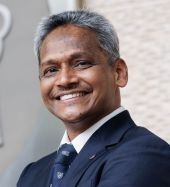
BNM governor Datuk Seri Abdul Rasheed Ghaffour said Budget 2027 reflects a "balanced approach that continues to advance important reforms while supporting households and businesses amid ongoing global uncertainties."
"Going forward, the key challenge will be to ensure that productivity, innovation and investment continue to strengthen alongside rising incomes so that growth remains sustainable and benefits are shared broadly,” said Rasheed
Capital market growth to drive economy
In a separate statement, Securities Commission Malaysia (SC) said Budget 2027 measures will drive economic growth through capital formation and accelerate the priorities of its Capital Market Masterplan 2026–2030 (CMP).
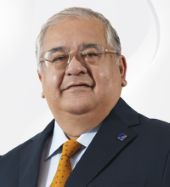
“The targeted measures mark the first step in delivering on our CMP aspirations to raise the ceiling via market growth as well as the floor by deepening market inclusivity," said SC chairman Datuk Muhammad Faiz Azmi.
The SC highlighted that a proposed matching grant for dual listings on Bursa Malaysia and the Stock Exchange of Hong Kong will allow Malaysian firms to "access a deeper pool of regional capital and expand beyond our shores".
It noted that simplified dual IPO guidelines were recently issued alongside Hong Kong’s Securities and Futures Commission (SFC), while the first Hong Kong Exchange Traded Fund (ETF) listing on Bursa Malaysia is anticipated soon.
Additionally, employment pass facilitation under the MyABE Scheme will help public-listed companies attract talent to scale regionally.
The regulator noted that enabling the Multi-Family Office (MFO) model alongside the Single Family Office (SFO) Incentive Scheme signals Malaysia's readiness to become a "full-service wealth management hub for global families and asset owners", scaling the SFO scheme which currently holds RM20.8 billion in assets under management.
To widen capital access for small businesses, RM270 million will be mobilised through equity crowdfunding (ECF) and peer-to-peer (P2P) platforms to reduce MSMEs' "reliance on traditional funding sources while improving access to growth capital".
Building Malaysian firms' capabilities
Bursa Malaysia chief executive officer Datuk Fad'l Mohamed said Budget 2027 will help Malaysian companies build capabilities, expand market reach and strengthen the IPO pipeline.
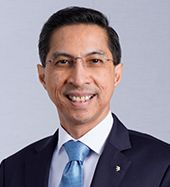
"Investments to accelerate the growth of local semiconductor companies to higher value segments and funding for mid-tier companies across sectors such as electronic and electrical, aerospace, digital and medical devices will deepen Malaysia's industrial and technology capabilities and prepare more businesses to tap the capital market as they grow," Fad'l said.
He added that government-linked investment company (GLIC) investments supporting Bumiputera enterprises and financing guarantees for mergers and acquisitions will further help firms strengthen market positions and attract investor interest.