

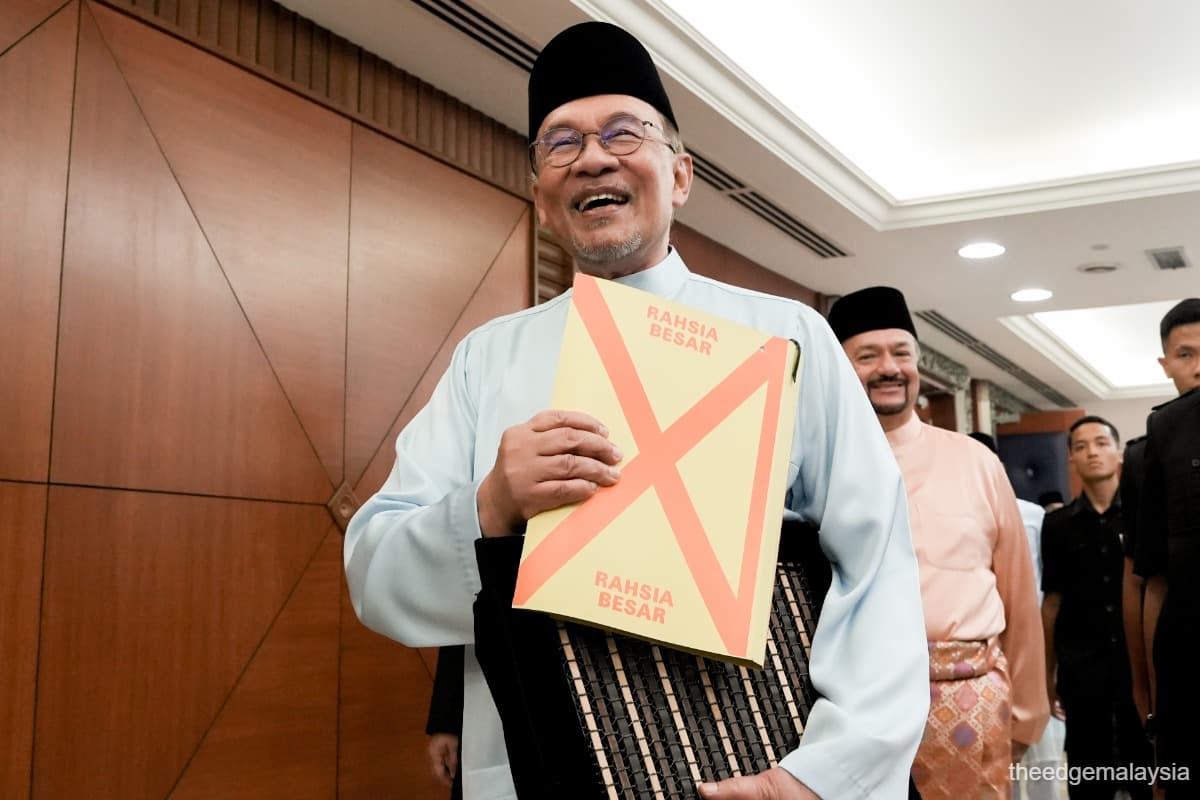
(Oct 9): Malaysia’s retail and tourism sectors are set to benefit as the government increases cash aid and raises the minimum wage to ease cost-of-living pressures in what could be Prime Minister Datuk Seri Anwar Ibrahim’s final budget before a national election.
The government will allocate RM16 billion in handouts and maintain fuel subsidies at RM40 billion next year to help households cope with rising costs, Anwar said in his budget speech on Friday. The minimum monthly wage will also be increased to RM2,000 from RM1,700 starting June.
The ringgit closed 0.2% higher at 4.0850 per dollar amid broad gains in regional currencies, while the country’s stock benchmark rose 0.5%.
Here’s a look at some of the key winners and losers of the budget for 2027:
Winners
Consumption
Malaysia’s consumer sector is set for further gains after the government announced a nearly 7% increase in cash handouts as well as a marginal tax cut for middle-income earners, which may boost purchasing power across a broad swath of the population. That could bolster the outlook for retailers, including convenience store chain 99 Speed Mart Retail Holdings Bhd (KL:99SMART) and dollar-store Eco-Shop Marketing Bhd (KL:ECOSHOP).
Tourism
The government will allocate RM935 million to tourism and culture as it extends the Visit Malaysia campaign through 2027. This could benefit leisure companies Genting Bhd (KL:GENTING) and Genting Malaysia Bhd (KLGENM), and potentially troubled budget carrier operator AirAsia Group Bhd (KL:AAGB).
Borneo-based firms
Anwar raised allocations for the Borneo states of Sabah and Sarawak to a record, potentially providing a further lift to their economies. Resource-rich Sarawak, in particular, is emerging as one of Malaysia’s key growth engines.
Greater investment in Borneo could benefit companies such as Dayang Enterprise Holdings Bhd (KL:DAYANG), Cahya Mata Sarawak Bhd (KL:CMSB), and port operator Bintulu Port Holdings Bhd (KL:BIPORT).
Losers
Plantations, glovemakers
Malaysia’s plan to raise its minimum wage by nearly 18% to 2,000 ringgit by June may increase costs for labour-intensive industries, including palm oil and glove manufacturing.
Plantation companies, particularly, are at risk given their heavy reliance on workers, including foreign labour. Malaysia is home to some of the world’s biggest palm oil companies, including SD Guthrie Bhd (KL:SDG), IOI Corp (KL:IOICORP), and Kuala Lumpur Kepong Bhd (KL:KLK).
While most glovemakers have automated production lines, they may still face higher labour cost. The country is a major production base with companies such as Top Glove Corp (KL:TOPGLOV), Hartalega Holdings Bhd (KL:HARTA), and Kossan Rubber Industries Bhd (KL:KOSSAN).
E-commerce giants
Malaysia is set to introduce laws to regulate the e-commerce industry to protect its small and medium enterprises, potentially impacting e-commerce giants that have gained strong market shares in the Southeast Asian country. Sea Ltd’s Shopee, ByteDance Ltd’s TikTok Shop and Alibaba Group Holding Ltd’s Lazada all have major presence in the country.
High-income earners
Malaysia will lower the threshold for its 30% top tax rate to a chargeable income exceeding RM1 million ringgit, from RM2 million currently. That may weigh on the disposable income of high earners as Anwar channels more support toward lower-income groups.
Uploaded by Magessan Varatharaja