

This article first appeared in Digital Edge, The Edge Malaysia Weekly on October 12, 2026 - October 18, 2026
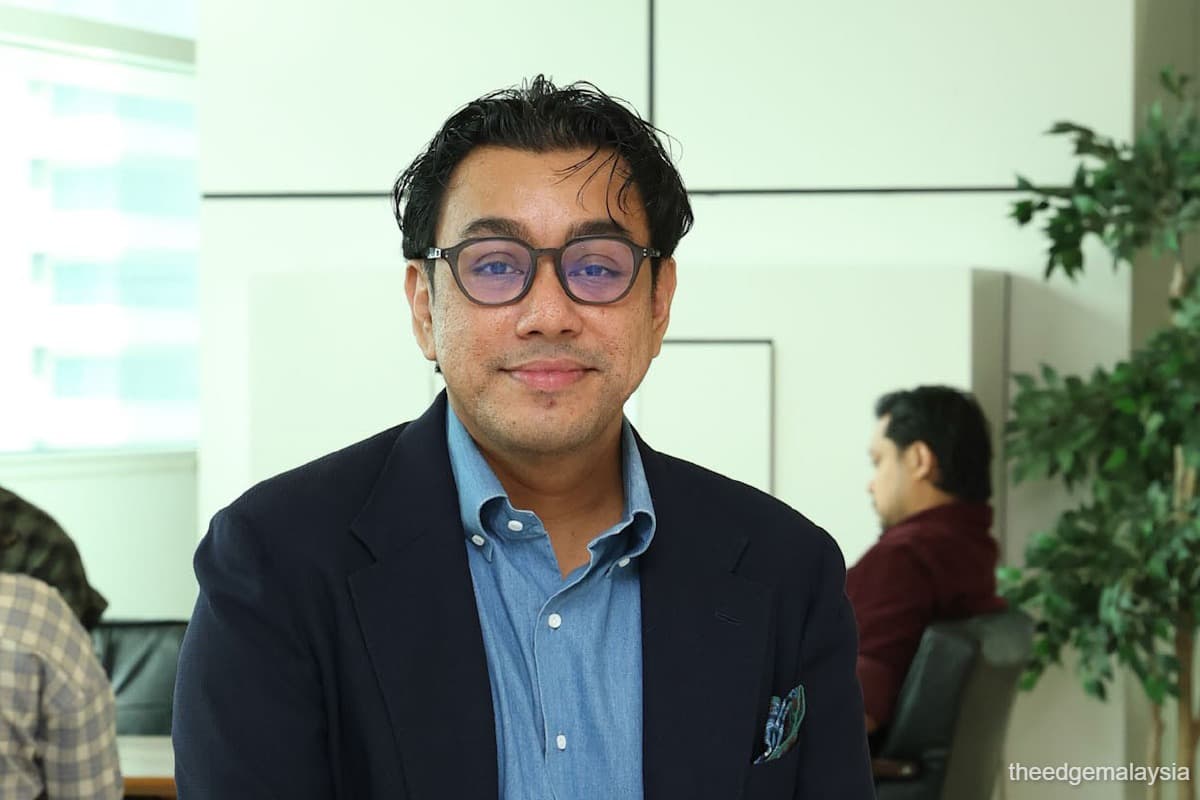
Conversations around social entrepreneurship often focus on funding, but a bigger challenge for founders is moving from building businesses that look for customers to creating products and services that customers are actively looking for, says Ahmad Azuar Zainuddin, CEO of Satu Creative Services Sdn Bhd.
That requires founders to understand the problem they are trying to solve, whether there is genuine demand for their solution and whether they have found the right product-market fit. In addition, social enterprises must balance commercial demand with their social or environmental purpose.
“Most of the time, when you meet what customers are looking for, the business starts to become easier. Then the conversation becomes, ‘How do I repeat this? How do I scale this?’ This is [why] we say that funding is just one part of doing business. It is necessary, but more important is where it usually starts — with desirability, or identifying something that the customer needs and wants,” he says.
Malaysia’s social enterprise ecosystem has expanded considerably since the Ministry of Entrepreneur Development and Cooperatives (Kuskop) launched the Malaysian Social Enterprise Blueprint 2015-2018 in 2015. At the time, about 100 social enterprises had been identified in the country.
According to the State of Social Enterprise in Malaysia report by the British Council in 2018, there were 20,749 social enterprises in Malaysia, including businesses, cooperatives and non-governmental organisations. As at July 30 this year, 649 social enterprises were accredited under Kuskop.
“When we talk about social enterprises, they are different from NGOs (non-governmental organisations) and regular businesses. But ultimately, they are still businesses. Looking at this, it is not an either-or scenario, but an ‘and’ scenario, meaning that you have to be impactful while also being viable, sustainable and even profitable as a business,” says Azuar.
He adds that there is a gap in helping social enterprises become stronger commercially.
“This is something more businesses are looking at. There is a lot of support in terms of grants at the early stage, as well as financing or investment at a later stage. But I think there is a gap in between and this is where we come in.”
To address that gap, Satu Creative launched the third edition of Creative Sprint in July to help social enterprises strengthen their business models, access funding and build industry partnerships.
“The latest rendition of Creative Sprint focused on three areas, which are income pathways, heritage conservation and circular solutions,” Azuar says.
The programme brought together 21 social enterprises from central and northern Malaysia, with the Central Region Bootcamp held from Aug 18 to 20 and the Northern Region Bootcamp in Penang from Sept 8 to 10.
Participants took part in venture-building, customer discovery and investment readiness workshops while connecting with entrepreneurs, investors, industry practitioners and potential funders. Eligible ventures had the opportunity to receive grants of up to RM100,000.
The programme was backed by Yayasan Hasanah, Bank Simpanan Nasional, Digital Penang, Malaysian Business Angels Network and Artem Ventures.
“The wonderful thing about the country’s reception towards social enterprises is that it is a work in progress. From what we saw a decade ago and what we are seeing now, [there is] progress. [But] are there gaps? Yes,” says Azuar.
Among the recurring concerns is that funding alone is insufficient if businesses lack opportunities to test their products, reach customers or work with larger organisations.
“There is also a need for greater support from procurement teams and customers, especially in creating opportunities for social enterprises to work with larger organisations. We saw this not only as a call for them, but also for us, to design our programmes to create this type of matching and networking,” he adds.
Satu Creative also runs annual alumni gatherings to maintain connections between businesses from different cohorts and states after the formal programme ends.
“This helps with networking and ensures they are not left to deal with things on their own after the programme and bootcamps,” Azuar says.
One business that has gone through the Creative Sprint is Sarawak-based Earthlings Coffee Sdn Bhd, which identified an opportunity to build greater demand for the Liberica coffee produced by local farmers.
Azuar says the company worked with experts to improve cultivation methods and coffee quality while providing farmers with training and other assistance as part of its social enterprise model.
The farmers can now earn two to three times more than before, he says.
“At the same time, because the quality of the coffee is better, they are able to sell it to customers. And because not many people are looking into this space, all of a sudden there is a new product that is desirable, with a very sustainable and ethical supply chain.”
Save by subscribing to us for your print and/or digital copy.
P/S: The Edge is also available on Apple's App Store and Android's Google Play.