


This article first appeared in Digital Edge, The Edge Malaysia Weekly on October 12, 2026 - October 18, 2026
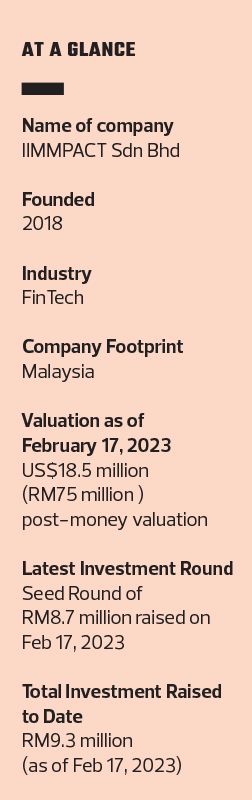
IIMMPACT Sdn Bhd began in 2018 as a consumer app that allowed users to pay different bills through a single platform, but the business changed direction after struggling to retain customers as larger e-wallet operators expanded.
CEO and co-founder Alex Tan says fewer than 20% of users who signed up for the app remained active, prompting the Kuala Lumpur-based company to shift from the consumer market and focus instead on providing payment infrastructure to banks, e-wallets and digital platforms.
“We are basically a B2B (business-to-business) company now,” he says.
Today, IIMMPACT aggregates billers and digital services through a single application programming interface, or API, allowing its clients to offer services without having to build separate connections with each provider.
The company says its platform covers more than 20,000 services across over 90 categories, including utilities, telecommunications, insurance, gaming top-ups, digital gift cards and loyalty programmes.
It processed more than RM1 billion in transaction value last year. The platforms it works with include Shopee, Lazada, AEON Bank, Boost and Ryt Bank, where it provides the infrastructure behind bill payment and other digital services.
The model is intended to reduce the time required for banks and other platforms to add billers individually, says Tan.
“It will take you five years to launch. But if you connect to us you can actually go live in one month,” he says.
The move to a business-to-business model followed an unsuccessful attempt to compete directly for consumers at a time when Grab, Boost and Touch ’n Go were expanding their payment ecosystems.
IIMMPACT received a Cradle grant of about RM300,000 around a year after its launch, but by then the founders had concluded that the original strategy was not working.
The company spent about a year rebuilding its platform as an API before beginning the process of pitching it to potential corporate customers.
Convincing companies to work with a small start-up proved difficult, particularly because IIMMPACT had only four employees and little operating history at the time.
Boost became its first customer after an extended sales process.
The company has since retained 97% of its clients, although the business remains dependent on customers continuing to see value in using an intermediary rather than dealing directly with billers, he says.
That risk becomes more significant as banks and large digital platforms build their own technology capabilities and negotiate directly with utilities, telecommunications companies and other service providers.
IIMMPACT has responded by developing a platform-as-a-service model that allows clients to maintain their own commercial agreements with billers while continuing to use its technology, adds Tan.
The system includes payment dashboards, reconciliation tools and controls intended to prevent duplicate payments.
According to Tan, establishing and maintaining a direct integration with an individual biller can take between nine and 12 months.
IIMMPACT is therefore seeking to position its technology separately from its role as an aggregator, so that customers can continue using the platform even if they no longer require access to its network of commercial relationships.
The company has also expanded beyond bill payments into other digital services.
Its API supports gaming top-ups, digital gift cards and loyalty programmes that allow financial institutions to connect their rewards schemes with airline and hotel programmes. It has also added e-SIM services covering 181 countries.
Banks can use such services as cardholder benefits without having to develop the underlying infrastructure themselves, he says. “We are trying to figure out how else we can value add more towards our client.”
Bill payments remain closely tied to the country’s domestic payments infrastructure, with IIMMPACT’s bill presentment system operating on JomPAY, which is run by Payments Network Malaysia Sdn Bhd, or PayNet.
The company is also working with PayNet on a system intended to extend bill payment services to physical retail outlets such as convenience stores.
The proposed service would allow consumers who rely on cash to pay bills over the counter rather than through a banking app or e-wallet.
IIMMPACT is also ISO 27001 certified, meeting an international standard for information security management that requires organisations to maintain controls for managing and protecting sensitive data.
Regional expansion is not an immediate priority as the company expects to spend at least another three years developing its local operations before moving into larger Southeast Asian markets, he shares.
The company currently has about 20 employees and expects revenue of between RM6 million and RM7 million this year.
Tan says revenue could increase further as several large customers that are now integrating with the platform begin contributing to transaction volumes.
IIMMPACT’s investors include Peak XV Partners, formerly Sequoia Capital India and Southeast Asia, and ScaleUp Malaysia. Its angel investors include Tata Digital chief executive Sajith Sivanandan.
Save by subscribing to us for your print and/or digital copy.
P/S: The Edge is also available on Apple's App Store and Android's Google Play.