

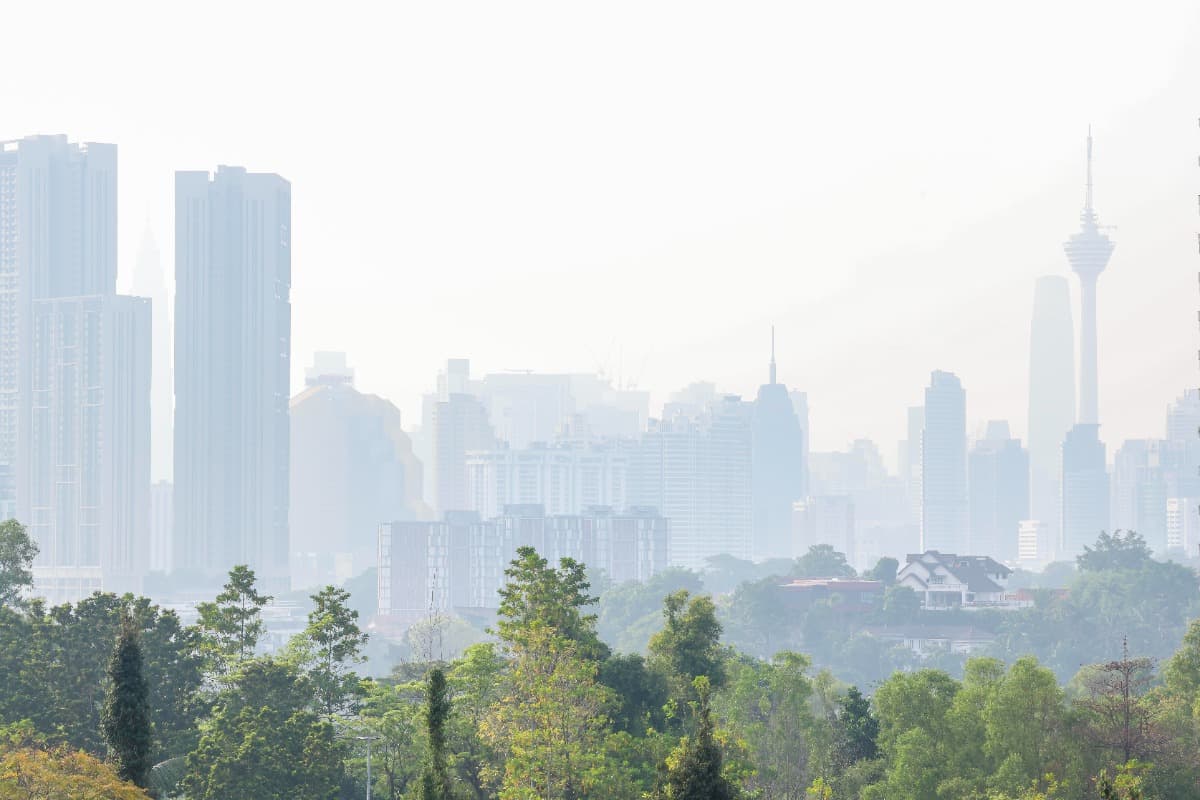
KUALA LUMPUR (Oct 9): The worsening haze in Malaysia could disrupt manufacturing operations, affect worker attendance and drive up business costs, according to the Federation of Malaysian Manufacturing (FMM).
The industry group warned that poor air quality could affect outdoor operations and logistics, while forcing manufacturers to spend more on air filtration systems, protective equipment and workplace adjustments.
FMM president Jacob Lee Chor Kok said the recurring haze poses risks not only to public health but also to economic productivity and industrial competitiveness.
“Clean air is not a luxury. It is a fundamental requirement for public health, economic productivity and sustainable development,” FMM said in a statement on Friday.
As at 10am on Friday, Kuala Lumpur recorded a US Air Quality Index (AQI) reading of 210, followed by Petaling Jaya at 207, both classified as very unhealthy, according to air-quality monitoring platform IQAir. Ipoh and Klang also recorded unhealthy readings of 176 and 174 respectively.
To minimise disruptions, FMM urged manufacturers to activate business continuity plans, protect workers from prolonged haze exposure and adjust outdoor activities when air quality deteriorates.
“Prevention must take priority over repeated crisis management,” FMM said, calling for stricter enforcement against illegal open burning, improved early warning systems and greater investment in fire prevention.
The federation also urged Asean to accelerate existing haze-control measures and track progress towards its ambition of becoming haze-free by 2030.
FMM also called for Budget 2027 to strengthen incentives for environmental technologies and pollution prevention, including support for workplace air-quality monitoring and filtration improvements.
“A haze-free Asean must become a measurable achievement, not merely a recurring aspiration,” it said.
In a separate statement on Thursday, FMM called for greater support to help Malaysian small and medium enterprises (SMEs) expand into larger businesses rather than remain small indefinitely.
Lee proposed raising the manufacturing SME eligibility threshold to RM100 million in annual sales turnover and 300 full-time employees, allowing growing companies to continue accessing government support during expansion.
“The goal should not be for businesses to remain SMEs indefinitely, but to support them through the critical growth phase where they can create greater economic value, quality jobs and stronger industrial capabilities,” he said.
FMM also called for a review of the SME corporate tax threshold, stronger payment discipline and better debt recovery mechanisms to help businesses improve cash flow and finance their growth.