

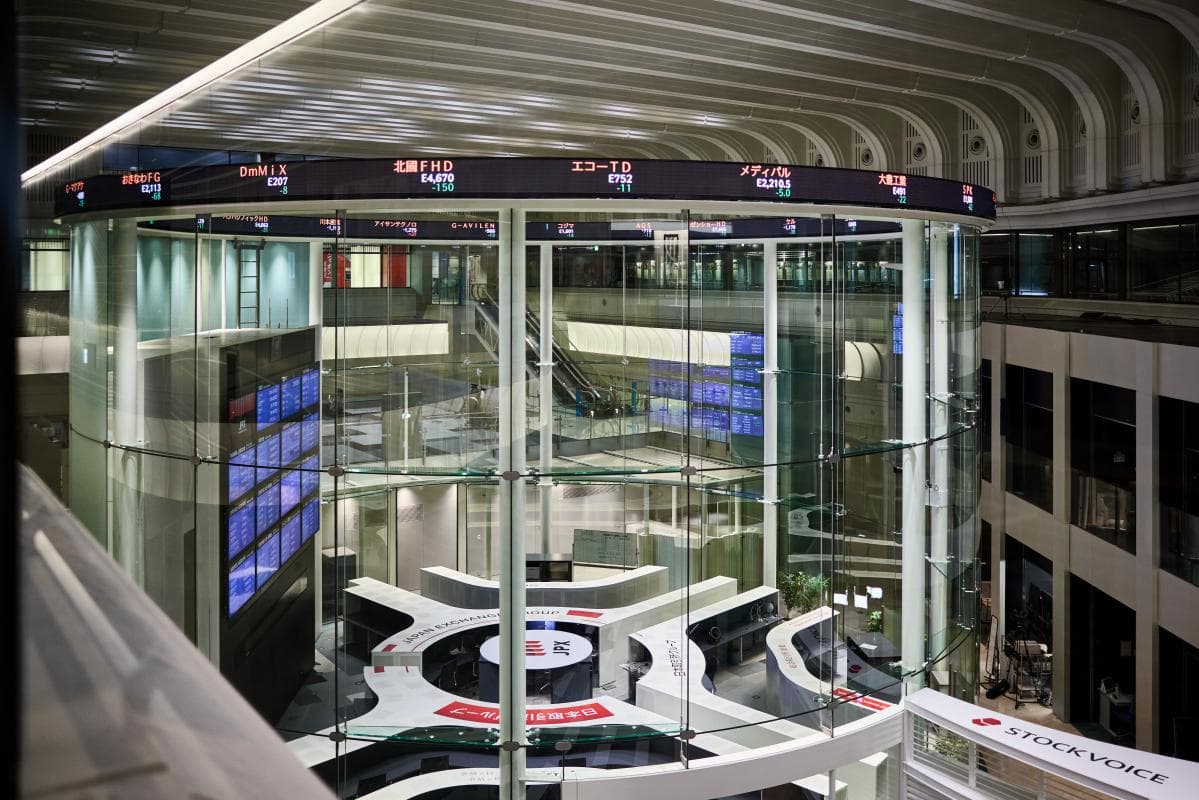
(Oct 9) : Asian tech stocks are set to come under pressure, tracking a selloff in US chipmakers as speculation over OpenAI’s revenue revived concerns about the sustainability of the artificial-intelligence spending boom.
Equity-index futures pointed to losses in tech-heavy Japan and South Korea, while those for Australia signaled gains. US stock futures edged higher in early Asian trading after technology shares led Wall Street lower. The Nasdaq 100 sank 1.4%, its worst day in seven weeks, while a gauge of chipmakers slumped 3.4%.
The selloff followed a Financial Times report that OpenAI’s annualized revenue was US$20 billion below previously signaled levels. The ChatGPT maker is on track for roughly US$50 billion, according to people familiar with the matter, versus reports last month of nearly US$70 billion. Oracle Corp. also slid on a report it was trucking natural gas to server farms to ease power bottlenecks.
Elsewhere, Firmus Grid Ltd., an Australian data center company backed by Nvidia Corp., is set to postpone its initial public offering, and the company is weighing a private funding round instead, according to people familiar with the matter. The move is an ominous sign for other proposed data center listings, according to analysts.
The OpenAI revenue questions add to concerns over AI spending as elevated borrowing costs make the vast sums flowing into data centers and computing infrastructure harder to justify. Investors are increasingly looking for evidence that revenue can keep pace with the investment required to develop and run AI models.
“Investors are becoming a bit skeptical about how long this huge AI spending can last with borrowing costs rising in a significant way,” said Matt Maley at Miller Tabak.
US oil edged lower after Brent surged on Thursday as fresh Iranian tanker attacks threatened to curtail a recent recovery in Middle East flows. The global benchmark jumped over 4% to settle above US$104 a barrel. The dollar was steady.
Treasuries advanced on Thursday after solid demand at a 30-year debt auction pulled long-dated yields back from more than two-decade highs. The rally extended after President Donald Trump said he would hold off on attacking Iran again until after the US midterm elections on Nov. 3.
The gains provided some respite from a months-long selloff in longer-term debt, fueled by concerns that the Iran war will keep energy prices and inflation elevated, alongside mounting worries over government finances.
The outlook for rates remained under pressure, however, as Federal Reserve officials signaled more tightening ahead. Governor Christopher Waller said further increases will probably be needed to bring inflation under control, while St. Louis Fed President Alberto Musalem said rates should rise over the next six to nine months without endorsing a move this month.
“To bring inflation back to target in a timely manner, more monetary policy firming will be required,” Musalem said Thursday at a Bloomberg event in New York.
Still, the weakness remained concentrated in technology rather than spreading across the broader market, highlighting the benefits of diversification. More than two-thirds of S&P 500 members advanced, while small-cap shares were little changed as investors rotated toward defensive sectors.
“My biggest surprise is the tech selloff remains concentrated, with more than two-thirds of S&P 500 constituents higher and small caps close to flat,” said Chris Murphy, co-head of derivatives strategy at Susquehanna International Group. “Strength in staples and low-volatility stocks points to rotation toward defensives rather than broad-based equity selling.”
uploaded by Isabelle Francis