

This article first appeared in Digital Edge, The Edge Malaysia Weekly on October 12, 2026 - October 18, 2026
Alphaswift Industries Sdn Bhd is the only drone maker among the Malaysian companies given access to British chip architect Arm Holdings plc’s chip design technology, and it plans to design its own chip as it builds towards passenger flight.
The local drone industry has come a long way, as home-grown companies now export aircraft and services in areas such as agriculture and infrastructure inspection, while competing not only with one another but also with established Chinese manufacturers that dominate many commercial segments on price and scale.
Alphaswift is trying to set itself apart in this crowded market by moving into more complex applications, from medical delivery to a longer-term ambition of passenger flight, while developing more of its technology in-house, including its own chips. This ambition is among the reasons that it received the Arm Flexible Access (AFA) tokens under the government’s partnership with Arm Holdings. To date Alphaswift is the only drone manufacturer that has received the tokens.
Under the deal — which is a key part of the National Semiconductor Strategy (NSS) rollout — signed in March 2025, Arm will receive US$250 million (RM972.75 million) over 10 years from the Malaysian government in exchange for intellectual property licences and computer subsystem designs that will be made available to companies in the domestic electrical and electronics sector.
Arm Holdings — which is among the top 10 largest semiconductor companies in the world — makes chip designs that it licences to companies such as Qualcomm and Nvidia.
The NSS goal is to get established local players to beyond chip assembly, testing and packaging into higher-value activities such as chip design and to help them develop their own intellectual property. As at Aug 21, 22 out of 25 AFA tokens and four out seven Compute Subsystem (CSS) tokens are still up for grabs. CSS provides ready-made processor building blocks to help semiconductor companies develop chips faster.
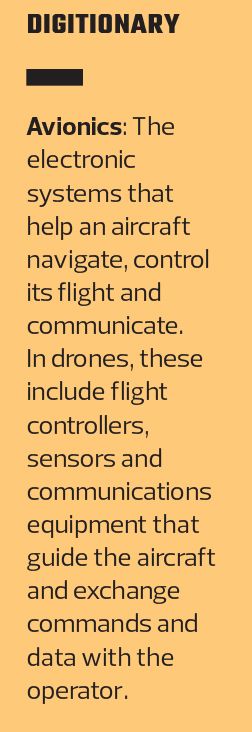
With the AFA tokens, the Cyberjaya-based Alphaswift plans to develop a proprietary chip for its avionics (see box story). AFA provides companies with early, lower-cost access to Arm’s chip designs, enabling them to experiment, develop and test products without paying the full licensing fees up front.
At present, the start-up has secured the approval of the Civil Aviation Authority of Malaysia (CAAM) to transport dangerous goods by drone, including biological substances such as blood samples and medicines. Its hospital-to-hospital blood-sample delivery pilot between Hospital Bera and Hospital Sultan Haji Ahmad Shah in Temerloh, Pahang, which are about 20km apart, began with a drop test on Dec 11 last year, followed by a drone flight on Jan 22 and a medical drone crash response exercise on Feb 11.
Its next confirmed medical project is a medicine-delivery pilot in Tawau, Sabah, under a Malaysian Communications and Multimedia Commission (MCMC)-led initiative that is expected to serve about 12 villages.
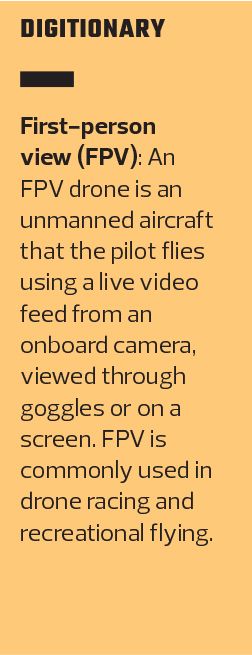
These developments add to a business that already designs aircraft to specific customer requirements and develops first-person view (FPV) drone kits. Together, they form the building blocks of the company’s longer-term plan to develop electric vertical take-off and landing (eVTOL) aircraft that could one day carry people, part of its broader vision to make air transport more accessible.
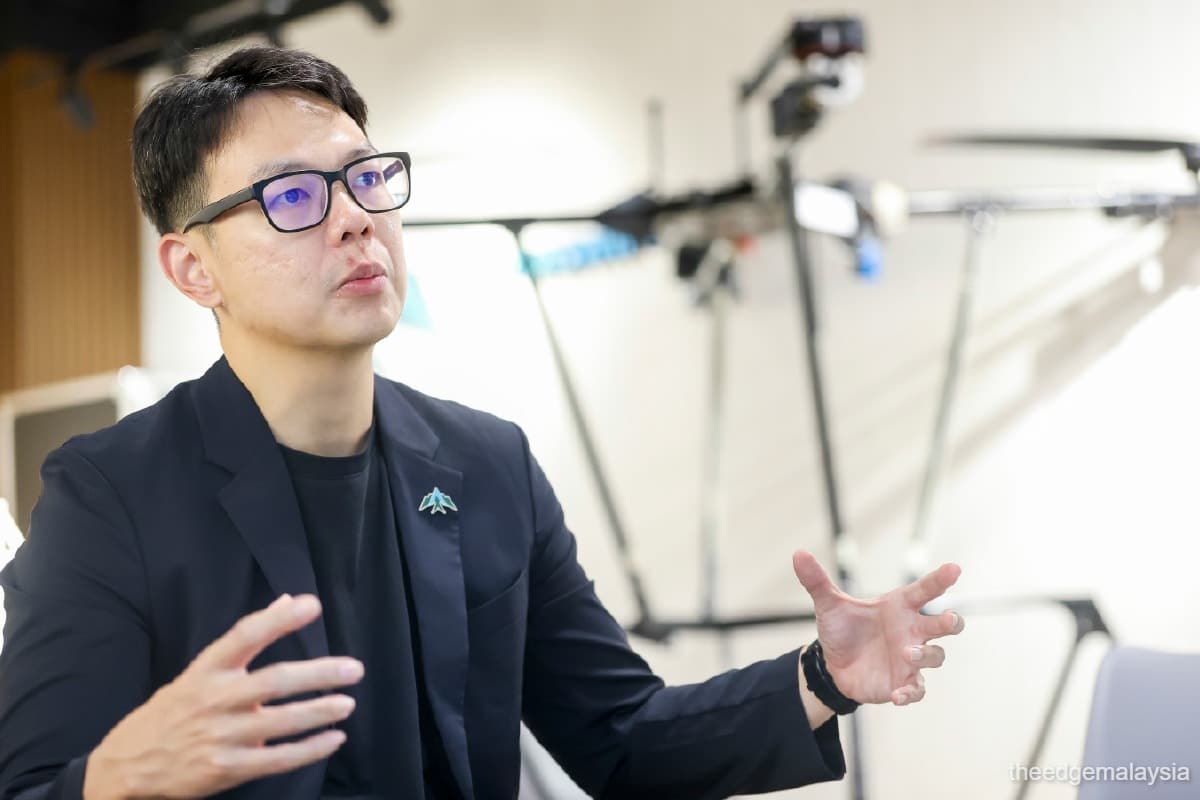
Alphaswift CEO Shian Lee is putting these pieces in place to build a business that earns revenue while developing the capabilities needed to realise that ambition. “Logistics is the blood circulation of our civilisation. We want to improve on that,” he says.
“Imagine if we have drones being able to carry one million parcels a day, then you will be able to receive your e-commerce items in the next hour. Organs can be transported within an hour instead of relying on helicopters. That will dramatically improves lives everywhere. We can make costs go down significantly and also make things go faster.”
Alphaswift, which was set up in 2020, is Lee’s second drone venture. He was CEO of Fourfang Sdn Bhd from 2017 to 2020, where he worked on unmanned aerial vehicle product development, flight testing and aircraft design, according to his LinkedIn profile.
Lee initially bootstrapped Alphaswift and later, received undisclosed equity investment from Leave a Nest Capital Co Ltd, he says. Revenue has largely financed the business, while grants have supported individual projects, he adds.
Leave a Nest Capital, a Japan-based investor focused on science and technology start-ups, holds a 10.71% stake in Alphaswift, according to company records.
Lee says Alphaswift’s revenue comes from a mix of customised aircraft, cargo delivery work and sales of FPV kits and avionics. In FY2025, the company recorded revenue of RM14.38 million and a net profit of RM2.36 million, according to financial information filed with the Companies Commission of Malaysia.
Alphaswift was the first tenant of Leave a Nest Group’s incubation hub in Cyberjaya called Center of Garage Malaysia, which opened in January 2024. In just two years, the company is preparing for its next phase of expansion by moving its manufacturing operation to a new leased factory in Perdana Industrial Park in Puchong.
Scheduled to begin operations this month, the facility will bring together research and development, electronics production and aircraft assembly, while giving the company more room to increase the production of its FPV drone kits and avionics as demand grows. The kits are used by hobbyists, training schools and the defence sector.
About half of the avionics will be used in Alphaswift’s own products, while the remainder will be sold to other drone manufacturers.
Lee does not disclose how much Alphaswift is investing in the factory, but says scaling up production will require further capital, particularly as the company develops its own avionics, hires specialised talent and moves towards higher-volume manufacturing. He declines to say how much capital will be needed or how the company plans to raise it.
The additional capacity is intended to support Alphaswift’s expansion as it seeks to move drone delivery beyond pilot projects into regular commercial use.
“Our next milestone is to work with e-commerce or logistics partners to see which routes and what kinds of parcels make sense to deliver using drones. My target is to have a million drones flying in Malaysian skies — for e-commerce, letters, medicine, blood, organs and all that. Then we will be able to really transform the economy,” says Lee.
He is also considering an initial public offering within five years. The company was recently included in Cradle Fund Sdn Bhd’s Malaysia Top 100 Startups 2026 Edition and was among the 10 winners of the Selangor Accelerator Programme 2024 run by the Selangor Information Technology and Digital Economy Corporation.
One step at a time
Lee earned his bachelor’s and master’s degrees in aerospace engineering at Purdue University in the US before completing a doctorate at Nanyang Technological University in Singapore, specialising in flight controls and autonomous systems.
He traces his fascination with self-flying aircraft to childhood, recalling watching Batman press a button on his utility belt to summon his plane before flying off. That inspired his ambition to build an eVTOL aircraft that can fly itself and carry people.
“It is a childhood dream. I think most of us want to have the ability to fly everywhere, anytime, right? But humans are unable to do that naturally, so we have to invent machines to do that for us,” he says.
“The aircraft that we have now are quite big. You have to get into a huge, long tube to get to places, and then you have to pass through security. What if one day, you could have your own aircraft parked in your garage or your front porch? Wouldn’t that be awesome?”
But developing an eVTOL would require substantial capital, with even US$100 million likely to fall short. Alphaswift would also need to engineer a reliable aircraft, demonstrate its performance through extensive flight testing, secure regulatory approvals and gain public confidence.
The industry is still in the early stages, with China having approved some pilotless passenger operations and several air taxi trials underway in the US, while widespread commercial use will depend on aircraft certification, supporting infrastructure and rules for safely integrating such vehicles into existing airspace.
Lee is pursuing that ambition in stages, starting with agricultural spraying drones and buying components through Alibaba before assembling and programming aircrafts for increasingly demanding applications.
“There’s a trajectory. Following Nasa’s model, it has four steps. It launches an empty rocket first and gets a thumbs-up. Then it launches satellites. If the satellites are okay, it launches animals, monkeys. And finally, when all this is done, it gets approval to launch astronauts, which is the most risky one, to launch people,” he explains.
“It is the same for us. First, we started with agriculture, the lowest risk. The second step is cargo delivery, which is sort of like satellites. Number three, we have drones that can carry blood, which is biohazardous — sort of like living samples, like animals. So when we get all these things done and approved, then only will we get the confidence and support to finally fly people. That’s the trajectory and the step-by-step process that we follow.”
The exposure in the agriculture sector gave the team a relatively low-risk environment in which to learn to operate large drones carrying payloads and understand where the equipment could be improved.
This experience has helped Alphaswift move beyond assembly to begin developing more of its own technology, including a hybrid power system with an on-board petrol engine that charges the battery and extends flight endurance for agriculture and cargo delivery.
Alphaswift’s next step was to develop drones for cargo delivery, including longer journeys beyond the visual line of sight, where the aircraft leaves the operator’s view. That meant being able to maintain control and avoid other aircraft without relying on the operator’s direct sight of the drone and surrounding traffic.
The company conducted cargo trials in Johor, logging about 1,000 flights and 400 flight hours. The testing generated no revenue but helped build government confidence in the company’s delivery technology.
That paved the way for it to move into medical delivery, including its hospital-to-hospital blood-sample delivery trial between Hospital Bera and Hospital Sultan Haji Ahmad Shah with the Ministry of Health (MoH). The roughly 20km drone flight took about 20 minutes, while road transport typically takes about 40 minutes, depending on traffic.
The trial compared the two modes of transport in terms of delivery time, sample quality and logistics, and explored how drones could improve medical logistics where distances between districts and uneven access to healthcare pose challenges. More than 165 blood samples were delivered during the project, which involved over 100 flights covering more than 1,900km, according to Julian Tan Kok Ping, an authority member of CAAM in a LinkedIn post.
Alphaswift spent roughly two years developing its medical drone-delivery capabilities and securing the regulatory clearances needed for blood transport, working with authorities such as CAAM, MoH and MCMC. The company invested about RM500,000 in the development work and meeting regulatory requirements.
Its next medical project is the medicine-delivery pilot in Tawau under the MCMC-led initiative, which is expected to serve about 12 villages where residents struggle to obtain regular medical supplies.
While building its cargo and medical-delivery capabilities, the company also branched into avionics and FPV drone kits. The avionics business grew out of technology it was already developing for its own aircraft.
Lee says the company began designing its own avionics after deciding it could no longer rely entirely on imported systems, given the rising costs, supply risks and export controls. It later saw an opportunity to sell the technology to other drone manufacturers, particularly as customers in Western markets looked for alternatives to China-made drone components.
During this period, Alphaswift began developing FPV drone kits. The company’s Ikari kit packages the main components needed to assemble and operate a small drone, including its flight controller, the frame, camera, video-transmission system, remote control and goggles.
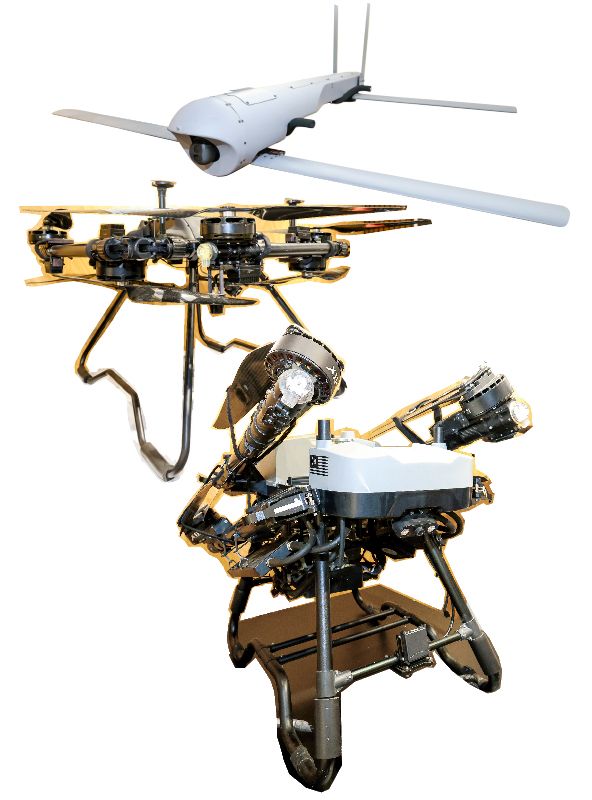
Custom-made aircraft have remained part of the business throughout, with customers approaching the team with a particular task they want a drone to perform and its engineers designing the aircraft around that requirement.
One project involved building a drone that could collect water samples from a lake for laboratory testing, while another required an aircraft that could spray water horizontally to clean the façades of buildings. In each case, the team designed the aircraft and payload system together, worked out how the equipment should be mounted and operated, and programmed the software so the customer would be able to control the payload while the drone is in flight.
Making eVTOLs a reality
Passenger flight remains Lee’s longer-term goal. He envisages an autonomous eVTOL aircraft carrying four to five people, giving travellers an alternative to spending hours on the road.
In his vision, that could change not only how people travel but also where they choose to live, allowing someone to remain in their hometown and fly to Kuala Lumpur for work or meetings rather than having to move closer to the city. “It will be one extra option that you and I can select to fly, instead of driving every day,” he says.
However, turning that vision into a commercial aircraft will take years. Lee expects regulators to need at least another five years to develop a framework for autonomous passenger flight.
He estimates that once Alphaswift formally begins developing an aircraft, it will take roughly another five years to design it, build prototypes, conduct flight tests and secure approvals.
Financing will be another hurdle. “RM100 million is an understatement,” he says, estimating that developing such an aircraft would require two to three times that amount.
A passenger-drone network would also require places to take off and land, along with charging, battery storage and ground operations.
“You will need a drone port. You will definitely need something like a bus station. You cannot be landing in front of people’s houses. My dream is that for every postcode, there will be a drone port,” says Lee.
How Alphaswift plans to put Arm to work
Alphaswift Industries Sdn Bhd plans to use Arm Holdings plc’s intellectual property under the Arm Flexible Access (AFA) programme to develop a proprietary chip that it will incorporate into its drones’ avionics and sell to other drone manufacturers.
Alphaswift CEO Shian Lee says that the first design will be an artificial intelligence (AI) inference chip, which run AI models to process data on the drone, or a chip for wireless communications. The company has yet to finalise its choice and intends to begin with just one chip.
Avionics include the computers and sensors that guide the aircraft, alongside equipment for exchanging commands and data.
Currently, Alphaswift develops and sells four avionics products: a flight controller that manages navigation and flight, a motor controller that regulates how fast the motors spin and separate wireless devices for transmitting data and video. The company sells its avionics through distributors to other drone manufacturers, who use these the components in their own aircraft and sell the drones under their own brands without having to develop the electronics themselves.
Lee sees an opening among manufacturers serving Western markets and other countries where customers want or need electronics sourced from outside China. Those buyers have few alternative suppliers, giving Alphaswift a market for avionics it originally developed for its own drones, he says.
The avionics use printed circuit boards designed by the company, which connect the chips and other electronic components while the chips themselves are purchased from European suppliers, explains Lee.
With the AFA tokens, Alphaswift will be able to design a chip tailored to its avionics requirements, integrating functions that currently require additional components. This could make its circuit boards smaller and reduce power consumption, says Lee.
However, chip design requires substantial capital. Lee estimates the cost of developing one chip at about RM50 million, and says the project could take three to five years.
Eventually, Alphaswift plans to develop proprietary chips for each of its four avionics products.
“Designing one chip costs about RM50 million, so I cannot spend so much to design all of them at the same time. We will design one first and then we make sure that we can sell a lot. Then we will settle the next one,” he says.
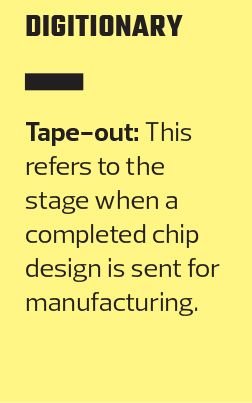
The AFA token gives Alphaswift access to Arm’s chip designs, tools and training for 12 months. Standard tokens allow unlimited tape-outs during that period, while Entry tokens allow one, Arm’s tape-out fees apply in both cases.
Save by subscribing to us for your print and/or digital copy.
P/S: The Edge is also available on Apple's App Store and Android's Google Play.